The post How To Start A Gardening Business In South Africa first appeared on Mzansi Magazine.
]]>In a country where sunshine graces the land for most of the year, the opportunity has never been better. It is an ideal time to start a gardening business. Green spaces are valued as much in townships as in suburbs. South Africa’s climate and culture create fertile ground for this industry. Whether you’re a young entrepreneur with a passion for plants, you will find this environment conducive to growth. Or maybe you’re someone trying to turn a weekend hobby into a steady income. A gardening business caters to residential properties. It also serves commercial clients, schools, offices, shopping centres, and even municipalities.
Many South Africans love a well-kept garden. But, few have the time, tools, or skill to keep one. That’s where you come in. By choosing to start a garden, you step into a market that blends service, sustainability, and seasonal demand. Homeowners and property managers from Cape Town to Durban to Johannesburg are actively searching for reliable gardener services. This is especially true in areas like Durban, where landscaping is both aesthetic and functional due to the subtropical climate.
Before you grab a pair of pruning shears and hit the pavement, have a strategy. It’s essential to approach this venture with strategy, not just sweat. Running a successful gardening business in South Africa requires more than enthusiasm. It needs planning, branding, and pricing. Additionally, a clear understanding of local needs is crucial. In this guide, we’ll give all the information you need. Learn how to start a gardening business the smart way. Avoid common pitfalls. Build something that grows alongside your community.
Why a Gardening Business Makes Sense
Let’s be real: not every business idea survives South Africa’s economic ups and downs. Yet, the gardening business has shown remarkable resilience. Why? Because people always want their outdoor spaces to look good, whether for pride, property value, or mental wellness. In fact, studies show that well-maintained gardens can increase a home’s market value by up to 15%.
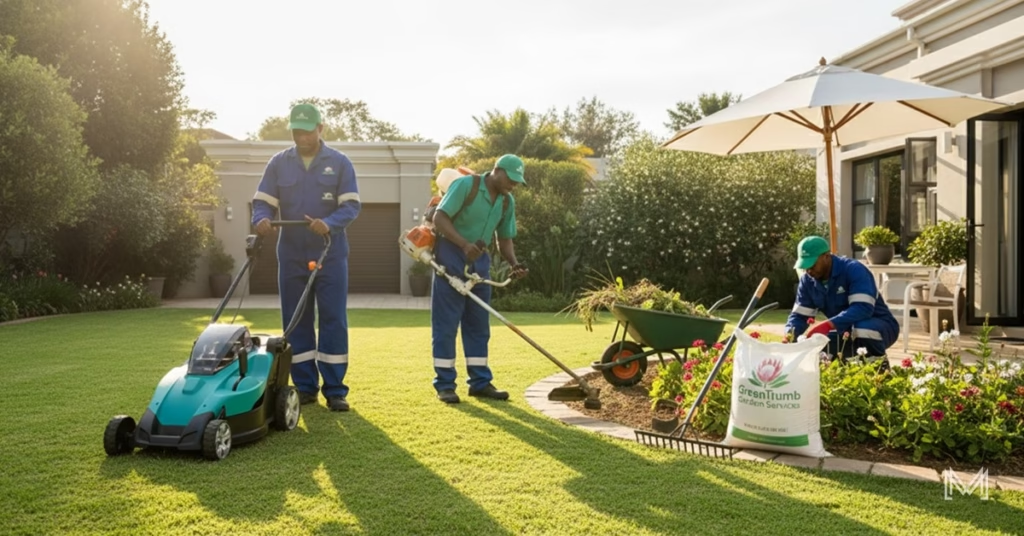
Eco-conscious living is on the rise. Urban farming and water-wise landscaping are also gaining popularity, especially in drought-prone provinces like the Western Cape. So, there’s a growing demand for expert garden maintenance services. In Durban, for example, homeowners often need help with tree felling in Durban, invasive plant removal, and coastal-friendly landscaping. These are not DIY jobs; they require skill, permits, and the right equipment.
Is a gardening business profitable? The numbers say yes. Entry costs are low compared to other trades, and profit margins can reach 40–60% once you’re established. Many solo operators earn between R15,000 and R30,000 per month working just 4–5 days a week. Add a small team, and that figure can double.
Entry costs are low compared to other trades, and profit margins can reach 40–60% once you’re established.
Most importantly, you don’t need a degree to succeed. What you do need is reliability, knowledge of local flora, and a willingness to get your hands dirty literally. That’s why so many young South Africans are choosing to start a gardening business as their first entrepreneurial leap.
How to Start a Gardening Business: Your First Steps
If you’re serious about wanting to start a gardening business, begin with research, not tools. Walk through different neighbourhoods. Notice which homes have overgrown lawns. Identify which businesses outsource their green spaces. Find out what services are already offered in your area. Search online for “gardening business near me” and see who’s ranking on Google Maps. Read their reviews. What are customers complaining about? Poor communication? Inconsistent visits? That’s your opportunity.
Next, define your niche. Will you focus on basic garden maintenance? This includes mowing, weeding, and trimming. Or will you offer premium services like landscaping in Durban, irrigation setup, or organic pest control? The broader your offering, the more clients you can serve, but specialising can help you stand out. For instance, becoming known as the go-to expert for tree fellers in Durban could secure high-value contracts.
Don’t skip this crucial phase: talk to real people. Ask neighbours, friends, and even local spaza shop owners if they’d use a gardening service. What would they pay? How often? These conversations will shape your gardening business plan far better than guesswork.
Crafting a Winning Gardening Business Plan
No, you don’t need an MBA. But you do need a gardening business plan even if it’s just two pages long. This isn’t for banks (yet); it’s for you. It clarifies your goals, pricing, target market, and startup costs.
Start by outlining your services. Will you offer weekly lawn care, seasonal clean-ups, or one-off projects like installing raised vegetable beds? Then calculate your gardening business start-up costs, Mzansi. Basic gear like a lawnmower, hedge trimmer, gloves, and rakes can cost between R3,000 and R8,000 if bought second-hand. A branded T-shirt and cap? Another R500.
Your plan should also include a marketing strategy. How will people find you? Will you rely on flyers, WhatsApp groups, or Facebook? And don’t forget operations: will you work alone or hire help? If you plan to scale, include a simple financial forecast.
You can find free templates online by searching “gardening business plan pdf”, but customise it for South African conditions. For example, factor in load-shedding. If you use electric tools, you’ll need a battery backup or petrol alternatives.
Having a solid gardening business plan in South Africa doesn’t just reduce risk; it builds confidence. And confidence shows in how you pitch your services.
Legal Setup: Registering Your Gardening Business
Yes, you can operate informally at first. Yet, if you want credibility and longevity, register your business. It also lets you issue tax invoices. Through the Companies and Intellectual Property Commission (CIPC), you can register a sole proprietorship for just R175. Platforms like FNB’s Business Portal even bundle this with a free business bank account.
Choose a name that reflects your brand. Brainstorm gardening business names that are memorable, easy to spell, and relevant, like “Green Thumb Mzansi” or “Durban Garden Crew”. Avoid overly cutesy or funny gardening business names unless your target market is playful (e.g., eco-schools or boutique cafes).
Once registered, open a separate bank account. Never mix personal and business funds. Also, consider liability insurance, especially if you’ll be using ladders or chainsaws or working on commercial properties. A small monthly premium can save you from major headaches.
And while you’re at it, design gardening business cards. Even in the digital age, handing someone a physical card after a great first job leaves a lasting impression. Keep them in your pocket, your van, and even tape one to your toolbox.
Tools, Transport, and Team: Building Your Operational Base
To start a gardening business, you need mobility and gear. Most professionals opt for a bakkie; it’s practical, durable, and perfect for hauling soil, plants, and tools. If buying new isn’t an option, consider renting or leasing. Some entrepreneurs even partner with local dealers for weekend-only rentals during peak seasons.
As for tools, start lean. Focus on versatility: a good brushcutter, a reliable lawnmower, pruning shears, and a wheelbarrow cover 90% of basic jobs. Invest in quality where it counts; cheap mowers break during load-shedding heatwaves.
Now, about your team. In the beginning, go solo. Master the workflow, pricing, and client management. Once you’re turning down jobs due to time, bring on help but wisely. Hire on a per-job basis at first. That way, you avoid fixed salaries during slow months. Look for people with experience, maybe former farmworkers or retirees who know indigenous plants.
Training matters too. Teach your team your standards: how you edge a lawn, how you bag clippings, and how you greet clients. Consistency builds reputation.
Marketing That Works for Local Gardening Services
Forget expensive ads. In South Africa, word-of-mouth and visibility drive gardening services. Start hyper-local. Print 200 flyers and deliver them in your suburb, especially to complexes and retirement villages where gardening is outsourced.
But don’t stop there. Put your logo on your bakkie. Park visibly at shopping centres while running errands. People will snap a photo of your number. Create a simple Facebook page or Instagram profile showing before-and-after shots. Tag your location “garden services Durban North” or “landscaping Durban” so locals can find you.
Ask happy clients for Google reviews. Five-star ratings boost your ranking when someone searches “gardener Durban” or “garden maintenance services”.

And never underestimate the power of a free service. Offer to tidy your local church garden or community centre for free. Just put up a small sign: “Maintained by [Your Business Name].” That’s low-cost, high-impact branding.
Pricing, Profit, and Avoiding Financial Troubles
One of the biggest mistakes new entrepreneurs make is undercharging. Yes, you want to be competitive, but R80/hour won’t sustain you. Research what others charge in your area. Garden services in Durban, for example, range from R150 to R350 per hour depending on complexity.
Charge per job or per visit, not per hour. A standard garden clean-up might be R600 flat. Tree removal? R1,500+. This simplifies billing and rewards efficiency.
Track every cent. Use a free app like Yoco or SnapScan for payments and record-keeping. Set aside 15% for taxes. And always pay yourself last after expenses, fuel, and tool replacements.
The soil is ready. All you need to do is plant the seed.
Financial discipline prevents gardening business financial troubles. Many fail not because of lack of work. They fail because they didn’t budget for slow seasons (like winter in Gauteng). Another reason for failure is not budgeting for equipment breakdowns. Build a rainy-day fund; even R500 a month helps.
Scaling Up: From Solo Gardener to Landscaping Brand
Once you’ve got 10 regular clients and a waiting list, it’s time to think bigger. Could you offer seasonal packages? Introduce composting or veggie garden setups? Partner with nurseries for plant supply commissions?
You might even consider buying an existing gardening business for sale in Mzansi to fast-track your growth. Just do due diligence: check client lists, equipment condition, and recurring revenue.
Also, think branding. A strong logo is essential. Adding matching uniforms enhances brand identity. Including a slogan (“We Grow With You”) can turn a side hustle into a recognisable local brand. And yes, those gardening business cards should now include your website and QR code.
Final Thoughts: Why Now Is the Time to Start a Gardening Business
South Africa needs more green hands. With urbanisation rising and green spaces shrinking, professional garden and maintenance services aren’t a luxury; they’re a necessity. Whether you’re in Pretoria, Port Elizabeth, or Pietermaritzburg, the demand is there.
To start a gardening business is to invest in community, environment, and your own future. It’s physical, yes, but also deeply rewarding. You’ll see results every week. You’ll build relationships. And you’ll earn respect as someone who makes Mzansi more beautiful, one garden at a time.
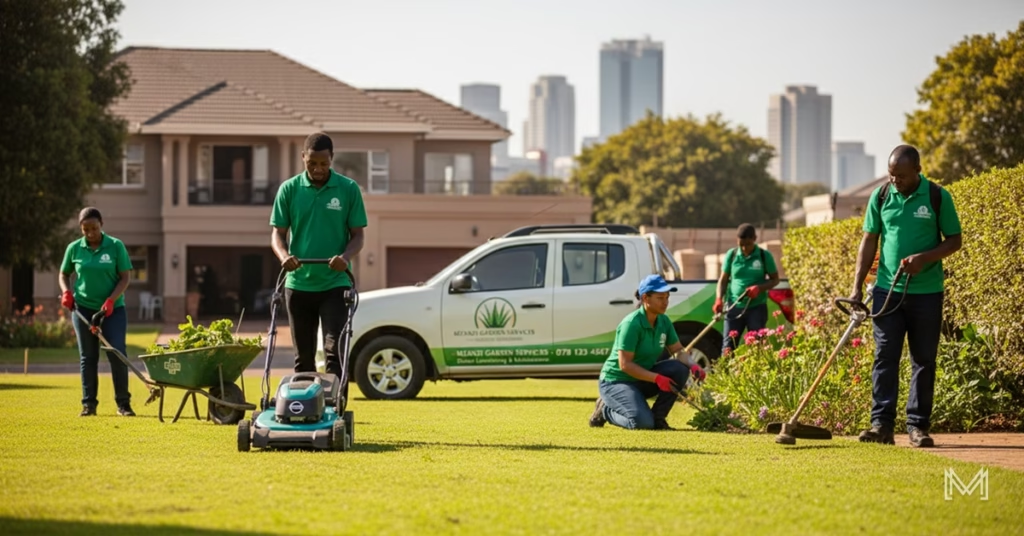
If you’ve ever wondered “how to start your own gardening business,” the answer is simple. Start small. Plan smart. Show up consistently. The soil is ready. All you need to do is plant the seed.
And remember, whether you’re searching “how to start a gardening business with no money” or looking for gardening business ideas that scale, the foundation remains the same. Focus on service, skill, and sincerity.
FAQ’s Start a Gardening Business South Africa Guide
What are the initial start-up costs for a gardening business in South Africa?
Basic second-hand gear like a lawnmower and tools can cost between R3,000 and R8,000. Add about R500 for simple branding like a cap and T-shirt to get going.
How much money can I expect to earn as a solo gardener?
Many solo operators in South Africa earn between R15,000 and R30,000 per month. They work only four or five days a week. Profit margins can reach 40–60% once your gardening business is established.
Should I register my gardening business with CIPC?
Yes, registering with CIPC, even as a sole proprietorship for just R175, gives you credibility. It lets you issue tax invoices. It’s a crucial step for longevity and professionalism in the business.
What is the best way to market my new local gardening service?
Focus on hyper-local marketing like delivering flyers and making sure your bakkie has visible branding. Getting good Google reviews from happy clients is key when people search for “gardener near me”.
How should I price my gardening services to be competitive yet profitable?
Avoid charging a low hourly rate. Charge a flat fee per job or visit. For example, charge R600 for a standard clean-up. Research local rates, which can range from R150 to R350 per hour depending on the job’s complexity.
It’s time. Go ahead and start a gardening business. The roses (and rand notes) are waiting.
The post How To Start A Gardening Business In South Africa first appeared on Mzansi Magazine.
]]>The post Phone and Gadget Repair Services in South Africa: A Startup Guide first appeared on Mzansi Magazine.
]]>Smartphones rule our daily routines completely. So, breaking a screen feels like a massive personal disaster. Most people simply can’t afford to buy brand new devices every single year. This exact problem creates an amazing opening for young entrepreneurs wanting to hustle. Right now, starting phone and gadget repair services makes perfect financial sense. You offer a solution everyone desperately needs today.
Furthermore, fixing devices helps save the environment from harmful electronic waste accumulating in our landfills. Anyone can learn these technical skills with dedication and practice. We will explore exactly what you must know to launch your new venture successfully. You will learn everything necessary to build a sustainable and profitable tech company from scratch.
Why Phone and Gadget Repair Services Offer Huge Profits
People constantly ask the same important question before starting. They want to know, is the cell phone repair business profitable in today’s tough economy? The short answer is an absolute yes. Millions of active smartphone users rely on their devices for banking, chatting, and working daily. Furthermore, our tough economic climate forces consumers to stretch their personal budgets significantly.
Even when the economy is struggling, people still need their phones for banking, job hunting, and staying connected.
Instead of upgrading at network providers, they actively look for reliable local technicians. This means a dedicated phone repair business can generate steady daily cash flow. Eventually, running successful phone and gadget repair services lets you become your own boss completely. You control your working hours while proudly serving your local community. Timing is everything, and the market demand has never been higher than right now.

Many youngsters wonder how they can enter this exciting gadget repair business without huge capital. Luckily, the barrier to entry remains surprisingly low for determined individuals. People drop their devices constantly, meaning your potential customer base grows every single day. As a result, launching phone and gadget repair services solves a massive daily struggle for everyday citizens. You become the local hero who saves lost family photos and important work documents. Additionally, you do not need a fancy university degree to get started in this technical field. Passion, patience, and a willingness to learn matter far more than formal qualifications. Thus, you can easily turn a small side hustle into a massive full-time income stream.
Essential Steps for Mastering Phone and Gadget Repair Services
You can’t fix broken devices without proper knowledge and the right equipment. First, you need proper education to build absolute customer trust. Looking into a phone repair course gives you an incredibly solid foundation. Alternatively, you can explore the Nemisa cellphone repairs training programme for excellent local insights and government-backed skills. Another great choice involves finding a dedicated school for cell phone repair near your neighbourhood. Besides education, you must clearly understand the specific tools needed to start a phone repair business today. Basic items include precision screwdrivers, plastic spudgers, magnifying glasses, and anti-static workstations.

Buying cheap equipment usually leads to costly mistakes and angry customers. So, investing in quality tools ensures your phone and gadget repair services run smoothly from day one. You also need to calculate the exact cell phone repair business startup cost before buying any spare inventory. Keeping your first spending low helps you reach pure profitability much faster.
Preparing your phone and gadget repair services correctly limits early mistakes that ruin new businesses. Furthermore, mastering the basic hardware repairs takes only a few weeks of intensive daily practice. Eventually, you will confidently replace batteries ruined by load shedding, swap out cracked screens, and fix broken charging ports. Practice always makes perfect, so consider buying broken phones online to practise your new skills safely.
Planning Your Phone and Gadget Repair Services Perfectly
Every successful venture requires a very clear and strategic roadmap. Thus, downloading a detailed mobile repair business plan PDF helps you structure your brilliant ideas properly. This crucial document guides you on handling daily operations and managing your business finances carefully. For instance, figuring out how to start an iPhone repair business requires understanding strict premium parts sourcing. Apple users expect top-tier quality when handing over their expensive and beloved devices. Hence, your phone and gadget repair services must show sheer professionalism at all times.
Good branding goes a very long way in this highly competitive tech industry. If you want a striking logo or a beautiful store banner, contact Warten Weg. He is a graphic designer. Reach out if you need any design services. His creative eye for detail will make your new brand look incredibly professional and trustworthy. Growing your new company requires excellent daily management and smart marketing strategies.
Sometimes, you even consider expanding into home maintenance. Starting a window screen repair business can help you diversify your income streams entirely. Nonetheless, staying firmly focused on electronics usually brings the fastest financial returns initially. You must learn how to track your income and expenses using simple accounting software. This discipline ensures you never run out of cash to buy essential spare parts.
Finding the Best Location for Phone and Gadget Repair Services
Location completely dictates your daily foot traffic and overall business visibility. Choosing the right spot depends heavily on your available budget and your ideal target market. Exploring different mobile repair shop ideas is important. It helps you decide between a mall kiosk, a mobile van, or a traditional store.

Many ambitious entrepreneurs look closely at cell phone repairs in Durban because of the bustling coastal economy there. Similarly, setting up near busy business hubs like cell phone repairs in Umhlanga attracts wealthy corporate clients easily. If you live in KwaZulu-Natal, a cell phone repair course in Durban connects you with local wholesale suppliers. These connections are excellent for your business.
People constantly search for “cell phone repairs near me” or “cellphone screen repairs near me” on Google daily. Thus, positioning your phone and gadget repair services in a highly visible area captures this impulsive search traffic beautifully. Setting up a free Google Business profile ensures locals actually find your physical shop quickly. Furthermore, a clean and welcoming workspace makes customers feel entirely safe leaving their expensive gadgets with you. Word of mouth spreads extremely fast when you offer a welcoming environment.
| Setup Option | Initial Setup Cost | Business Mobility | Ideal Customer Base |
| Shopping Mall Kiosk | Medium | Low | Walk-in shoppers, impulsive buyers |
| Mobile Repair Van | High | High | Corporate clients, busy professionals |
| Home Based Office | Low | Zero | Local neighbors, word-of-mouth referrals |
| Retail Strip Store | Very High | Low | High-volume repairs, consistent walk-ins |
Pricing and Competing in Phone and Gadget Repair Services
Understanding standard market rates keeps your new business highly competitive. Customers often ask technicians, ‘How much is it to fix a phone screen in South Africa?’ Prices obviously vary wildly depending on the specific phone model and the technician’s experience level. As a savvy business owner, you must study big retail competitors carefully. Look closely at the fixed phones and prices to understand industry standard rates perfectly. Furthermore, reviewing the fixed cell phones catalogue helps you find exactly which spare parts to stock regularly. Knowing your competition inside out strengthens your phone and gadget repair services immensely against bigger rivals.
Mzansi is waiting for the next tech hero why shouldn’t it be you?
You even want to visit local fix-it stores to see how they lay out their shopfronts professionally. Finding a fixed contact number and asking basic customer queries teaches you how they handle client service over the phone. Ultimately, your main goal is providing better, faster, and more personalised service than the giant corporate franchise chains. Building genuine relationships with your regular clients ensures they keep coming back forever. Treat every single device as if it belongs to your own mother. This simple mindset shift guarantees high-quality workmanship every single time. Happy customers happily pay fair prices when they trust the technician completely.
Conclusion- Phone and Gadget Repair Services
Starting your exciting entrepreneurial journey always takes courage and careful preparation. Providing phone and gadget repair services empowers you to build real generational wealth. Furthermore, you actively help people stay connected with their loved families and their important jobs.

Start small today, focus firmly on quality workmanship, and always treat every customer with immense respect. The digital economy continues to grow rapidly across the nation every single month. Hence, this specific industry will only expand further over the next few exciting years. Take that brave first step right now and watch your new enterprise flourish beautifully.
Frequently Asked Questions
How much does it typically cost to fix a phone screen in South Africa?
The price varies from R400 for entry-level models to over R3,500 for high-end Samsung or iPhone screens.
What is the estimated lowest cost to start a home-based phone repair business?
You can launch a basic home-based repair venture. The first investment for tools and stock ranges between R11,175 and R22,500.
Is a cell phone repair business truly profitable in the current South African economy?
This business is highly profitable. High inflation and a weak rand force many people to repair their old devices. They choose this choice instead of buying expensive new ones.
Where can I find professional training for phone repairs in South Africa?
Aspiring technicians can enrol in private academies in cities like Durban and Johannesburg. They can also look for government-subsidised skills development through the NEMISA programme.
What are the most essential tools needed to start offering repair services?
A professional start requires a precision screwdriver set. You also need an anti-static mat. A heat gun is necessary to safely loosen adhesives on modern gadgets.
The post Phone and Gadget Repair Services in South Africa: A Startup Guide first appeared on Mzansi Magazine.
]]>The post How to Start a Nail Business in South Africa: A Step-by-Step Guide for Aspiring Entrepreneurs first appeared on Mzansi Magazine.
]]>Our nation’s beauty business is a veritable gold mine that never seems to run out. People strive to look their best everywhere you look. The South African way of life now includes having “fresh sets” as a given. High-quality nail services are in high demand. This happens for a matric dance, a wedding, or simply a payday pleasure. This could be the best career decision you ever make if you have an eye for detail. A passion for creativity is also necessary for success when start a nail business. This sector provides a special fusion of profitable profits and artistic expression. For young entrepreneurs wishing to start their own business, it is ideal.
Many people wonder if they have what it takes to survive in such a competitive space. The truth is that there are many salons out there. Still, there is always room for someone who offers excellent service and a unique vibe. You do not need a massive corporate office to start your journey.
Success in the beauty industry isn’t just about the polish; it’s about the passion and the hustle you put into every set.
In fact, most of the successful moguls we see today started with just a small kit and a big dream. So, this guide will walk you through the essential steps. It will help you start a nail business that actually lasts. You can also grow it in the local market.
Mastering the Art and Choosing Your Path
Before you even think about buying stock, you must ask yourself what you really know about the craft. The “what” of this business is professional nail care, but the “who” is you, the technician. You must decide if you want to be a generalist or a specialist in acrylics, gels, or nail art. Many beginners ask, what do you need to start a nail business in terms of skills? You need patience and a lot of practice. You can learn a lot from social media tutorials. Still, getting formal training can set you apart from the “backyard” operators.

Furthermore, you should consider the “why” behind your venture. Are you doing this because you love making people feel confident, or are you just looking for a quick buck? In the South African context, clients are very loyal to technicians who show genuine care for nail health. If you decide to start a nail business, your reputation is your most valuable currency. You should spend time practising on friends and family until your application is smooth and your cuticles are clean. As a result, your confidence will shine through when you finally start charging real money for your work.
Finding Your Niche in Mzansi
South Africa has a diverse population with different tastes. Some clients prefer the “clean girl” aesthetic with short, neutral nails. Others want long, dramatic “baddie” claws featuring stones and glitter. By identifying your style early, you can market yourself more effectively. You should also look into nail business names that show this style. For example, a name like “Elite Luxe Nails” gives a different vibe compared to “The Nail Hustle”. Your name should be catchy and easy for locals to remember when they are telling their friends about you.
Planning Your Finances and Workspace
One of the biggest hurdles for any entrepreneur is the money talk. You are asking, how much does it cost to start a nail business at home? The answer varies depending on your goals, but it is much cheaper than renting a shop in a mall. You can start with a basic kit for as little as R2,000. Alternatively, you can choose a more professional setup for up to R15,000. To help you plan, draft a nail business plan. This plan should outline your expected costs. It should also detail how much you plan to charge.
When considering where to work, you have options. You start a nail business from home to save on rent. Alternatively, you offer mobile services and go to the client. Both have their pros and cons. If you work from home, you need a dedicated, clean space that feels professional. On the other hand, mobile services allow you to charge a travel fee, which can increase your income. Still, you must factor in the cost of petrol or transport. Here is a breakdown of what you need to get started.
Startup Costs and Equipment Table
| Item | Estimated Cost (ZAR) | Purpose |
| Professional UV/LED Lamp | R600 – R1,500 | Curing gel and top coats |
| Basic Acrylic/Gel Kit | R1,200 – R3,000 | The core materials for extensions |
| Manicure Table & Chair | R1,500 – R4,000 | Creating a comfortable workspace |
| Sanitisers & Tools | R500 – R1,000 | Hygiene and nail preparation |
| Initial Marketing (Flyers/Ads) | R300 – R800 | Getting your first clients |
As you can see, the startup cost for a nail business is relatively manageable if you start small. You do not need the most expensive table right away. Instead, focus on getting a high-quality lamp because a cheap one will lead to service failures. Always keep some “emergency” cash aside. This is important for when you run out of a specific colour or a file breaks. This financial discipline is what separates a hobby from a real nail salon business.
Legal Requirements and Professionalism
A common question among young entrepreneurs is, ‘Can you start a nail business without a licence?’ In South Africa, you do not strictly need a trade licence to paint nails. Still, you do need to follow local municipal bylaws. If you are starting a nail business at home, you must check if your area allows small businesses. These businesses may not be permitted to run in residential zones. Furthermore, registering your business with the CIPC (Companies and Intellectual Property Commission) makes you look more professional. It also lets you open a business bank account.

Professionalism also means taking health and safety seriously. You must understand what equipment I need to start a nail business to keep things hygienic. Using dirty tools can lead to infections, which will destroy your reputation instantly. You should invest in an autoclave or high-grade chemical disinfectants. When you start a nail business, you are responsible for the well-being of your clients’ hands. Thus, showing them that you sterilise your tools in front of them builds immense trust.
Naming and Branding Your Venture
Coming up with nail business name ideas is the fun part. You want something that sounds professional but also has local flair. Think about how the name will look on a business card or an Instagram profile. Once you have a name, check if the social media handles are available. In our digital age, your Instagram feed is your shopfront. Hence, you should spend time taking high-quality photos of your work to show potential customers what you can do.
Setting Up Your Home-Based Studio
If you are starting up a nail business from home, the “where” is very important. You should choose a room that has good natural light and plenty of ventilation. Nail products can have strong smells, and you do not want your whole house smelling like acrylic monomer. Additionally, you need to make sure that your clients have a clear path to the “studio.” They should not walk through your private living spaces. This helps keep a boundary between your work life and your personal life.
In South Africa, your reputation is your currency treat every client’s nails like a masterpiece and your business will grow.
Many people ask, ‘What do I need to start a nail business at home besides a table?’ You need a comfortable chair for yourself and your client. You will be sitting for hours, so your back will thank you for investing in a good seat. You also need a way to show your colours. People love seeing a wall of options; it makes the experience feel like a “real” salon visit. Even if you only have ten colours, displaying them neatly can make a huge difference.
The Essentials List
To be specific, here are the things you need to start a nail business in a home setting. You need a reliable power source, and in South Africa, that means having a plan for load shedding! Investing in a small rechargeable lamp or a power station can save your business during those dark hours. Imagine being halfway through a set and the lights going out. Having a backup plan shows your clients that you are a serious professional who is ready for anything.

Marketing and Finding Your First Clients
Now that you know how to start a nail business, you need people to actually pay you. The “when” of your business starts the moment you tell the world you are open for bookings. You should start by creating a dedicated business page on Facebook and Instagram. Use hashtags like #NailsSouthAfrica or #MzansiNails to reach local audiences. Moreover, do not underestimate the power of word-of-mouth. Offer a discount to your first ten clients if they refer a friend.
Furthermore, you can look into how to start a nail bar in South Africa by partnering with existing businesses. Maybe there is a local hair salon that does not offer nail services. You can ask to rent a small corner of their shop. This gives you access to their existing clients, which is a great way to skip the slow “startup” phase. Still, make sure you have a clear agreement on how the rent or commission will work.
Growing Your Brand
To really succeed, you need to be consistent. Post every single day, even if it is just a “behind the scenes” video of you cleaning your brushes. People love to see the person behind the brand. If you are struggling for inspiration, look at other nail business name ideas. Explore branding styles online to see what is trending. Still, always stay true to your own unique style. Your clients are coming to you for your specific touch, so do not try to copy everyone else.
Scaling and Future Growth
Once you have mastered starting up a nail business, you should look toward the future. You start as a one-person show, but eventually, you will hire another technician. This is how you transition from a side hustle to a full-blown company. You should constantly update your nail business plan to show your growth. Maybe you want to start selling your own cuticle oils or branded files. This adds an extra stream of income to your business.
Remember that learning never stops. The beauty world changes fast, with new techniques coming out every month. To stay relevant, you should attend local beauty expos and workshops. This is where you can network with other entrepreneurs who are also looking at starting a nail business. Sharing tips and tricks with others in the industry can help you avoid common mistakes and find better suppliers.
Final Thoughts on Your Journey Start a Nail Business
Deciding to start a nail business is a brave and exciting step toward financial independence. It requires hard work, long hours, and a lot of grit, but the rewards are worth it. You get to be your own boss, set your own hours, and make people feel beautiful every day. Whether you are working from a spare bedroom or a sleek studio, keep your passion alive. Make sure to sustain high standards.

Summary of the Hustle
In conclusion, knowing how to start a nail business is only the beginning. The real magic happens when you put in the work day after day. South Africa is full of opportunities for those who are willing to hustle. By using these steps, you master your craft and set up your legal structures. This way, you are building a foundation for success. Don’t let fear hold you back from your dreams. Grab your files, pick your colours, and get ready to make your mark on the Mzansi beauty scene. If you stay focused, your nail salon business will be the talk of the town in no time.
FAQs: Start a Nail Business in South Africa
Do I need a professional licence to start a nail business in South Africa?
You do not strictly need a trade licence to paint nails. Still, you must make sure you follow your local municipal bylaws concerning home-based businesses.
How much money do I need to start a basic nail setup at home?
You can start with a basic kit for as little as R2,000. But, a more professional setup can cost up to R15,000.
Is it necessary to register my business with the CIPC?
Registering with the CIPC is highly recommended. It increases your professionalism. It also lets you open a formal business bank account.
How can I handle load shedding while running my nail salon?
Invest in a rechargeable UV/LED lamp. Alternatively, consider a small portable power station. This will guarantee your services aren’t interrupted during power outages.
Can I start a nail business without any formal training?
You can learn many skills online. Nevertheless, obtaining formal training is the best way to set yourself apart from competitors. It also ensures high-quality results.
The post How to Start a Nail Business in South Africa: A Step-by-Step Guide for Aspiring Entrepreneurs first appeared on Mzansi Magazine.
]]>The post Join Our Fundraiser to Scale Online Business Strategy and Insights first appeared on Mzansi Magazine.
]]>The spirit of entrepreneurship in our country is something quite special. Every day, we see ordinary people starting with a small side hustle. They turn it into a proper business that puts food on the table. At Mzansi Magazine, we have always been about giving you the “keys to the kingdom.” join our fundraiser.
We want you to move from the streets to the boardroom. We believe that information should be accessible to everyone. It doesn’t matter if you are running a Spaza shop or building a tech startup. To keep this mission alive and growing, we need your support. We formally invite you to participate in our fundraising. Our goal is to increase our online presence. Our objective is to offer even deeper insights to our community.
Why You Should Join Our Fundraiser Today
Our platform has become a home for many who are tired of the traditional financial system. We talk about the real stuff: liquor licences, ensuring CIPC compliance, and how to avoid financial slavery. However, we must improve our resources in order to continue offering this excellent content for free. You are contributing to more than just a magazine when you participate in our fundraising.

You are investing in a movement. This movement empowers SMMEs with marketing skill. It also provides startup guides that actually work in the South African context. The digital space is moving fast, and we want to make sure no entrepreneur is left behind. Many people are searching for “free money donors”. Others are looking for “companies that give donations to individuals”.
When you join our fundraiser, you are not just giving money to a magazine. You are investing in a movement.
But, the truth is that sustainable growth comes from community support. The decision to join our fundraiser means we can hire more local writers and researchers who understand the local market. We aim to do more than just write articles. We want to offer hampers and giveaways. These will give small businesses a real boost.
How We Use the Donated Money When You Join Our Fundraiser
Transparency is everything when it comes to fundraising in South Africa. We know that trust is earned, and we want you to know exactly where every cent goes. The donated money will be used to scale our online strategy. It will also improve our website speed. Additionally, we will create more video content for those who prefer visual learning. Supporters who join our fundraiser understand that quality journalism requires time and expensive tools to track market trends effectively.
| Investment Area | Description of Impact | Priority Level |
|---|---|---|
| SMME Resource Hub | Creating templates for business plans and compliance. | High |
| Community Giveaways | Providing hampers and tools for small businesses. | Medium |
| Video Strategy | Producing masterclasses for young entrepreneurs. | High |
| Research & Data | Buying local market data to share with readers. | Medium |
We invite every reader to join our fundraiser because we want to stay independent. By raising funds online, we avoid being controlled by big corporate interests that don’t care about the small guy. This independence allows us to tell the truth about debt and financial freedom without fear.
Navigating the World of Crowdfunders and Fundraising Websites
If you are a regular reader, you are thinking about starting your own campaign to raise funds online. There are many fundraising websites and crowdfunders available today. For instance, GoFundMe South Africa is a popular choice. Yet, local platforms like Backabuddy often work better for our specific currency and banking systems.
When you explore Fund Me South Africa options, choose one that is user-friendly for your auntie. Make sure it is simple for her to use. It’s also important to find one that your business partner can contribute to without a struggle. It should also make it simple for your business partner to contribute without a struggle.
How to Ask for Donations Effectively
Many people feel shy when they have to say, “Donations, please,” or “I need donations.” But, there is an art to a donation request that actually gets results. First, you must be clear about your “why”. Instead of just asking for “free money”, explain the social impact of your project. If you are looking for donors and sponsors, highlight the benefits. Show them the “keys to the kingdom” you are offering to the world. People are more likely to give when they see a clear plan for growth and sustainability.
Learning how to get food donations for nonprofit organisations or cash for a business magazine requires the same skill: communication. You have to tell a story that moves the heart and the wallet. This is why we are so vocal about why people should join our fundraiser. We aren’t just asking for a handout; we are asking for a partnership.
The Impact of Choosing to Join Our Fundraiser
The growth of Mzansi Magazine directly translates to the growth of our readers. When we have the budget to investigate new industries, you get the “how-to” guides for free. It is easy to join our fundraiser through our links on Go Get Funding or Backabuddy. We have ensured that obtaining personal donations online is easy. You can follow in our footsteps and launch your own campaign for your startup.
Back a Buddy
South Africa Fundraiser Only
Go Get Funding
International Fundraiser
Transitioning from a small blog to a trending business magazine hasn’t been easy. It took long nights and a lot of grit. Many have asked how to ask for donations in a way that doesn’t sound desperate. The secret is to offer value first. We have spent months giving out free advice on liquor licences and real estate. Now, we are asking the community to help us take the next step. By choosing to join our fundraiser, you guarantee that the next generation of hustlers has a roadmap to success.
Finding the Right Support Systems
We often get emails from people saying, “I need donations” for their school fees or their new bakery. While we can’t fund everyone directly, our magazine teaches you how to find companies that give donations to individuals. We also point you toward the right fundraising websites to help you raise funds online. The hustle is hard, but you don’t have to do it alone.

Social impact is at the core of everything we do. We believe that financial literacy is the only way to break the chains of the past. When you join our fundraiser, you are supporting a platform that teaches people how to avoid “loan sharks.” It also shows them how to build generational wealth instead. This is about more than just business; it is about the dignity of our people.
Final Thoughts: Join Our Fundraiser for a Better Mzansi
The voices consider what lies ahead. We envision a South Africa where every young person is equipped to launch their own business. Also want Mzansi Magazine to be their go-to source for ideas and useful tactics. To reach that goal, we need your help to scale. Please join our fundraiser and help us continue to give the essential insights that our community needs to thrive.
The secret is to offer value first… Now, we are asking the community to help us take the next step.
Whether you give a little or a lot, your contribution makes a massive difference. We are constantly looking for donors and sponsors who share our vision of a prosperous, self-reliant nation. Every bit of donated money is a brick in the foundation of a new era for South African business. Let’s move from the streets to the boardroom together. Please join our fundraiser today, and let’s build something that lasts for generations.

FAQ’s Join our fundraiser today
What is the primary purpose of the Mzansi Magazine fundraiser?
The primary purpose is to expand their digital reach and upgrade resources to offer deeper insights for the entrepreneurial community.
Where can readers join the fundraiser mentioned in the article?
Readers can easily join the fundraiser through the provided links on platforms like Go Get Funding or Backabuddy.
Why does the magazine want to raise funds online rather than seek corporate interest?
Raising funds online helps Mzansi Magazine stay independent so they can tell the truth about debt and financial freedom without fear of corporate control.
What specific investments will be made using the donated funds?
Donated funds will go towards scaling online strategy, improving website speed, producing video masterclasses, and buying local market data.
According to the article, what is the essential part of making a successful donation request?
The essential part of a successful donation request is clearly explaining your “why” and highlighting the social impact of your project.
The post Join Our Fundraiser to Scale Online Business Strategy and Insights first appeared on Mzansi Magazine.
]]>The post How to Launch a Security Business in South Africa first appeared on Mzansi Magazine.
]]>South Africa has a huge need for protection services. Strong security is more important than ever for both homes and businesses that are always busy. As a result, numerous new businesses are striving to fulfil this need. If you want to start a security business in South Africa, it can be very profitable, but you need to plan carefully and know all the rules that guide the industry. This article will show you the most crucial steps to success in this rich field.
I am learning about the security situation in South Africa
Before you start, it’s important to understand how the South African security business works. There are numerous security issues in the country, leading to an increased demand for various services.
- Manned Guarding: The business still employs security guards to monitor activities and deter potential threats.
- Alarm monitoring: When someone breaks in, modern alarm systems connected to central monitoring stations immediately alert people.
- CCTV Surveillance: This technology lets you watch and record actions in real time, which helps build proof in case of an accident.
- Access Control: Systems that let you control who comes in and out of a building help keep it safe.

10 steps to launch your security business successfully
1. Conduct in-depth market research
The first step to a successful security business is to thoroughly understand your target market.
- Competitive Analysis: Look at the other protection companies in the area. In what ways do they help? What do they do well and not well?
- Audience in mind: Who do you want to sell to? Are they businesses, homes, or people who work in specific fields, such as education or healthcare?
- Gap in Demand: Are current security companies not meeting certain needs? Find ways to meet the needs of special groups.
- Stay up-to-date on the latest changes in security technology and the consumer trends that are shaping what people want.
2. Forge a robust business plan
Your business plan is your roadmap to success. This essential document outlines your vision, strategy, and financial projections.
- Company Profile: Make sure your company’s purpose, vision, and principles are clear.
- Service Offerings: Describe the security services you will provide, what they cover, and how much they will cost.
- Target Market: To narrow down your list of ideal customers, do a market study.
- Marketing strategy: How will you reach your ideal customers and bring them in?
- Financial plans: Provide comprehensive financial plans that include sources of income, costs, and projections of how profitable the business will be.
- Operational Plan: Write down how your business works, how many employees you need, and what you do every day.
- Legal and Regulatory Framework: Understand fully the laws and rules that apply to running a security business in South Africa. These may include guidelines from the Private Security Industry Regulatory Authority (PSIRA), wage laws, and insurance policies.
3. Formalise your business registration
Once you’re sure of your business plan, declare your company legal.
- CIPC Registration: Tell the Companies and Intellectual Property Commission (CIPC) about your security business. Figure out what kind of business you want to run (single proprietorship, partnership, close corporation, or Pty Ltd) and give it a name.
- Tax Registration: For tax purposes, obtain a South African Revenue Service (SARS) tax number.

4. Get the necessary licenses and permits
Any security business in South Africa needs to know how to deal with the country’s rules and regulations.
- PSIRA Registration: Get a registration license and register your business with PSIRA.
- Please provide information about your business, the services you offer, and the skills of your staff.
- Compliance: Follow PSIRA’s rules about operating standards, training, and licenses.
- Renewal: To stay on track, you should update your PSIRA license on a regular basis.
- Employee Licenses: Make sure all of your security guards have current PSIRA licenses that allow them to do their jobs.
- Firearm Licenses: If needed, obtain the appropriate firearm licenses for authorised security personnel.
- Other Permits: Depending on the services you provide, your business may require additional permits, such as travel permits for security cars.
5. Form a professional team:
The people who work for you are what keep your security business going.
- Security Officer Hiring: Select qualified, skilled, and experienced security guards who can provide the required knowledge and skills.
- Vetting: Do background checks and make sure all applicants’ credentials are correct before hiring them.
- Training: To keep security guards’ professional skills up-to-date, offer them ongoing training programs. These things could be:
- Simple steps for security
- “First Aid and What to Do in an Emergency.”
- How to talk to people
- I’m talking to my clients and trying to calm them down.
- Learning how to use security technology
- It is important to understand gun safety and how to handle a gun when necessary.

6. Define your core service offerings
How will you meet the wants of your target market with the security services you offer?
- We offer manned protection services for companies, homes, and special events.
- Monitor your alarm systems 24 hours a day, seven days a week, and be ready to respond quickly to any problems that arise.
- CCTV Surveillance: Set up and take care of CCTV systems that provide full security tracking.
- Access Control Systems: Develop and install access control systems that include actual hurdles, entry/exit systems, and identification technology.
- Use mobile patrols to regularly inspect the property and ensure that security is always in place.
- Specialised Services: If you’re excellent at what you do, you might want to look into niche services like security advice, internet security, or guarding services.
7. Establish a Competitive Pricing Strategy
Make a pricing strategy that is competitive. The key is to find the right mix between being affordable and making money.
- Market research: Find out how much similar protection services in your area usually cost.
- Cost Analysis: Carefully look at all of your working costs, such as salaries, tools, licenses, and insurance.
- Value Proposition: Make it clear to clients what makes your security services special and valuable.
- Packages and Bundles: To get people to buy from you, offer deals on packages and bundles of services.
8. Make a strategic marketing plan
Ensure that your security business is visible to those who want to see it.
- Website: Make a professional website that tells people about your business, its services, and how to reach you.
- For online marketing, use Google Ads, social media sites like Facebook, Instagram, and LinkedIn, as well as related online listings.
- Making connections: Go to trade shows, join related professional groups, and work with companies that can offer reference opportunities to meet people in the security field.
- Neighbourhood Involvement: Get involved in your neighbourhood to build trust and a positive reputation for your brand.
9. Give excellent service to your customers
In the security business, keeping customers satisfied is key to long-term success.
- Communication: Talk to your clients clearly and on time, giving them information and handling their worries.
- Being responsive means responding quickly to questions, security concerns, and service requests.
- Flexibility: Make changes based on what the client wants, and ensure they get the best service possible based on those needs.
- Interactions with clients: Trust and understanding should be the foundation of your interactions with clients.
10. Concentrate on continuous improvement and adaptation
People who work in the security industry must be adaptable and committed to improving.
- Stay Informed: Know about new protection tools, best practices, and changes to the rules.
- Invest in Technology: If you want to provide reliable and competitive services to your clients, you should spend money on the latest security technology.
- Training for Employees: Provide your security staff with regular training to keep them up to date on the latest changes in security processes and improve their skills.
Conclusion
Starting a successful security business in South Africa requires dedication, careful planning, and adherence to industry rules. By following these steps carefully, you can build a strong base for your security business and set it on a path to growth and profit in this important and always-changing field.
Some more tips: Join forces with other companies that work in similar fields, like locksmiths, alarm system providers, or CCTV sellers. Think about getting insurance. Make sure your security company has full coverage insurance to protect you from potential risk and harm. Talk to lawyers and accountants to make sure your business follows all the rules and meets all the financial requirements.

Frequently Asked Questions
What are the basics you need to know to be a security guard in South Africa?
In South Africa, to work as a security worker, you must be at least 18 years old and hold a current PSIRA Grade A or B license. To do this, you must pass a PSIRA-given test of your skills. Additionally, you must be a South African citizen or have a legal work permit.
Do I need a certain license in South Africa to run a security business?
Yes, you need to get a PSIRA license and register your security business with the Private Security Industry Regulatory Authority (PSIRA). This proves that your business follows the Private Security Industry Regulation Act (PSIRA Act). To register, you must provide a lot of information about your business, its services, and its employees.
What are the hardest things about starting a security company in South Africa?
Here are some important problems:
- Intense Competition: There are a lot of well-known companies in the security business, so it’s tough.
- Strict Rules: Understanding the PSIRA rules and other legal requirements can be difficult.
- Finding and keeping skilled security officers is important, but it can be challenging to hire and train them.
- Exposure and insurance: It’s crucial to secure the appropriate insurance for your business to safeguard it against potential threats and legal liabilities.
How do I gain the first customers for my new security company?
To start, think about:
- Cold outreach means getting in touch with possible clients and telling them about your services.
- Networking: Attend events in your field and make connections with companies that may require security services.
- Advertising in your area: Use local newspapers, online listings, and social media sites.
- Partnerships: Work with businesses that are similar to yours, like locksmiths and alarm providers, to get leads.
How can I make sure that my security company always follows South African rules?
- Regular PSIRA Renewals: Make sure the PSIRA license for your business is up-to-date.
- Employee Licenses: Make sure that all of the security guards have current PSIRA licenses.
- Updates on training: Your security staff should get regular training to stay up-to-date on the law and best practices.
- Industry Updates: Keep an eye out for changes in the rules and technology that affect your field.
- Talk to Legal Professionals: Get advice from lawyers who work in the security field.
Remember that it takes time and steady work to build a successful security business. By adhering to best practices, demonstrating your trustworthiness, and prioritising customer service, you can secure a position in this crucial and expanding field.
The post How to Launch a Security Business in South Africa first appeared on Mzansi Magazine.
]]>The post Turning Your Dream into a Reality: A Guide to Start a Guest House Business in South Africa first appeared on Mzansi Magazine.
]]>Welcome to the vibrant world of hospitality! Are you dreaming of creating a welcoming haven for travellers, showcasing the beauty of South Africa, and enjoying the flexibility of running your own business? Start a guest house business can be a fulfilling journey, offering the chance to connect with people from all walks of life and contribute to the local economy. But like any entrepreneurial venture, it requires careful planning, dedication, and a touch of Mzansi Magazine.
Broken down into easy-to-follow steps:
1. Understanding the Guest House Business
Imagine a charming, characterful space where guests feel like they’re stepping into a home away from home. This is the essence of a guest house a smaller, more intimate alternative to the typical hotel experience. The key to success lies in creating a warm, welcoming atmosphere, offering personalised service, and showcasing the unique charm of your chosen location.
Why Start a Guest House?
- Flexibility: You call the shots! Design your own schedule, set your own standards, and enjoy the freedom of running your business your way.
- Local Connection: Be an ambassador for your community, showcasing the best of your area’s culture, cuisine, and attractions.
- High-Profit Potential: Especially in popular tourist destinations, a well-managed guest house can generate significant revenue.
2. Laying the Foundation: Planning Your Guest House Business
a) Research is Your Compass
Before you even begin dreaming about decor, take a deep dive into the market. Identify your target audience are you catering to adventurous backpackers, honeymooners seeking romance, or families looking for a comfortable stay? Analyse your competitors, understanding their strengths, weaknesses, and pricing strategies. Research local regulations and licensing requirements to ensure a smooth journey.
b) A Business Plan – Your Blueprint for Success
A solid business plan is your compass, guiding you through the exciting, but sometimes challenging, journey of starting your guest house. Think of it as a roadmap detailing your vision, strategies, and financial projections.

What your business plan should include
- Executive Summary: A concise overview of your guest house concept, target audience, and financial projections. Think of it as your elevator pitch!
- Market Analysis: A detailed breakdown of your research, outlining your target audience, competitors, and the potential growth of the market in your chosen area.
- Marketing Strategy: Your roadmap for attracting guests. Outline your online presence, social media strategy, partnerships with local businesses, and any special promotions.
- Operations Plan: The nuts and bolts of running your guest house. Detail staff management, guest service protocols, cleaning and maintenance schedules, and any unique offerings you plan to provide.
- Financial Projections: A clear outline of your expected income, expenses, and profitability. This includes your funding requirements and your estimated return on investment.
3. Legal Foundations: Getting Started on the Right Foot:
a) Registering Your Business
Legally registering your guest house with the Companies and Intellectual Property Commission (CIPC) is essential. It ensures that your business is recognised by law, protects your trademarks and intellectual property, and provides the legal foundation for your operations.
b) Obtaining Licenses and Permits
Just as crucial as registration is obtaining the necessary licenses and permits. This ensures your guest house meets safety and hygiene standards, operates legally, and provides a comfortable and secure environment for your guests.

Key permits to acquire include
- Health and Safety Certificate: Issued by your local health department, this certifies that your guest house meets sanitation, ventilation, and fire safety regulations.
- Liquor License: If you plan to serve alcohol, this license, issued by the South African Liquor Board, ensures compliance with regulations governing the sale and consumption of alcohol.
- Zoning Certificate: This document from your local municipality confirms that your guest house is located in a designated tourist zone and adheres to zoning regulations.
4. Creating a Welcoming Haven: Setting Up Your Guest House
a) Location, Location, Location!
Choosing the right location is paramount. Consider factors like proximity to tourist attractions, accessibility, safety, and whether the area aligns with your target audience. Ensure your chosen location complies with local regulations and zoning laws.
b) Renovation and Furnishing – Creating an Inviting Space
Transform your guest house into a haven! Invest in renovating and furnishing your property, creating a space that reflects your brand identity and offers amenities that enhance the guest experience. Consider offering comfortable beds, stylish bathrooms, Wi-Fi access, and any other features that cater to your target market.
5. Connecting with Your Guests: Marketing and Promotion Strategies
a) Building Your Online Presence
In today’s digital age, your online presence is paramount. A professional website showcasing your guest house, offering booking options, and showcasing beautiful images is essential. Utilise social media platforms to engage with potential guests, share captivating stories, and offer sneak peeks of your guest house’s unique charm. Optimising your website and social media for search engines (SEO) will help you reach a wider audience.
b) Reaching Your Target Audience
Partnering with local businesses that complement your offerings is a great way to expand your reach and leverage your customer base. Consider collaborations with tour operators, restaurants, and local attractions. Participating in travel fairs allows you to engage with potential guests face-to-face, showcasing your offerings and creating personal connections. Utilise targeted advertising on online platforms, focusing on your ideal guests.

6. Exceptional Guest Experiences
a) Customer Service Excellence
Training your staff to anticipate guest needs, provide personalised service, and address any concerns promptly is crucial. A warm and genuine smile, a helpful attitude, and a proactive approach to service will make all the difference. Encourage guests to provide feedback, use it to continuously improve your guest experience, and cultivate a culture of excellence.
b) Creating Memorable Experiences
Go beyond the ordinary! Offer unique experiences that differentiate your guest house. Organise local tours highlighting the best of your area, host cultural events showcasing local traditions, and recommend authentic dining experiences that provide a taste of Mzansi hospitality.
Conclusion: Start a Guest House Business in South Africa
Starting a guest house business in South Africa is a rewarding journey filled with exciting possibilities. By following these steps, infusing your passion for hospitality, and embracing the spirit of “ubuntu,” you can create a thriving business that provides memorable experiences for your guests and contributes to the vibrant tapestry of South African hospitality.
Frequently Asked Questions: Start a Guest House Business in South Africa
How much capital do I need to start a guest house business?
The cost depends on various factors like location, property size, and renovation requirements. It’s crucial to conduct a thorough financial analysis and budget accordingly.
What permits and licenses do I need?
The specific permits vary depending on your location. Contact your local municipality to inquire about the necessary requirements.
How can I ensure my guests’ safety and security?
Invest in security features like surveillance cameras, strong locks, and emergency protocols. Conduct regular safety checks and address any concerns promptly.
What are effective marketing strategies for a guest house?
Leverage online platforms, partner with travel agencies, offer referral incentives, and optimize your website for search engines.
How can I maintain high occupancy rates year-round?
Offer competitive pricing, implement seasonal promotions, and diversify your target market.
The post Turning Your Dream into a Reality: A Guide to Start a Guest House Business in South Africa first appeared on Mzansi Magazine.
]]>