The post How To Run a Spaza Shop Business in South Africa first appeared on Mzansi Magazine.
]]>Starting a small business offers a powerful way for young entrepreneurs to build a better future. Learning how to run a spaza shop can change your life and uplift your local community. These local convenience stores serve as the true heartbeat of the South African economy. If you want to run a spaza shop, you need the right mindset and proper planning.
Flexibility stands out as the biggest advantage of informal trading, allowing you to adapt quickly to whatever your community needs.
Furthermore, you must understand the basic concepts of what, why, how, who, when, and where. This comprehensive guide will help you build a profitable local retail business from the ground up.
What Is a Spaza Shop and Who Needs It?
A spaza shop is an informal convenience store that operates right inside residential areas. In fact, local families rely heavily on these small shops for daily essentials like bread, milk, and airtime. Who visits these stores? Everyday people who need quick access to basic goods without travelling to a distant shopping mall frequently visit them.
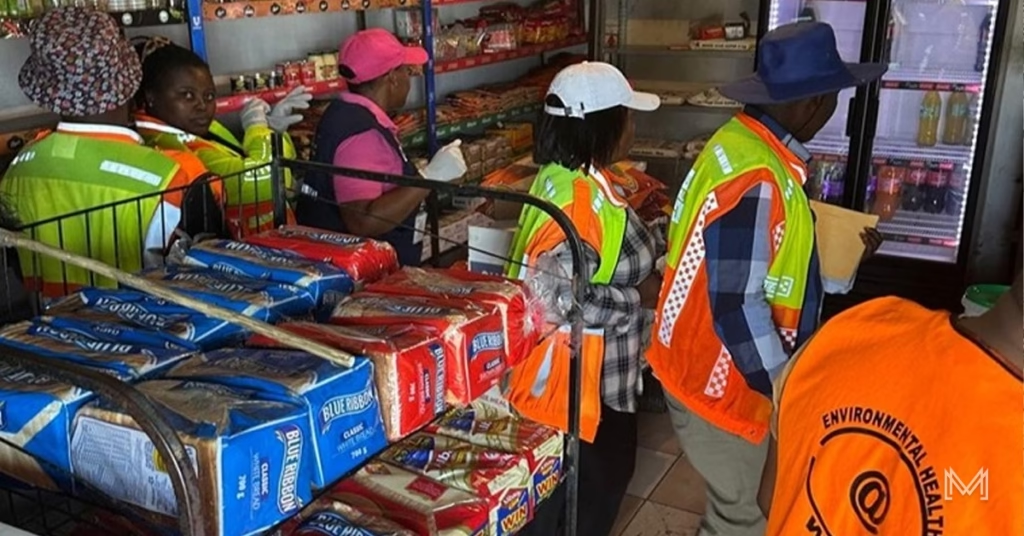
Consequently, you become a community hero when you provide these vital services to your neighbours. Moreover, the business model fits young entrepreneurs perfectly. It requires hard work, but the financial rewards are definitely worth the effort. People appreciate convenience, and they will gladly support a friendly local vendor.
Why You Should Run a Spaza Shop Today
Many people want to run a spaza shop to escape unemployment and become their own boss. As a result, you do not need a massive corporate budget to start this kind of enterprise. Besides, low startup costs make this venture highly accessible for beginners. Additionally, this local business keeps money flowing inside your own neighbourhood. You create jobs and support your family at the exact same time.
Also, you get to test different spaza shop ideas to see what your specific community likes most. For example, some owners add fast food options, while others sell fresh produce or offer internet services. You can adapt quickly to whatever your customers request. Flexibility stands out as the biggest advantage of informal trading.
Where and When to Run a Spaza Shop
Deciding where to run a spaza shop matters a lot for your daily sales. You must pick a spot with high foot traffic. Instead of renting expensive retail space, people usually set up inside their own yards, rent small shipping containers, or use busy street corners. Above all, location dictates your ultimate success. Therefore, observe where people walk when they return from work or school. Setting up near a taxi rank or a local school often brings excellent results.

In addition, knowing when to run a spaza shop involves looking at the economy and your personal readiness. The best time to start is right now. Of course, people always need food and basic household items, even during tough economic times. Meanwhile, open your doors early in the morning before people go to work. Similarly, close late in the evening to catch those coming back home. Consistency is extremely important for building trust.
How to Run a Spaza Shop: Step by Step
To truly run a spaza shop well, you must plan properly before buying any goods. To begin with, you need a clear roadmap for your business journey. You can easily find a spaza shop business plan pdf online to help structure your thoughts. A solid plan outlines your budget, your target market, and your daily operations. Writing things down prevents costly mistakes later.
Subsequently, you must secure some funding to buy your initial stock. If you do not have enough personal savings, look into local enterprise grants. You might need to fill out a spaza shop fund application form through a government agency or a small business fund. Make sure you read the instructions carefully before submitting your paperwork. Naturally, getting extra capital can help you buy a bigger container or better equipment.
Handling Legalities and Registrations
Nobody wants to face unexpected fines from local authorities. Therefore, you must learn about the spaza shop registration requirements in your specific municipality. As a result, you need a valid trading permit to operate legally and safely. Furthermore, health certificates are critical if you plan to sell prepared food or raw meat. By securing these documents, you protect your investment from being shut down.
Thankfully, the government has made the application process much easier over recent years. You can often complete your spaza shop registration online through government portals or banking partners. Securing your paperwork early protects your business from sudden closures. Therefore, always follow the local bylaws to maintain peace of mind. Operating legally also opens doors for future bank loans.
Choosing Stock and Managing Inventory
Your customers will keep returning if you always have what they need in stock. Because of this, creating a complete spaza shop items list is absolutely vital. Focus heavily on fast-moving consumer goods that sell every single day. Specifically, bread, maize meal, cooking oil, sugar, and tea should always remain on your shelves. For this reason, do not waste money on expensive luxury items at the beginning.
To keep things organised, download a spaza shop stock list pdf to track your inventory properly. This document helps you monitor what sells quickly and what sits on the shelf for too long. You should build strong relationships with local wholesalers to get the best possible prices. When you buy at lower prices, your profit margins naturally increase. Smart purchasing directly affects your business success.
Basic Store Inventory Guide
| Item Category | Description | Estimated Cost (ZAR) |
| Premises | Container rental or garage renovation | R2,000 – R7,000 |
| Equipment | Second-hand fridge and basic shelving | R3,500 – R6,000 |
| Initial Stock | Bread, milk, maize, canned goods, etc. | R5,000 – R10,000 |
| Registration | CIPC filing and local permits | R500 – R1,500 |
| Marketing | Signage and local flyers | R500 – R1,000 |
| Total | Estimated Minimum Starting Capital | R11,500 – R25,500 |
Financials: Profit Expectations
New entrepreneurs always ask about the potential profits in this industry. So, how much does a spaza shop make a month? The answer depends entirely on your location, inventory size, and customer service quality. A small container shop might make a modest profit of R4,000 to R8,000 monthly. In contrast, a well-stocked store in a busy area can easily clear R15,000 to R30,000 or more in pure profit.
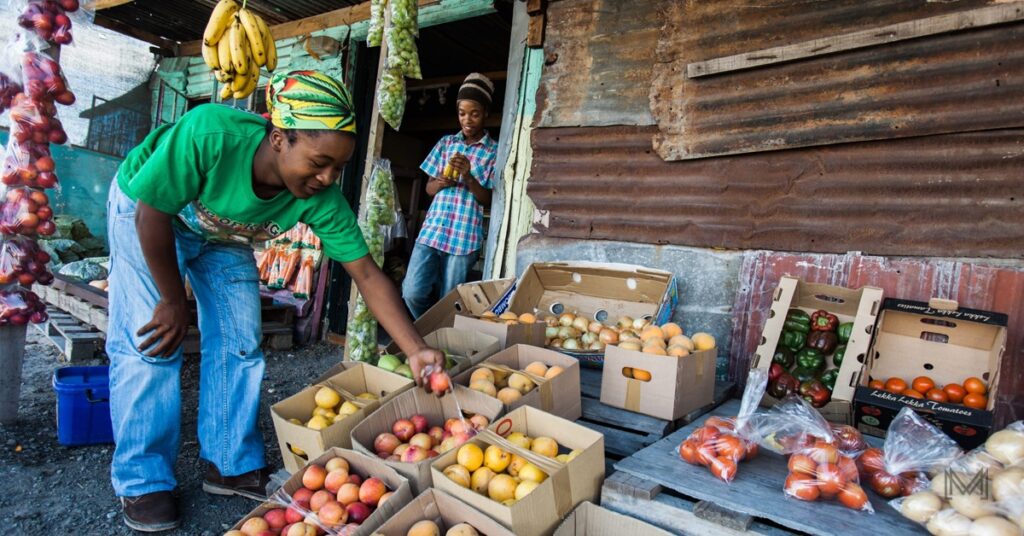
Ultimately, you must manage your money wisely to reach these higher numbers. In short, keeping personal and business money completely separate guarantees your financial survival. Never eat your own profits without paying the business back. Reinvesting your earnings allows you to expand your product range over time.
Daily Operations When You Run a Spaza Shop
When you run a spaza shop, customer service becomes your best tool for long-term growth. Treat every single shopper with absolute respect and kindness. Friendly service encourages positive word-of-mouth marketing within the community. If customers feel valued, they will naturally choose your store over a competitor. Greeting people by their names creates a strong sense of loyalty.
A spaza shop is more than just an informal convenience store; it is the true heartbeat of the South African economy.
You can run a spaza shop efficiently by tracking your cash flow every single day. Write down every single sale and every single expense in a notebook. This daily habit helps you spot missing stock or cash shortages early. Additionally, keeping the shop sparkling clean attracts more foot traffic. Nobody wants to buy food from a dirty counter. Make sure your shelves are neat and your prices are clearly visible to everyone.
Conclusion: Your Time to Run a Spaza Shop
To summarise, starting this entrepreneurial journey takes immense courage, but the payout goes beyond just making money. It is deeply rewarding to run a spaza shop in your community and watch it flourish. You provide essential goods, create local jobs, and become a trusted community figure. Overcoming the initial challenges builds strong character and sharp business skills.
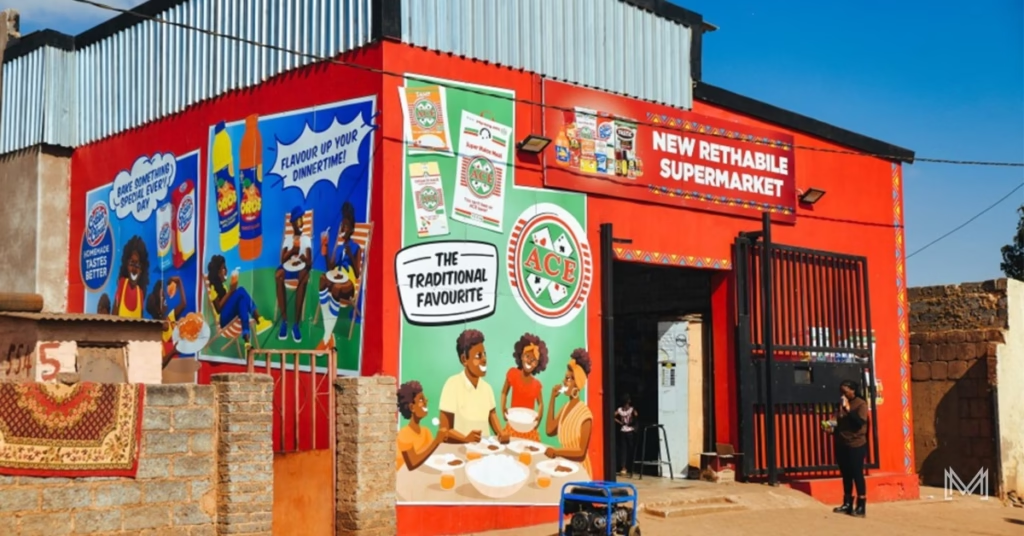
Follow the correct legal steps, choose the right location, and serve your customers well. Always keep your shelves stocked with the daily items people desperately need. Get out there and build your retail business with pride!
FAQs About the Challenges with Somalis Taking Over Spaza Shops
What is a spaza shop?
A spaza shop is an informal convenience store operating within residential areas to provide daily essentials.
How much profit can a spaza shop make in a month?
Depending on location and customer traffic, a spaza shop can make anywhere from a modest R4,000 up to R30,000 or more in pure monthly profit.
What are the best items to sell in my spaza shop?
You should focus on stocking fast-moving consumer goods that people need every single day, such as bread, maize meal, cooking oil, sugar, and airtime.
Do I need legal documents to operate a spaza shop?
Yes, you must obtain a valid trading permit and the necessary health certificates from your local municipality to operate legally and avoid sudden closures.
How can I get funding to start my business?
If you do not have enough personal savings, you can apply for financial assistance by submitting a spaza shop fund application form through government agencies or small business funds.
The post How To Run a Spaza Shop Business in South Africa first appeared on Mzansi Magazine.
]]>The post Why a Website Is Essential to Start an Online Business in South Africa first appeared on Mzansi Magazine.
]]>The dream of being your own boss is more alive than ever in our beautiful country. Many young entrepreneurs are looking for ways to escape the nine-to-five grind. They want to build something for themselves. Fortunately, the digital world has opened doors that were once locked. You don’t need a massive physical shop or a million rands to get going. Yet, there is a big debate happening in the streets and on social media. People wonder if they really need a website or if a Facebook page is enough to start an online business. While social media is a great tool, having your own website is the real game-changer for any serious entrepreneur.
Many people ask about the e commerce meaning when they first think about digital trade. Simply put, what is ecommerce? It is the buying and selling of goods or services using the internet. When you start an online business, you enter a space where geography matters less. Your brand’s image matters more. Some people call it a side hustle, while others see it as a full-time career.

No matter how you define e commerce, the main idea is consistent. You use digital tools to reach customers who want what you offer. This is anything from selling handmade leather bags to offering digital marketing services.
Understanding the Foundations of Digital Trade
Before we dive into the “why”, we must understand what is e-commerce in the local context. In our market, an ecommerce business in South Africa faces unique challenges like high data costs and logistics issues. Despite these, the industry is booming. More South Africans are getting comfortable with tapping their cards on their phones. If you want to start an online business, you must realise one key thing. A website serves as your permanent address in the digital world. Think of it like owning a building versus renting a stall at a weekend market. The stall is good for quick sales, but the building is where you build a legacy.
When you look for e commerce business ideas, you see people selling on Instagram or WhatsApp. This is a common way to start an online business because it feels easy. But, what happens if that platform changes its rules? What if they decide to charge you more for every post? If you only have a social media page, you don’t actually own your customer list. You are just a guest on someone else’s platform. Having a dedicated website means you own the space. You control the experience from the moment a customer lands on your page until they checkout.
Why a Website Beats Social Media Every Time
When you start an online business, credibility is your most valuable currency. In South Africa, scams are unfortunately common, so customers are very careful. A professional website tells the world that you are a legitimate entity. It shows that you have invested time and money into your brand. Most people will search for a business on Google before they spend their hard-earned money. If they can’t find a website, they will think you are just a “fly-by-night” operation. A website allows you to display your reviews. It also lets you show your contact details and your story. This is done in a way that builds deep trust.

Furthermore, a website gives you the power of search engine optimisation (SEO). This sounds like a big word, but it just means making sure people find you on Google. If someone types in online business ideas, your website can show up in the results. Your website can also if they look for a specific product. Social media pages are very hard to find through a standard search. Hence, if you want to start an online business, be where people are searching. This strategy helps your business grow consistently. You want to attract the person who is ready to buy. You don’t want just the person scrolling through photos of their friends’ lunch.
| Platform | Best For | Ease of Use | Cost Factor |
| Shopify | Dedicated e-commerce | Very High | Monthly fee |
| WooCommerce | WordPress users | Medium | Low (Host cost) |
| Wix | Beginners | High | Monthly fee |
| Custom Site | Large scale needs | Low | High upfront |
How to Start an Ecommerce Business with the Right Tools
You are wondering how to start an ecommerce business without spending a fortune. Many people think they need a developer who charges fifty thousand rand. That is a myth. Today, tools like Shopify make it incredibly easy for anyone to set up a shop. A Shopify store is basically a “business in a box.” You can pick a template, upload your products, and start selling. Using a store Shopify setup is often better than building something from scratch. They handle the security and the payment systems for you. This allows you to focus on selling while the tech works in the background.
If you are looking for how to start an ecommerce business, your first step should be picking a domain name. This is your address, like www.yourbrand.co.za. In South Africa, having a .co.za domain is very important. It tells local customers that you are based here, and it helps with local search results. After you have a domain, you need a platform. While there are many ecommerce for business platforms, Shopify remains a favourite because it is user-friendly for beginners. It helps you manage your inventory and even tracks your shipping, which is vital when you start an online business.
Business Ideas for the Digital Age
Let’s talk about online biz ideas that actually work in Mzansi. You don’t always have to invent something brand new. Sometimes, the best e commerce business for sale or to start is one that solves a local problem. Maybe you want to sell traditional attire to people living overseas. You have online business ideas related to tutoring or consulting. The beauty of an e-commerce business is that you can sell both physical goods and digital services. Some of the most successful e commerce businesses in our country started small, focusing on one specific niche before expanding.
Moreover, if you are looking for business internet ideas that don’t need much stock, consider dropshipping. This is a popular way to start an online business. You sell products, and a supplier ships them directly to the customer. You don’t have to keep boxes in your garage. Another choice is looking into business ideas on the internet, like digital downloads. You sell meal plans, budget templates, or even knitting patterns. These online business ideas are great because you only create the product once. Still, you can sell it a thousand times.
Overcoming the Money Barrier
A big question that pops up is how to start a ecommerce business without money. While you will eventually need cash for a domain, you can start very lean. You can use free trials on platforms to build your site. You can also look for online business ideas that focus on services rather than physical products. For example, if you are a good writer, you can start an online business. Start by creating a portfolio website. This requires time and skill more than it requires a large bank balance.
You may want to know how to start an online business from home. You must treat it like a real company. This means keeping track of your expenses and your income. Many people fail because they treat their ecommerce business like a hobby. If you want it to pay you like a job, you must treat it like a job. This includes setting aside time every day to work on your website, update your products, and talk to your customers. In South Africa, the “hustle culture” is strong, but the “structure culture” is what actually builds wealth.
Who Is This For and When Should You Start?
This journey is for the dreamer, the student, the stay-at-home parent, and the employee who wants more. It is for anyone who has a business idea for online success. You don’t need a degree in computer science to start an online business. You just need the willingness to learn. The best time to start was yesterday, but the second-best time is today. Don’t wait for the “perfect” moment because it doesn’t exist. Technology is moving fast, and the longer you wait, the more competitors will occupy the space you want.

Where should you launch? Everywhere! That is the magic of the internet. Even if you are sitting in a small room, your website can be seen by someone in a different province. It can even be seen in a different country. When you start an online business, you are removing the physical walls of your shop. Your “where” is the entire World Wide Web. Still, always remember to focus on your local market first. South Africans love to support local brands that understand their culture and their needs. Use your website to tell your story in a way that resonates with the people of Mzansi.
The Importance of Mobile-First Design
In our country, most people access the internet through their cellphones. This is a crucial point when you start an online business. Your website must look beautiful and work perfectly on a mobile screen. If a customer struggles to click a button, they will leave your site instantly. If the text is too small, they will also leave your site right away. Data is expensive, and nobody wants to waste it on a slow website. So, choose a platform that is optimised for mobile. This will make sure that someone in a taxi can browse your shop with ease. They can also do so while sitting at home.
When we discuss what e-commerce is, we must also discuss the user experience. A website enables you to create a “vibe” for your brand. You can use colours, fonts, and images that make people feel a certain way. This is much harder to do on a social media page where everything looks the same. To start an online business that stands out, you need that unique touch. You want people to remember your name. You want them to bookmark your site and come back again next month.
Managing Logistics and Payments
One of the biggest hurdles for an e-commerce business in Mzansi is getting the goods to the customer. Luckily, we have many local courier services that integrate directly with websites. When you start an online business, you can set up your site to calculate shipping costs automatically. This saves you from the headache of manual quotes. Similarly, payment gateways like PayFast or Yoco allow you to accept credit cards and instant EFT securely. This gives your customers peace of mind, knowing their financial details are safe.
Let’s look at some e commerce examples in our local market. We have giants like Takealot, but we also have thousands of successful small boutiques. These smaller e commerce businesses succeed because they offer something unique. They give a personal touch that big corporations can’t match. When you start an online business, use your “smallness” as an advantage. Be the brand that writes a handwritten thank-you note or offers personalised advice. These small things, joined with a professional website, create loyal customers for life.
Scalability and Long-Term Growth
A website is not just for today; it is for the future of your e-commerce business. As you grow, you can add more features. You can start a blog to share your skill, or you can create a loyalty programme for your best customers. If you start an online business on a platform like Shopify, adding apps for marketing and automation is easy. This means your business can scale from selling five items a week to five hundred items a week. You don’t have to rebuild everything from scratch.

In conclusion, the digital landscape in South Africa is full of opportunity. If you have business ideas for online ventures, a dedicated website is the best way to protect those ideas. It is also the best way to grow them. While social media is a great way to meet people, your website is where you do business. It provides the ownership, credibility, and tools you need to succeed in the long run. So, take that step. Research how to start an ecommerce business, pick a domain, and build your digital home. Starting an online business is a bold move. Yet, with the right website, it can change your life forever. Your future empire is just a few clicks away, so let’s get Mzansi working! Shopify,
FAQ’s about Start an Online Business
What is e-commerce?
E-commerce is the entire ecosystem of buying and selling products or services over the internet.
Why is a website crucial for an online business in South Africa?
A website acts as your virtual shopfront, giving you complete control over your brand, building credibility, and attracting valuable search engine traffic.
Can I start an online business with limited funds in Mzansi?
Yes, starting lean is possible by using models like dropshipping or selling digital products to keep initial costs low.
What are the most important features for a successful e-commerce website?
Essential features include mobile-friendliness, fast load speeds, clear product descriptions, high-quality images, and secure payment gateways.
When is the right time to launch my online business venture?
The right time to start your online business is always now, as delaying means missing out on potential customers and market presence.
The post Why a Website Is Essential to Start an Online Business in South Africa first appeared on Mzansi Magazine.
]]>The post How to Start an Aluminium Doors and Windows Manufacturing Business in South Africa first appeared on Mzansi Magazine.
]]>South Africa’s construction and infrastructure sectors continue to evolve. This change is driven by urbanisation and residential development. There is also a growing appetite for modern, energy-efficient building materials. Among these, aluminium doors and windows have surged in popularity thanks to their sleek aesthetics, durability, and low maintenance. For young entrepreneurs eyeing a high-demand, scalable venture, launching an aluminium doors and windows manufacturing business presents a compelling opportunity. This article explores how to enter this dynamic market. It offers insights grounded in South African realities and practical guidance.
Why Aluminium Doors and Windows Are in Demand
Aluminium has quietly become the material of choice across South Africa’s residential and commercial construction scenes. Unlike traditional wooden windows or heavier steel alternatives, aluminium offers a rare balance. It combines strength, lightness, resistance to rust, and design flexibility. Whether in Johannesburg high-rises, Durban coastal apartments, or Pretoria suburban homes, demand for modern aluminium fenestration systems is rising sharply.
Market reports confirm this trajectory. The South African aluminium doors and windows market is projected to grow steadily through 2029. A notable uptick is expected in 2028. This growth is fuelled not only by new builds. Renovations also contribute as homeowners increasingly replace older wooden door manufacturers’ products. They are choosing to switch worn-out frames with sleek, contemporary aluminium alternatives. In cities like Gauteng and Pretoria, modern architecture dominates. Demand for custom solutions from local aluminium door and window manufacturers remains robust.
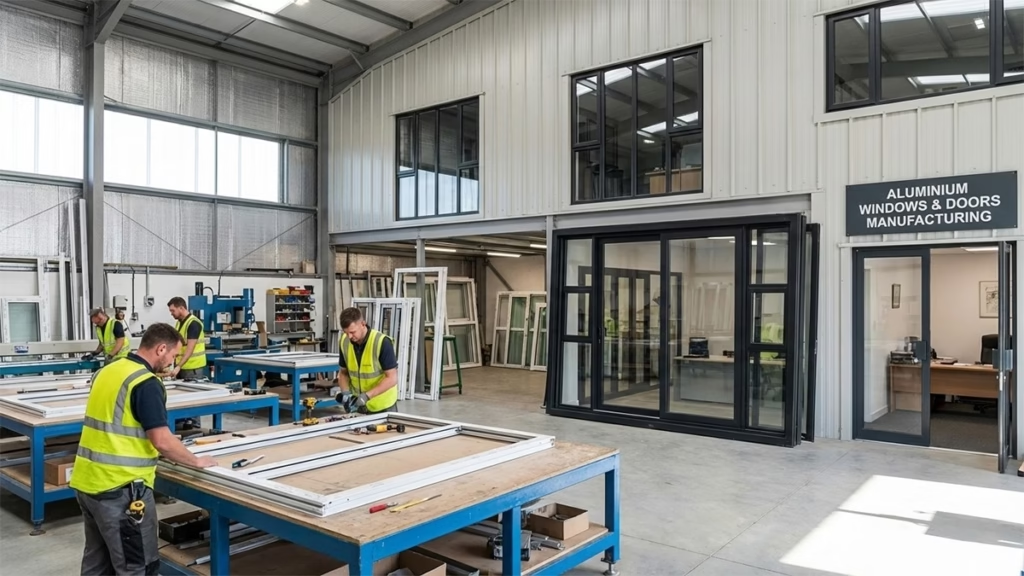
The versatility of aluminium window colours in South Africa is impressive. They range from classic white and bronze to modern matte black, silver, and even wood-effect finishes. This makes them adaptable to any design vision. This aesthetic flexibility is noteworthy. Aluminium also offers superior thermal and acoustic performance. These features position aluminium as a long-term investment for both builders and end-users.
How Much Are Aluminium Doors and Windows?
Before diving into fabrication, it’s essential to grasp the financial landscape. For potential buyers across the country, common questions include: “How much are aluminium windows?” or “What are the aluminium window Durban prices like?” The truth is, pricing varies widely based on size, finish, glazing type, and hardware quality.
Standard units like a 600×600 mm sliding window can start from R1,000 to R2,000. Larger configurations like 1800×1200 mm may range from R3,000 to R5,000. In Durban, where coastal corrosion resistance is a priority, cheap aluminium window Durban options exist. But, they often compromise on quality. Discerning buyers increasingly seek value over mere cost-cutting.
For manufacturers, this price spectrum means opportunity. You can position your brand in the budget segment by offering cheap aluminium window prices for cost-conscious clients. Alternatively, focus on premium, thermally broken systems with high-end handles and double glazing. Either way, transparency in your South Africa windows price list and South Africa doors price list builds trust and competitiveness.
Windows manufacturing isn’t just about cutting metal. It’s about precision engineering and weatherproofing.
Notably, installation typically adds R1,900 to R3,100 per unit, which many manufacturers bundle into their service a smart upsell strategy. Understanding these nuances helps you price accurately, manage client expectations, and maximise margins.
Navigating the Manufacturing Process
So, how are aluminium doors and windows actually made? The aluminium door and window manufacturing process starts with extrusion. This involves shaping raw aluminium billets into profiles like frames, mullions, and sashes. These are then cut, machined (for drainage slots, locking mechanisms, etc.), assembled with gaskets and glass, and finished with powder coating or anodising.
Many entrepreneurs mistakenly assume this requires massive upfront investment. Large-scale extrusion plants are capital-intensive. Yet, small to medium manufacturers can source pre-extruded profiles from suppliers like WISpeco or Alulux. They then focus on fabrication, assembly, and installation. This drastically lowers entry barriers.
Individuals interested in deeper technical insights can access several aluminium door and window manufacturing process PDF resources. These resources are available through industry bodies and training institutions. These guides detail tolerances, sealing techniques, and hardware compatibility critical knowledge for ensuring quality and safety compliance.
Remember: Windows manufacturing isn’t just about cutting metal. It’s about precision engineering and weatherproofing. It involves understanding how each part interacts under South African climate conditions. These range from the dry Highveld winters to the humid KwaZulu-Natal summers.
Training and Skill Development: Your First Investment
You don’t need a degree to enter this field but you do need hands-on skills. Fortunately, South Africa offers several aluminium window and door manufacturing training programmes tailored for newcomers. Institutions like the WISpeco Institute offer practical courses. Private academies for example AluCrimp Solutions give training in measuring and cutting. They also cover glazing and installation.
A typical aluminium window cost for a client reflects craftsmanship as much as materials. Thus, your team’s ability to fabricate accurately and install seamlessly directly impacts your reputation. Training courses some as short as one day, others spanning 10 days equip you with skills in:
- Reading architectural drawings
- Operating CNC machines and mitre saws
- Understanding thermal breaks and weep holes
- Troubleshooting common installation errors
These competencies not only improve product quality but also reduce waste and rework major cost drains for fledgling businesses. Plus, certified training adds credibility when pitching to contractors or property developers.

If you’re based in Gauteng, Pretoria, or Durban, you’ll find training providers within easy reach. Some even offer post-course mentorship or access to supplier networks a valuable bonus for new entrepreneurs.
Setting Up Your Operation: From Garage to Factory
Starting small is not only acceptable it’s strategic. Many successful aluminium door and window manufacturers in South Africa began in garages or backyard workshops. Your first setup might include:
- A double mitre saw
- A corner crimping or screwing machine
- A glass-cutting table (or partnership with a glazier)
- Basic hand tools and measuring equipment
As demand grows, you can scale into a dedicated workshop with CNC machinery, powder coating lines, and a showroom. Location matters: being near construction hotspots in Johannesburg, Pretoria, or Durban reduces logistics costs and improves response times.
Legal formalities are straightforward but essential. First, register your business as a Pty Ltd. Next, obtain a trade licence from your municipality. Finally, make sure compliance with SANS 10160 (loading standards) and SANS 204 (energy efficiency). While not all clients ask for certifications, possessing them positions you as a professional player. It sets you apart among door suppliers and door manufacturers in South Africa.
Also, consider branding early. There are many South Africa doors catalogue and South Africa windows catalogue options online. Standing out requires a clear identity. This could be achieved through unique finishes, faster turnaround, or eco-friendly practices.
Sourcing Materials and Managing Costs
Your biggest recurring expense will be raw materials primarily aluminium profiles and glass. Fortunately, South Africa has a well-developed supply chain. Major extruders run locally, and distributors in Gauteng and Cape Town offer next-day delivery on standard profiles.
To manage cash flow, avoid holding excessive stock. Instead, use client deposits to buy materials per job, a common practice that minimises risk. Also, negotiate volume discounts once you’re consistently ordering. Powder coating colours (from aluminium window colours in South African palettes) can be standardised to reduce lead times and costs.
When clients ask, “How much are aluminium windows?” Your quote should show not just materials but also labour, transport, and overhead. Transparent itemisation builds trust and justifies your pricing. This is crucial when competing against providers of cheap aluminium windows in Durban who may cut corners.
Marketing Your Business in a Crowded Market
With many aluminium door and window manufacturers in Gauteng and aluminium door and window manufacturers in Pretoria, differentiation is key. Don’t just sell windows sell peace of mind, energy savings, and modern design.
Use digital platforms effectively. Create before-and-after galleries on Instagram. List your South Africa door catalogue on Google Business. Offer free on-site quotes. Partner with architects, builders, and renovation influencers who can refer clients.
Whether in Johannesburg high-rises, Durban coastal apartments, or Pretoria suburban homes, demand for modern aluminium fenestration systems is rising sharply.
Also, consider niche markets. For example, the growing interest in wooden window frames has opened demand for wood-look aluminium. It’s a premium product you can manufacture with special powder coatings. Similarly, security-conscious homeowners seek reinforced systems, while eco-builders want thermally efficient frames.
Your window manufacturing brand should echo reliability. Offer warranties. Showcase testimonials. Keep a clean, professional website. Take inspiration from Mzansi Magazine’s emphasis on polished, user-friendly design in business communications.
Job Creation and Industry Contribution
Beyond profit, your venture can fuel local employment. The sector already supports thousands through aluminium doors and windows job vacancies in manufacturing, installation, sales, and logistics. As a young entrepreneur, hiring and training apprentices not only builds your team. It also invests in community upliftment. This is a narrative that resonates with South African values.
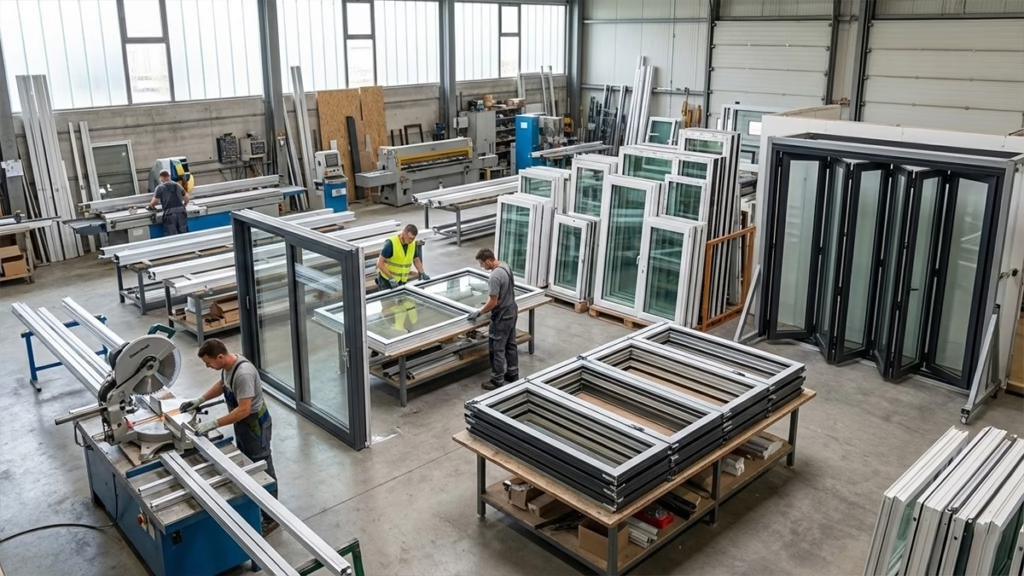
Moreover, local window manufacturing reduces reliance on imports. It keeps money circulating domestically. It also supports the broader metal fabrication ecosystem from tool suppliers to logistics firms.
Final Thoughts: A Future Built in Aluminium
Starting an aluminium doors and windows manufacturing business in South Africa is more than a commercial decision. It’s a stake in the nation’s built environment. With urban growth accelerating and sustainability becoming non-negotiable, aluminium fenestration is set to dominate for decades.
Whether you’re in Durban offering cheap aluminium windows Durban residents can trust, your role is vital. Alternatively, if you’re in Pretoria crafting high-end systems for executive homes, your role is equally important. Master the technical side, price fairly, train continuously, and market authentically. And always remember: window manufacturing isn’t just about frames and glass it’s about framing views, securing homes, and building legacies.
So, are you ready to cut, crimp, and construct your future in aluminium? The market’s open and South Africa’s skyline is waiting for your contribution.
FAQ’s Aluminium Doors and Windows Manufacturing
What is the estimated minimum startup cost for an aluminium windows manufacturing business?
You can achieve a lean start by focusing on core tools and starting stock. The estimated total startup cost ranges from R40,000 to R130,000. This range depends heavily on the quality and quantity of beginning machinery and materials you purchase.
Do I need to build my own extrusion plant to start manufacturing?
No, many small to medium manufacturers successfully start by sourcing pre-extruded aluminium profiles from local suppliers. This approach drastically lowers the high capital investment required for operating a full extrusion plant.
Where can I get training for aluminium window and door manufacturing in South Africa?
Several institutions, like the WISpeco Institute and private academies, offer practical courses tailored for newcomers. These programmes cover essential skills like measuring, cutting, glazing, and installation techniques.
How can I make my aluminium manufacturing business stand out in a competitive market?
You need to differentiate by offering clear value. For example, give faster turnaround times. Offer unique, high-end finishes like wood-look powder coatings. Also, make sure you market authentically and showcase testimonials to build a reliable brand reputation.
What are the essential legal steps for setting up my operation?
You must register your business. It is typically registered as a Pty Ltd. Then, obtain the necessary trade licence from your local municipality. It is also crucial to make sure compliance with South African National Standards (SANS) for safety and energy efficiency.
The post How to Start an Aluminium Doors and Windows Manufacturing Business in South Africa first appeared on Mzansi Magazine.
]]>The post How Does Digital Marketing Help Startups Grow? first appeared on Mzansi Magazine.
]]>In the dynamic and often unforgiving world of entrepreneurship, the environment is challenging. This is especially true here in South Africa. The difference between survival and success can come down to one core discipline: visibility. And in today’s digital-first economy, that visibility hinges on one indispensable strategy: digital marketing.
Young founders are bootstrapping their way through post-pandemic recovery complexities. They face load-shedding realities and a highly competitive informal sector. For them, digital marketing is not just a nice-to-have. It is the lifeline that connects a brilliant idea with real paying customers. What exactly is digital marketing? How does it fuel startup growth in ways traditional advertising can’t match anymore?
What Is Digital Marketing, Really?
Many new entrepreneurs ask themselves, what is digital marketing, and how does it differ from the traditional ways? Fundamentally, digital marketing is the promotion of products or services using electronic devices or the internet. It encompasses all marketing efforts that use an electronic device or the internet. Businesses use digital channels to connect with current customers. They connect with prospective customers through search engines, social media, email, and their own websites. It’s a dynamic, interactive, and data-driven approach, a stark contrast to the static, one-way messaging of old-school advertising.
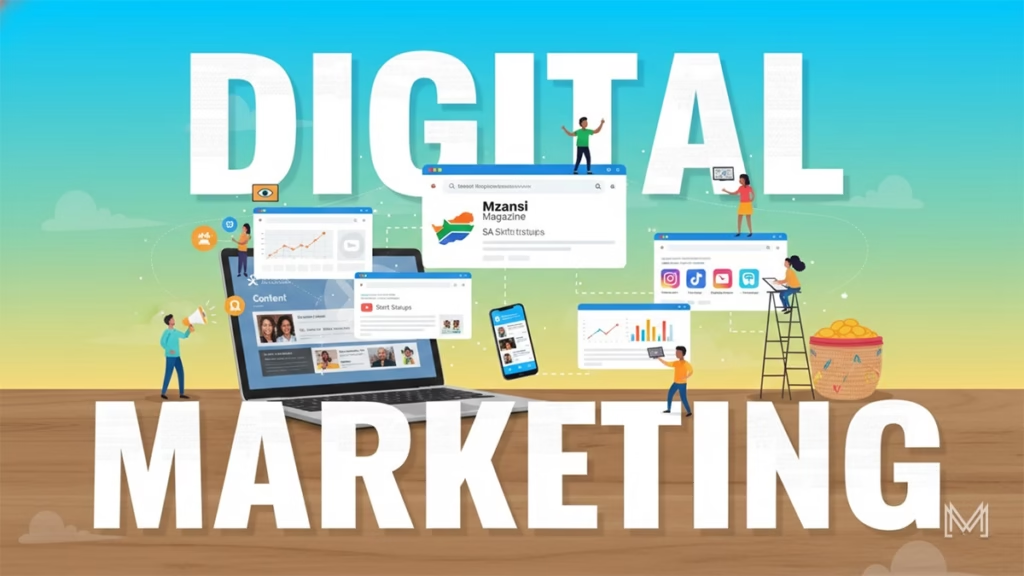
In South Africa, this digital shift is paramount. E-commerce sales hit R71 billion in 2023, and internet penetration is surging past the 70% mark. This means that a significant, and growing, part of your potential customers lives, works, and shops online. Startups that ignore this massive digital migration miss out on their primary avenue for growth. Effectively implementing this modern form of marketing will decide which small businesses scale and which unfortunately fade away.
Digital Marketing as a Startup Accelerator
For startups, especially those operating on a shoestring budget, digital marketing offers compelling advantages that traditional techniques simply can’t match. It’s not just about visibility; it’s about smart, targeted engagement that drives tangible business results.
Achieving Hyper-Targeted Exposure
One of the most potent weapons in the digital marketing arsenal is the ability to target very specific audience segments. Unlike traditional advertising, which broadcasts to a general audience, digital platforms enable businesses to precisely target their ideal customer. They do this based on demographics, location, interests, and even online behaviour, like focusing on a specific Mzansi suburb. This level of precision ensures that marketing spend reaches the people most likely to buy your product or service.
Digital marketing is the great equaliser. It doesn’t care if you work from a garage in Vereeniging. What matters is that you show up with relevance and resilience.
This means less money wasted and a significantly higher return on investment. Furthermore, even small enterprises can reach a wider audience than ever. They can extend their reach far beyond their local shopfront or first network.
Digital Marketing Provides Unparalleled Measurability
Imagine running a newspaper ad and trying to figure out exactly how many sales it generated. It’s practically impossible. Conversely, almost every element of a digital marketing campaign is measurable. You can track clicks, impressions, engagement rates, and, crucially, conversion rates down to the exact cent. This immediate and granular feedback loop empowers startups to move away from guesswork. Entrepreneurs can quickly recognize strategies that work, double down on them, and swiftly abandon those that don’t. This ability to measure, analyse, and iterate is essential. It is crucial for new ventures to be lean. It also helps them stay agile in their early stages.
Cost-Effective Scaling and Affordability
Startups often find themselves constrained by capital. Traditional media have steep entry barriers. In contrast, many forms of digital marketing have low beginning costs. These include organic social media, content marketing, and Search Engine Optimisation (SEO). A young business can start with minimal investment. They can use free tools and platforms. The spend can be scaled up as revenue grows. This pay-as-you-grow model makes sophisticated marketing tactics accessible to everyone, from the township entrepreneur to the Sandton tech founder. This democratisation of advertising power is vital for a developing economy like South Africa, fostering innovation across all sectors.
Knowing Your Customer: The Power of Personas in Digital Strategy
Here’s where many startups stumble: they blast generic messages into the void, hoping something sticks. But digital marketing only works when it’s personal. That’s why defining your buyer persona, the semi-fictional representation of your ideal customer, is non-negotiable.
Ask yourself: Who are they? What keeps them up at night? Do they check TikTok during load-shedding or scroll LinkedIn while waiting for minibus taxis? Understanding these nuances shapes everything from the tone of your WhatsApp campaign to the visuals on your Shopify store.
For instance, what are digital marketers in Durban doing differently for youth-focused brands? They’re using short-form video, influencer tie-ins, and UGC (user-generated content) because that’s where their audience lives. Meanwhile, B2B startups in Johannesburg focus on LinkedIn thought leadership and email nurture sequences. The channel mix depends entirely on who you’re trying to reach.

And here’s the kicker: when you align your digital marketing with real human behaviours, conversion rates soar. Studies show personalised digital campaigns can lift engagement by up to 200%. In a market as diverse as South Africa, there are 11 official languages. It also has varied cultural contexts. This level of customisation isn’t optional. It’s strategic.
Core Strategies: The Types of Digital Marketing Your Startup Needs
Mastering digital marketing means understanding its various interconnected channels. Aspiring digital marketers and founders should familiarise themselves with these core areas to build a robust online presence.
1. Search Engine Optimisation (SEO)
SEO involves optimising your website to rank higher in search engine results (like Google) for relevant keywords. For a startup, this is a long-term play, but its returns are massive. You want your coffee shop to be at the top. This happens when a potential customer searches for “best affordable coffee Cape Town.” You aim to attract highly qualified traffic. These are people actively looking for what you offer. Focusing on long-tail keywords, such as those with three or more words, is a great early strategy for new businesses. This approach helps them compete with bigger brands.
2. Content Marketing
Content is the fuel for your digital marketing engine. This involves creating and sharing valuable content. It should be relevant and consistent. Examples include blogs, videos, guides, and infographics. These efforts attract and keep a clearly defined audience. This strategy helps position the startup as a trustworthy authority in its field. For example, a South African fintech startup might publish articles on “Budgeting tips for young Mzansi professionals”. Good content organically drives traffic and leads.
3. Social Media Marketing (SMM)
South Africans are heavily engaged on platforms like TikTok, Instagram, and Facebook. Social media marketing is all about leveraging these platforms to build brand awareness, engage with customers, and drive sales. For many startups, SMM is the primary battleground. It allows for two-way communication, humanising the brand and fostering a loyal community. Successful examples include witty, timely campaigns from brands like Nando’s. They show the power of authentic social engagement in the Mzansi market.
4. Pay-Per-Click (PPC) Advertising
PPC is an incredibly useful tool for immediate results. Platforms like Google Ads or Meta Ads (Facebook/Instagram) enable businesses to place ads. These platforms charge only when a user clicks on the ads. This is often the quickest way for a new venture to test market demand. It can drive traffic to a newly launched digital marketing website. It also helps generate first sales. You have precise control over your budget and can switch off campaigns that underperform instantly.
Social Media: More Than Just Posting Pretty Pictures
Let’s be honest: many entrepreneurs treat social media as a gallery, not a growth engine. They post product shots, tag friends, and wonder why sales don’t follow. But digital marketing on social platforms thrives on conversation, community, and consistency.
Take TikTok, for example. In South Africa, it’s not just for dances anymore. TikTok has become a launchpad for authentic brand storytelling. Township food vendors showcase bunny chow recipes. Tech founders break down AI in Zulu. The algorithm rewards relatability over polish, which levels the playing field for startups without big production budgets.
Similarly, WhatsApp Business, a tool often overlooked, is a digital marketing powerhouse in our context. With over 27 million WhatsApp users in South Africa, it’s the perfect channel for order confirmations. It’s also ideal for flash sale alerts and customer support. One Durban-based fashion startup grew its monthly revenue by 300% just by moving its client communication from email to WhatsApp.
The key? Be where your customers are and engage; don’t just broadcast.
Upskilling: Why Digital Marketing Courses Are Non-Negotiable
Many founders hesitate because they “don’t know tech”. But here’s the truth: you don’t need to code to master digital marketing. What you do need is curiosity and a willingness to learn.
Fortunately, South Africa offers a wealth of accessible education. There are short courses in digital marketing at institutions like Red & Yellow Creative School of Business. Additionally, free digital marketing courses are available on Google Digital Skills for Africa. As a result, the barrier to entry has never been lower. These digital marketing courses cover everything from SEO, paid ads, and analytics. They also include content strategy. Often, they feature local case studies relevant to our market.
And yes, investing in a course for online marketing pays off. A founder who understands how to read a Facebook Ads dashboard or interpret Google Analytics can make smarter decisions. They can avoid costly agency markups. They can also pivot quickly when campaigns underperform.
If you’re eyeing digital marketing jobs, it helps to know what digital marketing is all about. This knowledge is beneficial if you are planning to hire. It helps you vet talent. The average digital marketing salary in South Africa ranges from R18,000 to R45,000 monthly, depending on experience. But, if you’ve done your homework, you’ll spot overpriced or underqualified candidates faster.
Measuring What Matters: Data Over Guesswork
One of the most liberating aspects of digital marketing? You don’t have to guess if it’s working. Every click, view, share, and purchase can be tracked.

For startups, this means agility. If an Instagram ad targeting students in Grahamstown yields a 5% conversion rate, you shift budget instantly. But, if the same ad in Bloemfontein gets zero, adjustments are necessary. In traditional marketing, that insight might take months and cost thousands to uncover.
Free tools like Google Analytics, Meta Business Suite, and Mailchimp’s reporting dashboards turn raw data into actionable insights. Which blog post drives the most sign-ups? What time of day do your emails get opened? These small tweaks, iterated over time, compound into significant growth.
And in a resource-constrained environment like ours, efficiency isn’t just smart; it’s survival.
Real Examples: Digital Marketing That Works in Mzansi
Let’s ground this in reality. Consider Yoco, the Cape Town-based fintech startup. They didn’t rely on billboards. Instead, they used digital marketing targeted LinkedIn ads for small business owners. They also created SEO-optimised guides on “how to accept card payments”. Additionally, they shared Instagram stories showing real street vendors using their card machines. The result? Over 200,000 merchants were onboarded, many in townships and rural areas.
Or look at Faith’s Kitchen, a home-based food business in Khayelitsha. She posted consistent TikTok videos of her cooking amagwinya. She included voiceovers in Xhosa. This strategy built a local fanbase that turned into delivery orders across the Cape Flats. No fancy website, just strategic, culturally rooted digital marketing.
These aren’t anomalies. They’re blueprints.
Overcoming Common Pitfalls
Of course, digital marketing isn’t foolproof. Many startups fall into traps: chasing vanity metrics (likes over leads), spreading too thin across platforms, or ignoring mobile optimisation. Remember, over 95% of internet users in South Africa access the web via phone. If your site takes 10 seconds to load on MTN data, you’ve already lost.
Also, don’t underestimate the power of consistency. Posting once a month won’t cut it. Digital marketing rewards regularity, whether it’s weekly newsletters, bi-weekly YouTube tutorials, or daily customer responses on Facebook.
For them, digital marketing is not just a nice-to-have. It is the lifeline that connects a brilliant idea with real paying customers.
And please, avoid “spray and pray” ad spending. Start small. Test one audience, one message, one platform. Learn. Then scale.
The Future Is Digital and Local
As AI, voice search, and augmented reality reshape the landscape, digital marketing will only grow more sophisticated. But the fundamentals persist: know your customer, deliver value, measure results, and adapt fast.
For South African startups, the opportunity has never been greater. Internet access is rising. There is a young digitally native population. Global platforms are available at local prices. Digital marketing is the great equaliser. It doesn’t care if you work from a garage in Vereeniging. It doesn’t matter if your workplace is a co-working space in Rosebank. What matters is that you show up with relevance and resilience.
Final Thoughts: Start Now, Learn as You Go
For the Mzansi entrepreneur, adopting digital marketing is no longer optional; it is a fundamental mandate for growth. It provides an effective way to cut through the noise. It is also measurable and accessible. This helps you connect directly with your target market and build a lasting brand. Start with a solid plan. Educate yourself through an accredited digital marketing course. Commit to the ongoing process of testing and learning. The data highlights the digital economy’s power. The digital channels are open. The playing field is waiting for your brand to dominate.
FAQ’s Digital Marketing for Startups
What is digital marketing, really?
Digital marketing is basically promoting your products or services using the internet and electronic devices. It uses channels like search engines, social media, and email to connect interactively with customers.
Why is digital marketing better than traditional advertising for startups?
It offers hyper-targeted exposure, meaning your ad spend only reaches the people most likely to buy from you. Furthermore, digital campaigns are fully measurable, allowing you to quickly see what works and what doesn’t.
How can startups with small budgets use digital marketing?
Many forms, like organic social media, content creation, and SEO, have low starting costs, letting you begin with minimal investment. You can use a “pay-as-you-grow” model, scaling up your spend only when revenue starts coming in.
Why is knowing my customer persona important in digital strategy?
Understanding your ideal customer’s habits dictates which platforms to use and what message will actually connect with them. This level of personalisation is crucial and can dramatically lift your engagement and conversion rates.
Do startup founders need formal digital marketing courses?
While you don’t need to be a coder, having curiosity and learning the basics through accessible courses is non-negotiable today. This knowledge helps you make smarter decisions and effectively manage or hire marketing talent later on.
The post How Does Digital Marketing Help Startups Grow? first appeared on Mzansi Magazine.
]]>The post Getting Started in the Real Estate Industry in South Africa first appeared on Mzansi Magazine.
]]>If you’ve ever walked through the winding streets of Observatory in Cape Town, you’ve observed South Africa’s real estate changes. This industry is constantly evolving. This is also true if you’ve driven past the gleaming office towers of Sandton. This sector is often underestimated by newcomers. Yet, it remains one of the most accessible and rewarding avenues for young entrepreneurs. They seek financial independence and long-term wealth creation. Today, I’m not just writing as a journalist. I’m speaking as a mentor. I’ve watched dozens of ambitious South Africans transform their lives. They entered the real estate industry with nothing but grit and a willingness to learn.
The real estate industry in South Africa stands at a pivotal crossroads in 2025. National house price growth is tracking at 3.7% as of April, signalling a steady recovery despite macroeconomic headwinds. At the same time, demand for affordable, energy-efficient housing is rising across urban and secondary towns alike. There’s a place for you here. You might be drawn to helping families find their first home. Alternatively, you could focus on structuring multimillion-rand commercial leases. You just need to know where to begin.
Treat licensing not as a hurdle, but as your first real estate industry award earned through discipline, not luck.
And that’s exactly what this guide is for. Forget the glossy brochures and get-rich-quick schemes. This is real talk about how to build a legitimate, sustainable, and ethical career in the real estate industry.
Understanding the Real Estate Industry: More Than Just Buying and Selling
You need to know what you’re stepping into before you hand out business cards. Understanding this is also important before you set up a flashy Instagram page. At its core, the real estate industry involves the acquisition, management, rental, and sale of property. This includes land, residential buildings, commercial spaces, and industrial facilities. But that’s just the surface. What truly defines this field is its intricate web of legislation, finance, market dynamics, and human relationships.

In South Africa, the real estate industry operates under strict oversight. The Estate Agency Affairs Board (EAAB) governs all licensed practitioners. Holding a valid Fidelity Fund Certificate isn’t optional. It’s your professional lifeline. This regulatory framework exists not to hinder you but to protect consumers and elevate industry standards. Ignoring it is the fastest way to end your career before it begins.
Moreover, the real estate industry in South Africa is not monolithic. It pulses differently in Durban’s coastal suburbs, Johannesburg’s inner city, and the emerging corridors of Polokwane or Kimberley. Understanding regional nuances, zoning laws, municipal rates, infrastructure development, and buyer demographics is non-negotiable. A property in Stellenbosch isn’t marketed the same way as one in Soweto, and your approach must reflect that.
The Four Pillars: What Are the 4 Types of Real Estate?
One of the first questions every aspiring player must answer is: Which segment calls to me? South Africa’s market, like global markets, is broadly divided into four categories: residential, commercial, industrial, and land.
Houses, townhouses, and apartments form the majority of residential real estate transactions. They often serve as the entry point for new agents. It’s personal, emotional, and fast-moving. The residential market is projected to reach USD 21.97 billion in 2025, with strong growth expected through 2030.
Commercial real estate involves offices, retail spaces, shopping centres, and medical facilities. This segment demands deeper financial literacy and longer sales cycles but offers higher commissions and strategic partnerships. The commercial market alone is expected to hit US$372.35 billion in value this year.
Industrial real estate warehouses, factories, and logistics hubs have surged due to e-commerce and local manufacturing pushes. Meanwhile, raw land investment, though riskier, can yield extraordinary returns in well-located peri-urban areas experiencing municipal expansion.
Knowing these distinctions isn’t academic; it’s strategic. Choosing your lane early lets you tailor your education, network, and branding suitably. Want proof? Look at real estate business examples like Pam Golding or Seeff: each carved dominance by mastering specific segments before expanding.
Licensing and Legal Foundations: Your Non-Negotiable First Step
Let’s be blunt: you cannot legally work as an estate agent in South Africa without proper registration. The EAAB requires all practitioners to finish a recognised qualification. This is typically a National Certificate in Real Estate. Practitioners must also sustain an annual Fidelity Fund Certificate. This isn’t bureaucracy for its own sake. In a sector where trust is currency, your licence is your credibility.
The process begins with employment at a registered agency. It provides your “agency pin” (starting with an “F”). The agency also supervises your initial training. From there, you’ll undergo coursework covering property law, ethics, contract management, and financial procedures. Only after passing rigorous exams can you apply for full status.
Yes, it takes time, usually 12 to 24 months. But consider this: would you let an unlicensed mechanic fix your car’s brakes? Clients won’t hand over their life’s biggest asset to someone who skipped the fundamentals. Treat licensing not as a hurdle, but as your first real estate industry award earned through discipline, not luck.
Building a Career: Real Estate Industry Jobs and Pathways
Many newcomers assume “real estate = agent”. That’s a dangerous oversimplification. The real estate industry jobs landscape is vast and varied. Beyond sales agents, you’ll find property managers, valuers, portfolio analysts, leasing consultants, deal coordinators, and development project managers.
In December 2025 alone, job platforms list over 680 active vacancies in the sector. These vacancies range from junior estate agents in Tsakane to national property acquisition specialists. Even remote jobs in real estate industry functions are growing, particularly in CRM management, digital marketing, and data analysis.
Your career trajectory depends on your strengths. If you love numbers and market trends, consider becoming an investment analyst. If you’re organised and detail-orientated, property management might be your sweet spot. And if you thrive on human connection and negotiation, agency work awaits. The key is to match your natural talents with a role. This role should contribute to the broader ecosystem of the real estate industry.

Remember: every successful developer, broker, or CEO started somewhere often answering phones or doing property viewings in the rain. There’s no shame in the grind. There’s only growth.
Marketing in the Digital Age: Standing Out in a Crowded Market
Gone are the days of newspaper ads and sandwich boards. Today’s real estate business runs on digital presence, personal branding, and trust-based content. Social media, especially Instagram, TikTok, and LinkedIn, has become the frontline for client acquisition. But here’s the catch: authenticity beats polish every time.
Young entrepreneurs often mistake flashy videos for effective marketing. Real success comes from consistency, local know-how, and solving problems. Share insights about bond approval timelines. Explain the new 2025 rental laws that protect tenants. Post walkthroughs of emerging suburbs like Khayelitsha’s new mixed-use developments. Position yourself as a guide, not just a seller.
Also, invest in a Customer Relationship Management (CRM) system early. The CRM in real estate industry workflows isn’t optional. It’s your memory. It’s your follow-up engine. It’s your lead tracker all in one. Top performers attribute 70% of their repeat business to disciplined CRM use.
And don’t neglect offline relationships. Attend community meetings, join Rotary clubs, and sponsor local sports teams. In townships and suburbs alike, people buy from those they know, like, and trust. Technology amplifies your reach, but relationships close the deal.
Navigating Challenges: What No One Tells You About the Real Estate Industry
Let’s be honest: the real estate industry isn’t for the faint-hearted. Income is commission-based, especially in your first two years. Rejection is daily. Market downturns happen, like the post-pandemic slump or the interest rate spikes of 2023. And yes, there are unethical operators who give the whole profession a bad name.
In the real estate industry, your word is your bond. Your reputation becomes your most valuable asset.
But challenges forge resilience. The most successful agents I’ve mentored didn’t quit during slow months. Instead, they used these times to upskill. They organised databases and deepened community ties. They studied the real estate industry overview reports from Stats SA and FNB to predict shifts. They attended EAAB workshops not because they had to, but because they wanted an edge.
Another silent hurdle? Access to capital. Starting a real estate business requires minimal upfront investment compared to other sectors. No inventory, no factory, but you’ll still need funds for marketing, transport, and certification fees. Many new agents partner with established agencies on commission splits to reduce risk while building their brand.
The Future Is Now: Trends Shaping the Real Estate Industry in 2025
If you think real estate is static, think again. AI in real estate industry applications is exploding with virtual viewings, predictive pricing algorithms, and chatbot lead qualifiers. PropTech startups are digitising everything from lease agreements to property valuations. And buyers now expect instant responses, 3D tours, and sustainability credentials.
Affordability remains central. With the prime lending rate stabilising at 10.75% after four consecutive SARB cuts, mortgage accessibility is slowly improving. This has reignited demand in the R800,000–R1.5 million bracket, perfect for first-time homebuyers and savvy entry-level investors.
Foreign buyers are also returning, particularly in the Western Cape, drawn by the rand’s value and lifestyle offerings. Meanwhile, secondary towns like George and Nelspruit are seeing unprecedented growth as remote work reshapes urban migration patterns.
To thrive, you must stay informed. Subscribe to industry newsletters. Follow the Chief Economist at FNB. Read the annual real estate industry news summaries. Knowledge isn’t just power; it’s profit.
Final Thoughts: Your Place in the Real Estate Industry Awaits
The real estate industry in South Africa isn’t just about bricks and mortar. It’s about shelter, security, opportunity, and legacy. It’s one of the few fields where your effort directly translates into income. Your reputation becomes your most valuable asset.
Yes, you’ll face setbacks. Yes, the learning curve is steep. There are over 275 active real estate vacancies nationwide. The market is recovering. The regulatory environment rewards professionalism. Now is a powerful time to begin.

So, get licensed. Choose your niche. Build real relationships. Stay curious. And above all, act with integrity. Because in the real estate industry, your word is your bond. And in a country yearning for trustworthy leadership, that might just be your greatest competitive advantage.
Welcome to the real estate industry. Your journey starts today.
FAQ’s How to Start a Real Estate Career
What is the absolute first step to legally work as an estate agent in South Africa?
The absolute first step is getting registered with the Estate Agency Affairs Board (EAAB). You must complete a recognised qualification. This is typically the National Certificate in Real Estate. You must also secure employment at a registered agency. They will supervise your initial training. They will provide you with the essential starting “agency pin” before you can apply for your Fidelity Fund Certificate.
Is real estate in South Africa only about being a sales agent?
Not at all. The real estate industry is much broader than just buying and selling homes. It offers diverse real estate industry jobs. You can explore roles like property management or becoming a valuer. Consider working as a leasing consultant or even becoming a portfolio analyst. Your choice depends on your strengths and interests.
How important is understanding regional differences when marketing property here?
Understanding regional nuances is non-negotiable. The market pulses differently across major cities. It also varies across coastal suburbs and secondary towns across South Africa. For instance, marketing a property in a historical area like Stellenbosch requires a unique approach. This differs completely from selling a unit in a high-demand township development. It also differs from selling a commercial space in Sandton.
What challenges should a newcomer realistically expect in this industry?
Newcomers must prepare for a reality where income is primarily commission-based, especially in your first couple of years. Rejection will be a daily occurrence that you have to push past. You should also brace for market downturns. Prepare for the silent hurdle of needing some initial capital. This is for things like essential marketing, transport, and certification fees before you start earning.
How is technology, like PropTech, currently shaping the South African real estate sector?
Technology is rapidly changing the sector. PropTech is being used for AI-driven predictive pricing algorithms. It is also used for virtual viewing experiences that clients now expect. These digital tools are streamlining workflows. They help with managing leads in a CRM and digitising lease agreements. Agents must adapt to stay competitive.
The post Getting Started in the Real Estate Industry in South Africa first appeared on Mzansi Magazine.
]]>The post How to Start a Shisa Nyama Business in South Africa first appeared on Mzansi Magazine.
]]>When you walk through any vibrant township on a Saturday afternoon, one smell will definitely hit you. The same goes for a busy corner in a suburban area. It is the unmistakable scent of meat sizzling over hot coals. This is the heart of Mzansi. Shisa nyama literally means “burn the meat” in Zulu. It has grown from a simple “buy and braai” backyard concept into a massive industry. Many young people see start a shisa nyama business as a great way to escape unemployment. It is often the best move they can make.
Shisa nyama literally means “burn the meat” in Zulu. It has grown from a simple “buy and braai” backyard concept into a massive industry.
But look, it is not just about throwing a chop on the fire and calling it a day. It is a real business that requires a sharp mind, a love for people, and a lot of hard work. Because the competition is stiff, you need a solid plan to make sure your smoke stands out from the rest. In this guide, we will explain why you should start a Shisa Nyama business today. We will also show how you can do it without losing your shirt in the process.
Why You Should Start a Shisa Nyama Business Now
South Africans love two things: good food and a great atmosphere. This is why the shisa nyama model works so well. It is a social hub. People meet there to talk politics or football. They also go there just to unwind after a long week. When you start a shisa nyama business, you are providing a service that people actually want and enjoy.
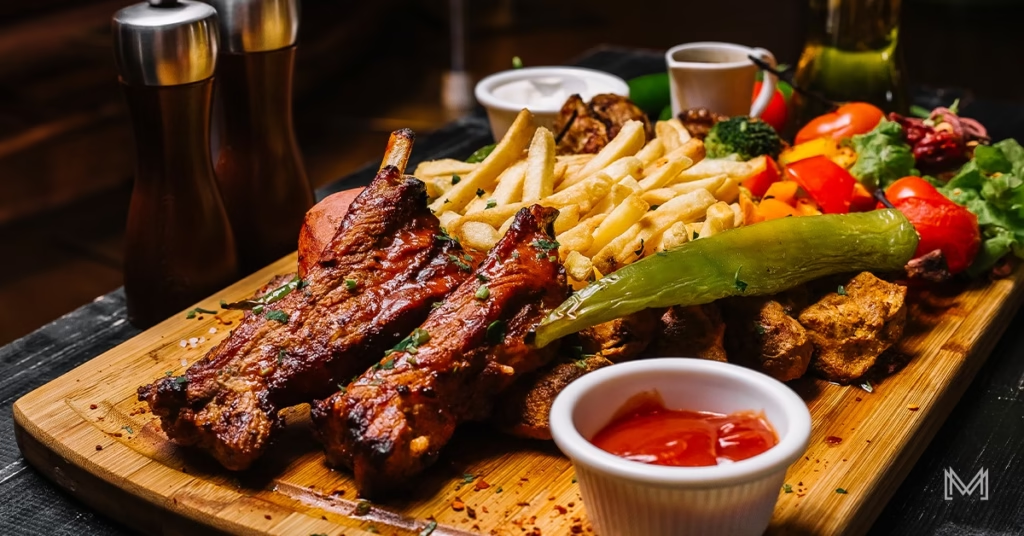
Moreover, the profit margins on meat can be quite healthy if you source correctly. A shisa nyama can start small. It can also grow as the community grows, unlike a formal restaurant, where the overheads will kill you. You are filling a gap for affordable, high-quality entertainment and food. This cultural relevance makes it one of the most sustainable shisanyama business ideas in the current economy.
Start a shisa nyama business with a solid plan
You can’t just wake up and buy a grill without thinking about the future. Many people ask, “What is the first thing I need?” Well, you need a roadmap. You should look for a shisanyama business plan PDF download online to see how the experts structure their finances. A plan helps you understand your target market and how you will beat the guy down the street.
Before you start a shisa nyama business, you must decide what type of business you want. Do you want to be a small roadside stand? Alternatively, do you aim to create a massive lifestyle lounge? Each choice has different costs and risks. Your plan must include your marketing strategy, your staffing needs, and your projected sales. Without this, you are just guessing, and guessing is the quickest way to go broke in Mzansi.
Understanding the Costs: How Much Money Do You Need?
A question common to every aspiring boss arises. They ask, ‘How much money do you need to start a business in South Africa?’ The truth is that it varies. If you want to start very small, you wonder, what business can I start with R200? You can’t open a full shop with R200. Still, you buy a small bag of charcoal and some wors. Then, you can sell rolls at a taxi rank. It is about starting where you are.

If you want a professional setup, you need to ask how much it costs to start a shisa nyama. Starting a shisa nyama properly involves understanding all costs. To get a decent container, you will need to consider a different range. A good grill is another requirement. Your first batch of stock also falls within this range. Many entrepreneurs ask, ‘What business can I start with R20 000?’ and a small-scale shisa nyama is a perfect answer to that. This amount lets you get the basic shisanyama equipment list sorted and pay for your first permits.
Essential Equipment and Setup Costs
| Item | Estimated Cost (ZAR) | Description |
|---|---|---|
| Industrial Braai Stand | R3,500 – R7,000 | Heavy-duty steel for long-lasting use. |
| Commercial Refrigerator | R5,000 – R12,000 | To keep your meat fresh and drinks cold. |
| Tables and Benches | R2,500 – R5,000 | Wooden benches are the standard “vibe.” |
| Initial Meat Stock | R3,000 – R5,000 | Beef, wors, chicken, and brisket. |
| Branding and Signage | R1,000 – R2,000 | A catchy name helps people find you. |
| Total Estimated Start | R15,000 – R31,000 | For a professional small-to-medium setup. |
How to Start a Shisa Nyama Business for Less
If you do not have R20,000, do not lose hope. You can still start a shisa nyama business. Start as a mobile vendor. Alternatively, partner with an existing tavern that doesn’t serve food. This reduces your rent costs significantly. Another popular trend is the car wash and shisanyama business plan. This is a genius move because customers can eat and drink while they wait for their cars to be cleaned. It creates two streams of income from the same customer base.
When you start a shisa nyama business on a budget, you have to be creative. Maybe you start by only operating on weekends when the foot traffic is highest. This helps you manage your cash flow while you build a name for yourself. Remember, the goal is to grow. Use your early profits to buy better equipment and expand your shisanyama menu.
Legal Requirements to Start a Business in South Africa
You can’t hide from the law forever. If you want to start a shisa nyama business that lasts, you must follow the business requirements in South Africa. First, you must register your business with the CIPC. This makes you a legal entity and enables you to open a business bank account.
Secondly, you need a Certificate of Acceptability for food handling from your local municipality. This proves that your kitchen or braai area is clean and safe for the public. If you plan to play loud music, you will need a noise pass. If you intend to sell cold beers, a liquor licence is required. These things take time to get. Start the paperwork as soon as you decide to start a shisa nyama business.
The Best Location to Start a Shisa Nyama Business.
In the world of business, location is everything. You need to find a spot where people naturally gather. Look for places near taxi ranks, busy intersections, or popular taverns. When you start a shisa nyama business, you want people to see the smoke. You also want them to smell the meat from a distance.
Your meat is your reputation. If you serve tough steak or dry chicken, word will spread fast, and your business will suffer.
But, you also need to consider safety and parking. Customers won’t come if they think their cars will be stolen or if the area is too dark at night. Make sure your chosen “where” has enough space for people to sit and relax. A crowded, cramped space might work for a quick takeaway. But, if you want people to stay and spend money on drinks, you need “lekker” space.
Crafting a Winning Shisanyama Menu
Your meat is your reputation. If you serve tough steak or dry chicken, word will spread fast, and your business will suffer. When people start a shisa nyama business, they often focus on quantity, but quality is what brings them back. Your shisanyama menu should include the classics: chuck, short rib, brisket, boerewors, and chicken wings.

But don’t forget the sides! You need great pap, chakalaka, and maybe a fresh coleslaw. Some of the best shisanyama ideas involve offering a “signature sauce” that nobody else has. This secret spice or marinade becomes your brand’s identity. People will travel far just to taste your specific flavour. Always source your meat from reputable butchers to guarantee your customers don’t get sick.
Marketing and Growing Your Brand
Once everything is set up, you need to shout about it. In today’s world, you can’t Start a Shisa Nyama business and ignore social media. Facebook and Instagram are your best friends. Post pictures of the meat on the grill every Friday afternoon. Use TikTok to show the “vibe” and the people dancing or enjoying their meals.
Furthermore, word of mouth in the community is the most powerful tool. Treat every customer like a king. If they have a good time, they will tell their friends. You can also run promotions. Examples include a “Sunday Soul Session” or “Midweek Wors Specials.” These help keep the money flowing during the slower days of the week.
Conclusion on How to Start a Shisa Nyama Business
Building a business from the ground up is a journey of a thousand miles. It requires patience, thick skin, and a lot of early mornings. When you start a shisa nyama business, you are not just selling food; you are selling an experience. You are creating a place where memories are made.

Whether you are starting with a small R20,000 investment, the principles stay the same. You can also be launching a massive car wash and shisanyama business plan. The investment is R20,000, or it is a massive car wash and shisanyama business plan. Regardless of the scale, the principles continue the same. Keep your quality high, your service friendly, and your books in order. If you do this, there is no reason why your spot can’t become the next big landmark in your community. Mzansi is waiting for your flavour, so go ahead and start a shisa nyama business.
Frequently Asked Questions
What does the term “Shisa Nyama” literally translate to in Zulu?
Shisa nyama literally translates to “burn the meat” in Zulu.
What is a key benefit of starting a small-scale shisa nyama business compared to a formal restaurant?
A small shisa nyama business has lower overheads that can quickly bankrupt a formal restaurant.
What essential legal document do you need from your local municipality for handling food at a shisa nyama?
You need a Certificate of Acceptability for food handling from your local municipality to prove your area is clean and safe.
What is a suggested creative strategy for starting a shisa nyama business when funds are limited?
When starting on a budget, you can reduce costs by partnering with an existing tavern that doesn’t serve food.
Beyond the meat, what essential element should a winning shisanyama menu include to keep customers satisfied?
A winning shisanyama menu must include great sides like pap, chakalaka, and perhaps a fresh coleslaw.
The post How to Start a Shisa Nyama Business in South Africa first appeared on Mzansi Magazine.
]]>The post DSTV Installation Business in South Africa: Start-up Guide first appeared on Mzansi Magazine.
]]>In the heart of various communities across our beautiful country, the flicker of a television screen brings families together. You can tune in for a massive Springbok game. Or you can catch up on the latest local soap operas. Either way, satellite television remains crucial. It is a central pillar of domestic entertainment. The demand for technical experts is massive. These experts bridge the gap between a signal in the sky and a screen in the lounge. If you have a knack for technical work, consider running a DSTV installation business. It is your ticket to financial freedom and community respect.
Why You Should Consider Growing Your DStv Installation Business
The market for satellite television in Mzansi is resilient. Global streaming giants are on the rise. Yet, satellite TV offers something those platforms often lack. It provides live sports and localised content that speaks the language of the people.
In the world of satellite tech, your signal is only as strong as your work ethic.
So, starting a DStv installation business makes perfect business sense right now. You are not just selling a service; you are selling the “vibe” that every South African household craves. Moreover, as new housing developments pop up and people move into new apartments, the need for professional setups remains constant.

When you look at the profitability of a DStv installation business, the numbers tell an encouraging story. Unlike many other startups, this venture primarily relies on your specialised skills. You don’t need massive warehouses or expensive stock. Furthermore, once you build yourself as a reliable technician, the word-of-mouth referrals will keep your phone ringing. You can easily diversify your income by offering maintenance, signal troubleshooting, and hardware sales alongside the first setup.
Steps to Start Your DStv Installation Business
Venturing into this field requires more than just a ladder and a pair of pliers. You need a solid foundation to guarantee your DSTV installation business stands out from the informal “fly-by-night” operators. First, you must understand the technical requirements. Learning the intricacies of signal strength, dish alignment, and cable management is vital. As a result, many entrepreneurs seek a DStv installation training PDF. They want to get a head start on the theory before getting their hands dirty.
Training and MultiChoice Accreditation
If you want to play in the big leagues, becoming an accredited installer is non-negotiable. Customers trust someone who has the official stamp of approval. To learn how to become a Multichoice DStv installer, you generally need to attend workshops and pass specific competency tests. MultiChoice offers different levels of accreditation, starting from basic installations to complex multi-unit dwelling setups. Once you are certified, you gain access to the official DStv business contact portal. This access enables you to receive direct leads. You also get official support.
The Technical Toolkit and Equipment
You can’t build a successful DStv installation business without the right gear. Investing in a high-quality satellite signal meter will save you hours of guesswork on a hot roof. Additionally, you will need a reliable vehicle, various drills, and safety equipment. Remember, your tools are your primary employees in this trade. When you arrive at a job site with professional equipment, your client feels valued. They promptly believe they are getting value for their money.
| Expense Item | Estimated Cost (ZAR) | Importance Level |
|---|---|---|
| Hand Tools (Pliers, Cutters) | R1,500 – R2,500 | High |
| Digital Satellite Signal Meter | R2,000 – R6,000 | Essential |
| Heavy Duty Ladder | R2,500 – R4,000 | Essential |
| Business Registration (CIPC) | R175 – R500 | Mandatory |
| Basic Marketing (Flyers/Ads) | R1,000 – R2,000 | High |
| Initial Stock (LNBs, Cables) | R3,000 – R5,000 | Medium |
Crafting a Solid DStv Installation Business Plan
No professional venture survives for long without a roadmap. Writing a DStv installation business plan is a crucial step that helps you define your target market and financial goals. Are you focusing on small residential homes, or are you aiming for the big corporate contracts? For example, handling DStv Business South Africa solutions for hotels requires a different set of skills. This is distinct compared to a standard home setup or solutions for guest houses. Your plan should clearly outline your pricing strategy and how you intend to outshine your local competitors.
In your plan, you should also cover the “who” and the “how”. Who is your ideal customer? Usually, it is a new homeowner or a tenant moving into a place without a dish. How will they find you? Most people today will pick up their phone and search for DStv installers near me. Thus, your plan must include a strategy for appearing in those digital search results. By positioning yourself correctly, you guarantee the growth of your DStv installation business stays on an upward trajectory.
Mastering the DStv Installation Process
The actual technical work is where the magic happens. A standard DStv installation process involves mounting the bracket. Then, it includes aligning the dish for top signal quality. Finally, it requires running cables to the decoder. Yet, even the most experienced installers sometimes face glitches. You need to explain to a customer how to set up the DStv installation wizard. This often happens after a software update or a factory reset. Being patient and teaching your clients how to use their equipment adds extra value to your service.

Furthermore, you must be well-versed in the different hardware options available. Whether it is the classic HD decoder or the more advanced Explora Ultra, your technical knowledge must be top-notch. Many customers will ask about DStv installation services that include ExtraView. This service allows them to watch different channels in different rooms. Being the “tech guru” who solves these problems quickly makes you indispensable.
Marketing and Managing a DStv Installation Business
Once your technical skills are sharp, you need to focus on the hustle. Marketing your DStv installation business in the digital age requires a mix of old-school and new-school tactics. Handing out flyers at local shopping centres still works, but having a presence on social media is even better. People in areas like KwaZulu-Natal often search for ‘DSTV installers Durban’ on Facebook groups or Google. Thus, being active in these online spaces is a game-changer.
From the township to the suburbs, every dish mounted is a step toward financial freedom.
Customer service is the secret sauce for the longevity of a DStv installation business. If you arrive on time, keep the work area clean, and explain the costs clearly, people will love you. Always be transparent about how much DStv installation is before you start the work. Hidden costs are the fastest way to ruin your reputation. Additionally, keep a record of every job. Tracking your clients’ details enables you to follow up later for upgrades or maintenance, ensuring repeat business.
Legal Requirements and Commercial Opportunities
To stay on the right side of the law, you must register your company with the CIPC. This step is essential if you want to bid for government or corporate contracts. Dealing with the legal side of a DStv installation business also includes getting public liability insurance. This insurance protects you if a ladder falls and breaks a window or if someone gets hurt on the job. It seems like an extra cost, but it provides peace of mind that is worth every cent.

Moreover, do not ignore the commercial sector. Businesses like bars, restaurants, and medical waiting rooms need entertainment too. You should familiarise yourself with the various DStv business packages South Africa offers. These corporate packages differ from residential ones and often require more complex distribution systems. By tapping into this niche, you can secure high-value contracts that pay much better than standard residential dish realignments.
The Future of the DStv Installation Business
As technology continues to evolve, the way we consume media will change, but the need for professional connectivity will continue. The future of the DSTV installation business lies in total home integration. This means expanding your skills to include Wi-Fi installations, smart home setups, and even security camera systems. By being the person who makes the house ‘smart’, you guarantee your business stays relevant for the next decade.
Think of yourself as a connectivity partner rather than just a guy with a dish. When you visit a home, look for other ways to help. They need their TV mounted on a wall, or maybe their internet signal is weak in the bedroom. Offering these extra services transforms your small trade into a comprehensive home-tech empire. This proactive approach is exactly what sets a prosperous DSTV installation business apart from the rest.
Conclusion: Start Your Journey Today
Building a successful venture in Mzansi is about grit, skill, and identifying the right opportunities. By using this guide, you are preparing for a rewarding career. This career is within a steady industry. Remember to stay humble, keep learning, and always give the best service possible to your community. You help a grandmother in getting her favourite channel back. You also set up a massive sports bar. In either case, your work brings joy to people.

In summary, the path to becoming a professional installer is clear. Get trained, register your company, buy the right tools, and start marketing your services. It won’t always be easy. Climbing on roofs in the summer heat is tough work. Still, the rewards of owning your own DSTV installation business are well worth the effort. Now is the time to take that first step and build your legacy as a top-tier DStv installation business.
FAQs About Starting a DSTV Installation Business in South Africa
How do I become an official MultiChoice DStv installer?
You must complete formal training and then apply for accreditation with MultiChoice to become official.
Why is a DStv installation business still feasible in the age of streaming?
Satellites stay the most reliable source for high-definition content for many South Africans because of ongoing high data costs.
What is the estimated price range for standard DStv installation labour only?
A standard labour-only fee for a single-view setup in the South African market ranges from R450 to R800.
What essential tool saves installers hours of frustration on difficult jobs?
A professional signal strength meter is an expensive but necessary tool that saves many hours of frustration.
What should I focus on when creating my DStv installation business plan?
Your business plan needs to help you track goals. It also needs to help you decide whether your target market will be residential homes or the commercial sector.
The post DSTV Installation Business in South Africa: Start-up Guide first appeared on Mzansi Magazine.
]]>The post 5 Tactics to Improve Your Social Media Accounts first appeared on Mzansi Magazine.
]]>In the fast-paced world of digital entrepreneurship, the ability to connect with an audience defines success. For many small business owners across the country, the digital space has become the primary storefront. It is where deals are made, and brands are born. Since the rise of mobile connectivity, nearly 41.5% of the population now actively engages with online platforms. This massive shift means that your brand is no longer just a physical entity. It has become a digital personality that lives on smartphones and tablets. To stand out in a crowded market, you must actively seek ways to improve your social media presence. This is crucial to staying ahead of the competition.
The journey of a young entrepreneur often starts with a dream and a smartphone. Yet, simply posting random pictures is no longer enough to sustain a business. You need a structured approach that combines creativity with data-driven decisions. By understanding the local landscape, you can tailor your message to resonate with the unique spirit of our people. This article explains practical steps to improve your online presence. These steps ensure your business not only survives but thrives in the digital economy.
Understanding the Landscape of Social Media Marketing
Before exploring specific tactics, you need to understand social media in marketing. It is vital to know what this actually entails. Essentially, it is the use of various platforms to connect with your audience, build your brand, and drive website traffic. This is often part of a broader digital and social media marketing strategy. It covers everything from content creation to paid advertising. For many, the ultimate goal is to move beyond “likes” and achieve real business growth.
While traditional marketing pushes a message at an audience, social media invites them into a conversation.
Many beginners often ask, ” What is social network marketing, and how does it differ from traditional methods? While traditional marketing pushes a message at an audience, social media invites them into a conversation. This two-way dialogue is what makes it so powerful for Mzansi businesses. Whether you are looking for social media marketing vacancies, the core principles remain the same. Or you are trying to start your own social marketing agency. You must give value, be authentic, and stay consistent to win the trust of your followers.

To get started, one can consider taking a free social media marketing course. Alternatively, one can enrol in a more formal social media marketing course to understand the nuances of the trade. Education is a powerful tool, and many successful managers started by earning a Meta social media marketing professional certificate. This foundational knowledge helps you understand the different types of social media marketing. These include influencer partnerships, content marketing, and paid social ads.
1. Mastering Content to Improve Your Social Media Presence
The first tactic focuses heavily on the quality and relevance of what you share. If you want to know how to improve your social media content, you must look at the stories you tell. South Africans love stories that show their daily lives, their struggles, and their triumphs. Instead of just selling a product, sell the experience or the solution it provides. For instance, a local clothing brand shouldn’t just show a t-shirt. They should show the person wearing it at a family braai. Alternatively, they depict it at a local music festival.
When you focus on how to improve your social media presence, you are essentially building a reputation. High-quality visuals are non-negotiable in 2026. Use your smartphone to take crisp, well-lit photos, but don’t be afraid of the “unfiltered” look for your stories. Authenticity often performs better than overly polished corporate ads. Furthermore, incorporating video content is essential, as algorithms now favour short-form videos like Reels and TikToks over static images.
| Marketing Type | Primary Goal | Best Platform for SA |
|---|---|---|
| Organic Social | Building Community | Facebook & Instagram |
| Paid Advertising | Direct Sales & Leads | Facebook & LinkedIn |
| Influencer Marketing | Brand Trust | Instagram & TikTok |
| Email Marketing | Retention & Loyalty | Direct Inbox |
| Social Media Management | Brand Consistency | All Platforms |
To truly improve your social media, you must also consider your posting frequency. Consistency creates a sense of reliability. If a potential customer visits your profile and sees a post from six months ago, they will think the business is inactive. They assume the business is closed. So, aim to post at least three times a week. This keeps your brand at the top of their feed. It ensures they think of you when they are ready to make a purchase.
2. Using Data and Amplification to Grow
Many entrepreneurs struggle because they don’t know how to use amplification rate to improve your social media strategy. In simple terms, your amplification rate is the ratio of shares per post to the number of followers you have. It indicates how willing your audience is to associate itself with your content. They do this by sharing it with their own circles. To increase this, create content that is highly shareable, like helpful tips, relatable memes, or inspiring local success stories.
The concept of “big data big impact how data improves your social media marketing” is not just for large corporations. Even a small social media marketing job requires looking at the “Insights” tab. By analysing which posts get the most engagement, you can double down on what works and cut out what doesn’t. For example, if you notice that your followers engage more with “How-to” videos, focus on them. If they engage less with “Product” shots, then rethink their use. Adjust your strategy accordingly. This data-driven approach is a sure way to improve your social media performance over time.
Moreover, integrating email marketing with your social efforts can create a powerful synergy. Many businesses use email for marketing to nurture leads that they captured through social media apps. By sending regular marketing emails, you retain and engage loyal customers. This action drives them back to your social pages. They return to engage with new content. This cross-channel approach ensures that you are not relying on a single platform’s algorithm to reach your audience.
3. Optimising Your Profile and Professional Presentation
Your profile is your digital business card. If you want to know how to improve your social media profile, start with the basics. Make sure your profile picture is your brand logo. Your bio should clearly state what you do. It should also mention where you are located. A common question among professionals is: What action is recommended to improve your social media self-presentation? The answer usually involves maintaining a professional yet approachable tone and ensuring all contact links are working.
Furthermore, you should regularly update your “Link in Bio” to point toward your latest promotion or blog post. This is crucial for enhancing your social media marketing. It reduces the friction between a follower seeing your post and making a purchase. If you are looking for social media and marketing jobs, make sure you have a polished personal profile. It serves as a living portfolio of your skills. It shows potential employers or clients that you practice what you preach.
To further improve your social media, think about the aesthetics of your grid or feed. While it doesn’t have to be perfect, a cohesive colour scheme or consistent font usage helps in brand recognition. When someone scrolls quickly, they should be capable of identifying your post just by the “vibe.” They will recognise it before they even read the name. This level of professional social media management sets the experts apart from the amateurs in the competitive Mzansi market.
4. Mindful Engagement and Strategic Hashtags
In the quest to improve your social media, one must not forget the human element. There are mindful approaches to enhancing your social media. These strategies can enrich both your life and your business simultaneously. This involves setting boundaries on how much time you spend scrolling and focusing more on meaningful interactions. Instead of just “liking” comments, reply to them. Start conversations with your followers. This builds a community rather than just a following.

Using the most mindful hashtags to improve your social media means choosing tags that are relevant to your niche. This approach improves your life rather than just chasing trending topics. In South Africa, using tags like #SupportLocal or #MzansiBusiness can connect you with a community of like-minded entrepreneurs. Still, avoid overusing them. A few well-chosen hashtags are far more effective than a wall of blue text that looks like spam. This is a subtle yet effective way to improve your social media discoverability.
Additionally, being mindful means being proactive. If you see a trend that aligns with your values, join in. If there is a national conversation happening, find a way to contribute positively. Social marketing and social media are about being part of the fabric of society. Brands that show empathy and awareness often see a much higher level of loyalty from their customers. This is in contrast to those that stay silent or disconnected.
5. Investing in Skills and Professional Services
As your business grows, you find that you can no longer do everything yourself. This is when you look into hiring a social media manager or partnering with a social marketing agency. A professional social media marketing agency has the tools and experience to take your brand to the next level. They understand how to do social media marketing effectively. They can manage complex campaigns that involve both social media and email for marketing.
You not be ready to hire an agency. In that case, focus on how to improve your social media skills through continuous learning. There are many social marketing courses available online that cover everything from basic posting to advanced social media marketing strategy. Staying updated with the latest features on various social media platforms is crucial. The digital landscape changes almost every month. Whether it’s a new social media app, adopting early can benefit you. If it’s a revision to an existing one, adopting early provides a significant advantage.
Investing in your education is a direct way to improve your social media results. Many young South Africans are now seeking marketing social media jobs. They see the potential for growth in this sector. You desire social media and marketing courses. Alternatively, you could be searching for marketing and social media jobs. Know that the demand for digital expertise is at an all-time high. By positioning yourself as an expert, you improve your own business. You also become a valuable asset to the local economy.
The Role of Social Media in the Modern Mzansi Business
Social media is the heart of modern commerce in our country. It bridges the gap between the small-town maker and the big-city buyer. For businesses to succeed, they must understand that social marketing and social media are not just about broadcasting. They are about building relationships. Every post, comment, and share is an opportunity to strengthen the bond with your audience. When you consistently work to improve your social media, you are building a legacy that can withstand market fluctuations.

Businesses use social media marketing to humanise their brand. It allows a massive corporation to feel like a friendly neighbour. It also lets a small startup like a world-class contender. This democratisation of influence is what makes the current era so exciting for new entrepreneurs. You don’t need a multi-million rand budget to make an impact. You just need a clear strategy. Add “gees”. Have the willingness to put in the work every single day.
How to Handle the Technical Side of Marketing
While the creative side is fun, the technical side is where the money is made. Understanding things like email marketing and how it integrates with your social ads is crucial. For example, you can use social media to offer a free guide in exchange for an email address. This lets you market with email later on, sending personalised offers directly to someone’s inbox. This is one of the most effective ways to improve your social media ROI (Return on Investment).
Social media is, after all, about being social. Approach it with the intention of helping, inspiring, or entertaining your fellow South Africans.
You should be aware of the various social media marketing vacancies. These opportunities can help your team if you are a business owner. Hiring someone specifically for social marketing jobs can free up your time to focus on product development and operations. A dedicated person can manage the daily grind of posting, responding to queries, and monitoring your social media marketing strategy. This ensures that your brand remains active and responsive 24/7.
To truly improve Your Social Media, you must also be aware of the “Where” and “When.” Where does your audience spend most of their time? If you are targeting Gen Z, you need to be on TikTok. If you are targeting business professionals, LinkedIn is your best bet. When are they most active? Use your analytics to find the peak hours when your followers are online and schedule your posts suitably. This simple adjustment can significantly boost your early engagement rates.
Conclusion: Take Action to Improve your social media
In conclusion, the digital world offers endless opportunities for those willing to learn and adapt. Focus on quality content. Leverage data. Optimise your profile. Engage mindfully. Invest in your skills. By doing so, you can significantly improve your social media standing. Remember that growth doesn’t happen overnight. It is the result of small, consistent actions taken over a long period. In the vibrant landscape of Mzansi, your unique voice is your greatest asset.
As you move ahead, keep experimenting with different types of social media marketing. See what resonates best with your community. Don’t be afraid to fail or try new social media apps that emerge on the scene. The most successful entrepreneurs are those who stay curious and stay students of the game. If you ever feel overwhelmed, remember that even the biggest brands started with a single follower and a single post.

Finally, always keep your audience at the centre of everything you do. Social media is, after all, about being social. Approach it with the intention of helping, inspiring, or entertaining your fellow South Africans. Success will follow naturally. It is time to take what you have learned and use it to improve your social media starting today. Your business deserves to be seen, and with these tactics, you are well on your way to making that happen.
Mzansi Magazine empowers emerging businesses with practical, homegrown insights. Subscribe to our newsletter for weekly tips on design, branding, and digital strategy to further improve your social media.
The post 5 Tactics to Improve Your Social Media Accounts first appeared on Mzansi Magazine.
]]>The post The Top Freelance Graphic Designer in South Africa first appeared on Mzansi Magazine.
]]>Every aspiring business owner knows that the first impression is often the last one. In the bustling economy of our beautiful country, standing out among a sea of competitors is challenging. It requires more than just a good product. You need to create a compelling narrative or offer a unique experience. It requires a visual identity that speaks to the consumer’s heart. The expertise of a professional freelance graphic designer plays a crucial role here. It becomes the ultimate game-changer for any startup or established enterprise.
Starting a business in the modern age means you are competing on a global stage. This is true even if your shop is just around the corner. Because your logo and website act as your digital shopfront, you can’t afford to look amateur. Hiring a skilled freelance graphic designer is not just an expense. It is a strategic investment into the future of your brand.
What Graphic Design Really Means for Your Business
Many people often wonder what graphic design is and how it actually impacts their bottom line. To put it simply, what graphic design is involves the art of visual communication. It is the process of using typography, photography, and illustration to solve problems and convey specific messages. A graphic design piece serves as a bridge. It connects a company’s values to its target audience.

You may wonder what graphic designers do. They take your abstract ideas and turn them into tangible visuals. Every element is carefully crafted. This ranges from the business cards you hand out at networking events to the banners on your social media pages. Understanding what a graphic designer can do helps entrepreneurs realise that these professionals are architects of perception. They don’t just make things look “pretty”; they make them work for your business goals.
Who are Lindani Lucky Thango and Warten Weg?
When searching for the best talent in the country, one name consistently rises to the top of the list. Lindani Lucky Thango is the creative visionary behind Warten Weg. This agency is a premier design agency. It has become a sanctuary for businesses seeking excellence. As a seasoned freelance graphic designer, Lindani has spent over a decade perfecting the art of brand storytelling. He believes that every brand has a soul, and his job is to make that soul visible to the world.

Warten Weg is not just a business. It is a creative powerhouse. This powerhouse offers a personal touch that large agencies often lack. Lindani Lucky Thango understands the local market dynamics perfectly. Whether you are a small hustle in a township or a high-end corporate firm, he provides solutions. These solutions are tailored to fit your budget. They are also aligned with your vision. His portfolio is a testament to his versatility, showcasing everything from minimalist logos to complex web interfaces.
Why You Should Hire a Freelance Graphic Designer
You are asking yourself why you should choose a freelance graphic designer over a massive advertising agency. The answer lies in the level of dedication and direct communication you get. When you hire freelance graphic designer experts like Lindani, you are talking directly to the person doing the work. This eliminates the “middleman” noise and ensures that your feedback is implemented exactly as you intended.
Hiring a skilled freelance graphic designer is not just an expense. It is a strategic investment into the future of your brand.
Furthermore, the cost-effectiveness is a major draw for new entrepreneurs. A freelance graphic designer hourly rate is usually much more manageable than the high overhead fees charged by traditional firms. This enables you to allocate more of your budget toward marketing and product development. Additionally, graphic design freelancers are known for their agility. They can often turn projects around much faster. This is because they aren’t bogged down by corporate bureaucracy.
How Much Does a Freelance Graphic Designer Make?
For those looking to enter the industry, understanding the financial landscape is crucial. If you want to know how much a freelance graphic designer makes, the answer varies based on experience and location. In South Africa, a freelance graphic designer salary can range significantly. Junior designers start with a modest income. In contrast, top-tier professionals like those at Warten Weg command premium rates. This is due to their proven track record.
The freelance graphic designer hourly rate in our local market typically sits between R350 and R1,200. The rate varies depending on the complexity of the task. Specifically, high-end branding projects or complex UI/UX design for apps will sit at the higher end of that scale. Therefore, as you build your freelance graphic designer resume, your earning potential grows alongside your portfolio of successful client stories.
Service Overview: What Warten Weg Offers
| Service Type | Description | Ideal For |
|---|---|---|
| Brand Identity | Logos, colour palettes, and typography. | New startups and re-branding. |
| Web Design | Responsive and SEO-friendly websites. | Businesses needing an online presence. |
| Print Media | Business cards, flyers, and billboards. | Physical marketing and events. |
| Social Media | Custom templates and ad graphics. | Influencers and digital marketers. |
| Packaging | Labels and box designs for products. | Retail and e-commerce brands. |
Where to Find a Freelance Graphic Designer Near Me
In the age of digital transformation, the physical location of your creative partner is becoming less of a barrier. Many clients search for a freelance graphic designer near me because they value occasional face-to-face meetings. If you are seeking a freelance graphic designer in Gauteng, you will discover innovation. You will also experience fast-paced energy. Similarly, a freelance graphic designer in Cape Town focus more on the aesthetic aspects. They also concentrate on lifestyle niches that the Mother City is famous for.
The beauty of being a freelance graphic designer is remarkable. As a remote professional, you can serve clients in every corner of the country. You need a freelance graphic designer in Durban. Alternatively, you are looking for someone based in the heart of the Karoo. In both cases, the internet makes collaboration seamless. Lindani Lucky Thango runs a freelance graphic design business from home. This model allows him to keep costs low. He maintains world-class standards for clients nationwide.
How to Become a Freelance Graphic Designer in South Africa
If the creative life calls to you, start learning how to become a freelance graphic designer. It is a journey of both art and business. You don’t just need to know how to use Photoshop; you need to know how to manage clients. Start by mastering the fundamentals of design, then move on to building a solid freelance graphic designer resume. Showing potential clients what you can do is far more important than just telling them.
Finding freelance graphic designer jobs requires a proactive approach. You can look for freelance graphic design opportunities on platforms like LinkedIn or even browse freelance graphic designer boards. Networking remains a powerful tool in South Africa. Often, the best freelance graphic design jobs come from word-of-mouth recommendations within the local business community. Always keep your portfolio updated and stay curious about new design trends.
Understanding the Role: What Does a Graphic Designer Do?
To truly appreciate the value of a freelance graphic designer, one must look at the day-to-day tasks they handle. So, what does a graphic designer do on a Monday morning? They start by researching a client’s competitors to make sure the new logo stands out. Next, they might sketch out concepts that show the brand’s message. Then, using advanced software, they bring those sketches to life, ensuring every pixel is perfectly placed.
Every brand has a soul, and his job is to make that soul visible to the world.
We should also consider what graphic designers do for long-term brand health. They maintain consistency across all platforms. If your Instagram looks one way and your website looks another, customers will get confused. A freelance graphic designer job involves being a brand guardian. They guarantee that your visual language remains coherent, which builds trust with your audience over time. Ultimately, what a graphic designer does is create a visual shorthand for your company’s excellence.
Finding Freelance Graphic Design Wanted Ads
The demand for creative talent is higher than ever before. Many companies are constantly posting freelance graphic design wanted notices on job portals. If you are searching for a freelance graphic designer job, you should tailor your application. Focus on the specific needs of the business. Don’t just send a generic link; explain how your skills can solve their specific problems.
For businesses looking to hire, the sheer number of freelance graphic designers can be overwhelming. To find the right freelancer jobs for graphic designer roles, focus on designers with experience in your specific industry. Their experience should match your field. It is important to review their earlier work. Make sure their style aligns with your vision. A great freelance graphic artist will be happy to show you their past “spells” and success stories.
When is the Right Time to Hire?
Many entrepreneurs wait too long to hire a professional freelance graphic designer. They try to do it themselves using free online tools. Later, they realise that their brand looks like a DIY project. The right time to hire is right at the beginning. Having a professional visual identity from day one sets a standard of quality that attracts better clients and higher revenue.
If you are looking for freelance graphic design jobs, now is the time to act. Perhaps you simply need to upgrade your current look. The market moves fast, and a stagnant brand is a dying brand. You need freelance graphic design jobs for a quick flyer. Alternatively, you might seek a long-term freelance graphic design partnership. In both cases, the investment will pay off. This will happen every time. It will enhance your brand recognition.
Why Lindani Lucky Thango is the Top Choice
What sets Lindani apart as a freelance graphic designer is his deep-seated passion for the South African hustle. He doesn’t just see a project; he sees a dream. By choosing Warten Weg, you are choosing a partner who is as invested in your success as you are. He blends international design standards with local cultural nuances. This ability makes his work truly unique in the Southern African landscape.
The process at Warten Weg is designed to be stress-free. From the first consultation to the final delivery, Lindani ensures that you are part of the journey. He uses his decade of experience to guide you through the difficult decisions. He ensures the final product is something you are proud to show. This level of care is why he is widely regarded as the top freelance graphic designer in the region.
The Future of Graphic Design Freelance Work
As technology evolves, the nature of freelance graphic design is changing. We are seeing more integration of AI and interactive elements. Yet, the human element of creativity remains irreplaceable. A freelance graphics designer jobs expert will always be needed to offer the emotional connection that machines can’t replicate. The future belongs to those who can marry technical skill with deep human empathy.
South Africa is a hub for graphic design freelancing jobs because of our vibrant culture and diverse perspectives. Our designers are known globally for their resilience and “make a plan” attitude. This spirit is exactly what you get when you work with graphic design freelancers like Lindani. They don’t just follow trends; they create them.
Conclusion: Your Next Step with a Freelance Graphic Designer
In conclusion, your journey to business success is heavily dependent on how the world perceives you. A freelance graphic designer is the key to unlocking that professional image that commands respect and drives sales. You are in the heart of the city. Or you are working from a quiet town. Either way, the right design partner is only a click or a call away.
If you are ready to take your business to the next level, do not settle for average. Reach out to Lindani Lucky Thango at Warten Weg today. You can give him a jingle at 0746885202 or shoot an email to info@wartenweg.com. For a look at his earlier creative exploits, be sure to visit wartenweg.com. In the world of business, your brand is your story. Let a professional freelance graphic designer help you tell it in the most beautiful way possible.
Frequently Asked Questions – Freelance Graphic Designer
What does a freelance graphic designer do exactly?
A freelance graphic designer is an independent professional who creates visual solutions for clients. They handle everything from logo creation and branding to website design and marketing materials, working on a project-by-project basis.
How can I find a freelance graphic designer near me?
You can find local talent by searching online directories. Use social media hashtags like #GraphicDesignerSA. You can also contact established professionals like Lindani Lucky Thango. They offer freelance graphic designer remote services across South Africa.
Why is the freelance graphic designer hourly rate different for everyone?
Rates vary based on the designer’s experience, the complexity of the project, and the value they bring to your business. A seasoned freelance graphic designer might charge more, but they often work faster and produce higher-quality results.
What should I include in a freelance graphic designer resume?
A strong resume should highlight your technical skills. It should showcase your portfolio of work and client testimonials. Demonstrating your ability to solve business problems through design is also important. Experience in graphic design freelance job settings is also a major plus.
The post The Top Freelance Graphic Designer in South Africa first appeared on Mzansi Magazine.
]]>The post Mastering the Art of Starting a Fast Food Business in South Africa: A Guide to Success first appeared on Mzansi Magazine.
]]>You will smell sizzling meat and fresh dough if you walk through any busy taxi rank in Jozi. The same happens in any shopping mall in Durban. This tells you one thing: the hustle is alive. Starting a fast food business in our beautiful country isn’t just about selling a meal. It’s about feeding the soul of a nation that is always on the move. With the local market projected to hit a massive $4.9 billion (roughly R90 billion) by the end of 2026, now is the perfect opportunity for young entrepreneurs. They should jump into the fire.
The 2026 Landscape: Profitable Fast Food Business Ideas
The game has changed since the old days of just selling chips and Russians. Today, the most profitable food business ideas are those that blend tradition with modern tech. While processed chicken remains the undisputed king of the kasie, we are seeing a huge shift toward “healthier indulgence”. People want that lekker taste, but they are also looking for sustainable ingredients and plant-based options.
Key Success Factors for Starting a Fast Food Businesses
Understanding what drives success when starting a fast food business in the South African market
 Tip: Rotate your device to landscape mode for better chart viewing on mobile phones
When brainstorming food company ideas, think about what makes a South African’s heart beat faster. Is it a gourmet Kota with a secret sauce? Or a modern Shisanyama that offers delivery through an app? Successful food business ideas today often leverage “cloud kitchens”, basically kitchens without dining areas that only do deliveries. This model lets you test various fast food business ideas without the heavy rent of a mall shop.
More Than Just a Good Idea: Laying Your Foundation
Every great venture begins with a spark. Perhaps you have legendary family recipes or a brilliant new take on street food. These food entrepreneur ideas are the seed. Yet, a seed needs fertile ground to grow. This is where most hopeful business owners stumble. They confuse a great food business idea with a feasible food business. The difference? A solid plan. Before you even think about a name or a location, you must wrestle your vision onto paper.
The art lies in blending your unique flavour with ruthless practicality, stellar service, and smart marketing.
As a result, your non-negotiable first task is crafting a detailed fast food business plan. Think of this document as your GPS through the unpredictable terrain of entrepreneurship. A strong business plan for fast food forces you to answer tough questions. Who exactly is your customer? What makes your offering different in a market saturated with options? A business plan about fast food will cover your concept and menu.

It will also include your target market and a deep analysis of your competitors. Importantly, your business plan for fast food must have financial teeth. It needs realistic projections for startup costs, monthly expenses, and your pricing strategy. Many organisations, like the Small Enterprise Development Agency (SEDA), offer templates. You can search for ‘restaurant business plan pdf South Africa.’ Alternatively, search for ‘fast food restaurant business plan pdf South Africa.’ These searches will help you find models suited to our local context.
Finding Your Flavour in the Market
South Africa’s appetite is diverse. What works in Sandton can flop in Sasolburg. Thus, refining your food business ideas requires local intelligence. Are you in a student area where speed and value rule? Then maybe a killer kota-style outlet is your call. Researching a kota business plan pdf download could offer specific insights. Is your community all about weekend socials? Then a shisanyama business plan focusing on grills, atmosphere, and licensing is your goldmine. The most profitable food business ideas often tap into existing cravings but add a unique, high-quality spin.
Meanwhile, remember that starting a fast food business today isn’t just about the physical shop. Your ideas for a food business are digital-first: a cloud kitchen specialising in gourmet burgers delivered via Mr D. Or maybe your food business ideas involve a mobile chip van that services taxi ranks during rush hour. The point is to find a gap. Look around your neighbourhood. What are people complaining about? Is it the lack of healthy quick options? The long lines at the existing chicken spot? Your solution to that problem is your ticket in. Exploring various business ideas for fast food and fast food ideas for business at this stage is crucial. Don’t just copy; innovate.
The Nitty-Gritty: From Paper to Plate
Once your plan is firm, the real work of starting a fast food business begins. This phase separates the dreamers from the doers. Firstly, you must deal with the law. Registering your company with the CIPC is step one. Next, you dive into the critical health and safety regulations. In South Africa, you can’t run any food businesses without a Certificate of Acceptability from your local municipal health department. An inspector will visit your proposed site to make sure compliance. They will check everything from water supply and waste removal. They will also inspect pest control and kitchen layout. Getting this right from day one is non-negotiable.

At the same time, you must lock down your location. The old saying “location, location, location” was born for the fast-food industry. You need high visibility and easy access. A great spot in a busy taxi route or near a school can be worth more than the fanciest equipment. Furthermore, you need to build your team. Your staff is the face of your brand. Invest in proper training, not just in cooking, but in customer service. A friendly smile and correct order can turn a first-time buyer into a regular.
Branding and Marketing: Shouting in a Noisy Room
You have the plan, the place, and the permits. Now, how do you get customers through the door? You build a brand that speaks to them. Your brand is more than a logo; it’s the feeling people get when they think of your shop. Is it about community, like a local shisanyama? Is it about insane flavour, like a secret peri-peri recipe? Weave that story into everything.

Moreover, your marketing strategy must be multi-channel. Of course, social media is powerful; use it to show juicy pictures, announce specials, and engage with customers. But, don’t underestimate local approaches. Flyers at the spaza shop can attract attention. A promotion for taxi drivers is another effective tactic. Alternatively, a loyalty card system can work wonders in your immediate community. The goal is to create a buzz that makes your outlet the talk of the township or suburb. Mastering this aspect is a core part of starting a fast food business that lasts.
Money Matters and Making It Work
Let’s talk finances bluntly. Many new food businesses fail because they run out of cash. Your small fast food business plan must include a tight grip on money. You must price your food correctly. Make sure it covers the cost of ingredients, labour, rent, and electricity. This must still leave you with a profit. Use your small fast food business plan pdf research to set these numbers. Keep your first menu small and manageable to reduce waste and simplify operations.
Starting a fast food business in our beautiful country isn’t just about selling a meal. It’s about feeding the soul of a nation that is always on the move.
Additionally, keep your personal and business finances strictly separate. Open a business bank account. Keep every receipt. Consider affordable point-of-sale systems that track sales and inventory daily. This data is gold; it tells you what’s selling, what’s not, and where your money is going. Remember, starting a fast food business is a marathon, not a sprint. You will not take a salary for the first few months. Every rand of profit should ideally go back into growing the venture. You could add a delivery service. Another option is expanding the seating area.
The Heart of the Hustle
Ultimately, starting a fast food business is about more than selling food. It’s about feeding people, creating jobs, and building something of your own. It demands long hours, resilience, and a passion that doesn’t quit when the grill is cold. Look at Sphe from Durban, who turned her grandmother’s curry recipe into a bustling bunny chow takeaway. Or Tumi in Jo’burg, who saw a need for late-night healthy wraps near club zones. Their stories started with a plan and a relentless will to execute.

So, take that food company idea of yours and get to work. Draft that business plan of a restaurant in PDF, study it, and refine it. Embrace the journey of starting a fast food business with your eyes wide open. Understand that the art lies in blending your unique flavour with ruthless practicality, stellar service, and smart marketing. The road is tough. Still, the reward is truly sweet for those who master the craft. They create a thriving, beloved local enterprise. Mzansi’s food scene is waiting for your next great idea. What are you cooking up?
Frequently Asked Questions – Fast Food Business
What is the most crucial first step when planning a fast food business in South Africa?
The most crucial first step is crafting a detailed fast food business plan because this document acts as your essential roadmap, forcing you to define your customer, unique offering, and realistic financial projections before investing any serious money.
Is the traditional fast food model still profitable, or should I focus only on delivery?
While delivery via models like cloud kitchens is booming for testing ideas cheaply, traditional models remain profitable if you secure a high-visibility, high-traffic location, as the saying “location, location, location” is especially true for fast food.
What is the non-negotiable legal requirement to operate a food business legally in South Africa?
To operate legally, you absolutely must obtain a Certificate of Acceptability from your local municipal health department after an inspector verifies that your site complies with all health and safety standards.
How can I make my new food business stand out in a market that already has many options?
You need to innovate by adding a unique, high-quality spin to existing popular cravings, perhaps by developing a secret sauce or focusing your brand story around a specific community need or flavour profile.
What financial mistake do most new food businesses in South Africa commonly make?
The most common financial mistake is failing to price food correctly to cover all costs ingredients, labour, rent, and utilities while still ensuring a healthy profit margin needed for long-term survival.
The post Mastering the Art of Starting a Fast Food Business in South Africa: A Guide to Success first appeared on Mzansi Magazine.
]]>