
Turning Trash Into Treasure: A Deep Dive into Recycling Business Opportunities in South Africa
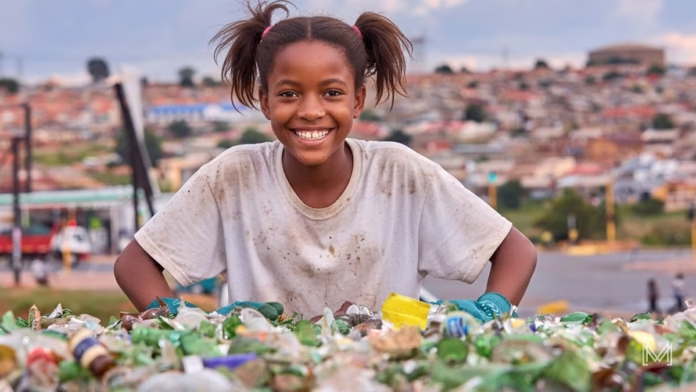
In the bustling streets of Johannesburg and the windy corners of Cape Town, a quiet revolution is happening. For years, we have looked at piles of plastic and old electronics as an eyesore. Yet, savvy local entrepreneurs are beginning to see something different. They see “Green Gold”. If you want to join the economy and help the planet, look into recycling business opportunities. This exploration might be your best move yet. Our country is now facing a massive waste crisis. Where there is a problem, there is always a chance to build a legacy.
South Africa generates millions of tonnes of waste every year. Sadly, a huge chunk of it ends up in landfills that are already full. Because of this, the government and private sectors are desperate for innovative solutions. This is where you come in. Whether you are a young graduate, recycling business opportunities can change your financial future. Or you are someone looking for a side hustle. Understanding how to tap into these opportunities is crucial. We are talking about a sector that not only cleans the environment. It also puts food on the table for thousands of families.
The Real State of Recycling Business Opportunities in South Africa
Presently, the recycling business in South Africa is worth billions, yet it remains largely untapped by small-scale entrepreneurs. When we look at our neighbours or even international markets, we see how structured they are. For instance, some people look at plastic recycling business opportunities in Johannesburg. They want to see how KwaZulu-Natal handles high volumes of waste in dense areas. While we can learn from them, our local context is unique. We have a massive informal sector that already does the heavy lifting. Connecting this sector to a formal recycling business signifies a huge gap waiting to be filled.
Where there is a problem, there is always a chance to build a legacy.
The shift towards a “circular economy” is significant. Now, big brands are legally obliged to take responsibility for their packaging. This “Extended Producer Responsibility” (EPR) has opened up opportunities for recycling business ideas in South Africa. These opportunities did not exist five years ago. Companies are looking for partners to collect, sort, and process their waste. If you can position yourself as a reliable link in this chain, you are not just starting a small shop. You are entering a high-growth industry.
Is the Recycling Business Profitable in Today’s Economy?
One of the first questions any new entrepreneur asks is, ‘Is the recycling business profitable?’ The short answer is yes, but it requires grit. In South Africa, the margins depend heavily on the type of material you handle and your proximity to processing plants. For example, steel and aluminium have high value, while certain plastics need more volume to make a decent return. Yet, once you scale, the numbers start to look very attractive.
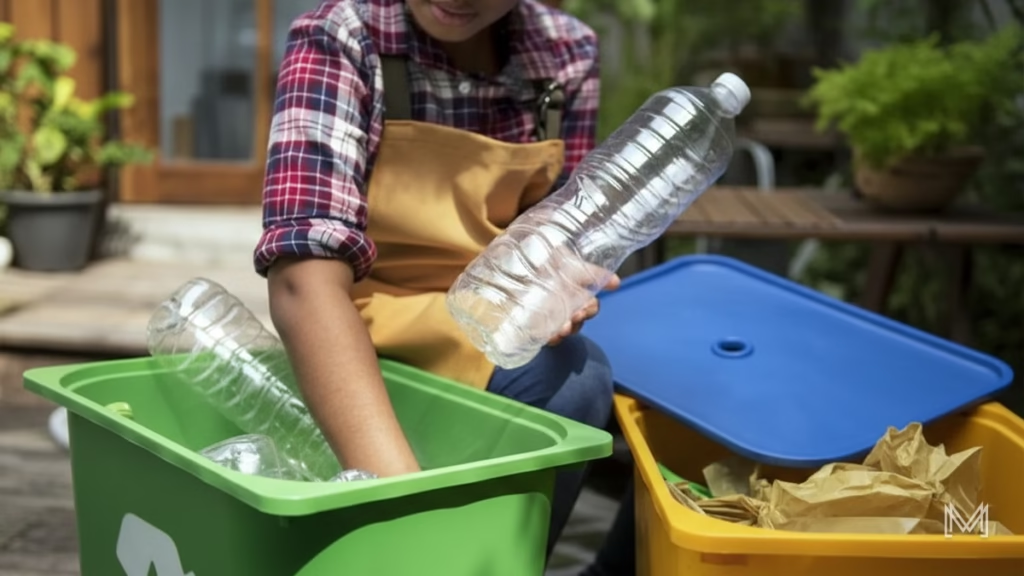
People often wonder how much does a recycling business make on a monthly basis. A small-scale buy-back centre can pull in a profit of R10,000 to R30,000. In contrast, a fully automated processing plant can see turnovers in the millions. The beauty of recycling as a business is that your ‘raw materials’ are often free or very cheap. Your main costs are transport, labour, and electricity. In a country with high unemployment, your ability to create jobs can help you. It also makes you eligible for various ‘green economy’ grants and tax incentives.
Breaking Down Plastic Recycling Business Opportunities
Plastic is everywhere. From milk bottles to shopping bags, our consumption is massive. This creates endless plastic recycling business opportunities for those willing to get their hands dirty. The most common plastics, like PET (bottles) and HDPE (milk jugs), are always in demand. Manufacturers are constantly looking for recycled pellets to lower their production costs.
Start with plastic if you are considering entering the recycling business. It is often the easiest entry point. You can start by being a collector. Then move to baling, which means compressing plastic. Eventually, you can progress into pelletising, which involves melting plastic into small beads. Each step adds more value to the material. We often hear about plastic recycling business opportunities in Durban. They are very advanced. However, South Africa is catching up fast. Local technology makes small-scale processing much more affordable for the average person.
The Rise of E-Waste and Franchise Models
Electronic waste, or e-waste, is the fastest-growing waste stream in Mzansi. Think about all the old cellphones, laptops, and printers sitting in people’s garages. These items contain precious metals like gold, copper, and silver. Exploring recycling business opportunities in this niche requires more technical knowledge, but the rewards are much higher. You don’t need to be a scientist to start. You can focus on the “urban mining” aspect of collecting and dismantling.
Some entrepreneurs look for a shortcut. They check out e-waste recycling business franchise opportunities in India or other global markets. This helps them see if they can bring those models here. Local franchises are still developing. There are opportunities to partner with established South African recyclers. They need regional collection points. This “business-in-a-box” approach can reduce your risk and give you the training needed to handle hazardous materials safely.
Step-by-Step: How to Start a Recycling Business
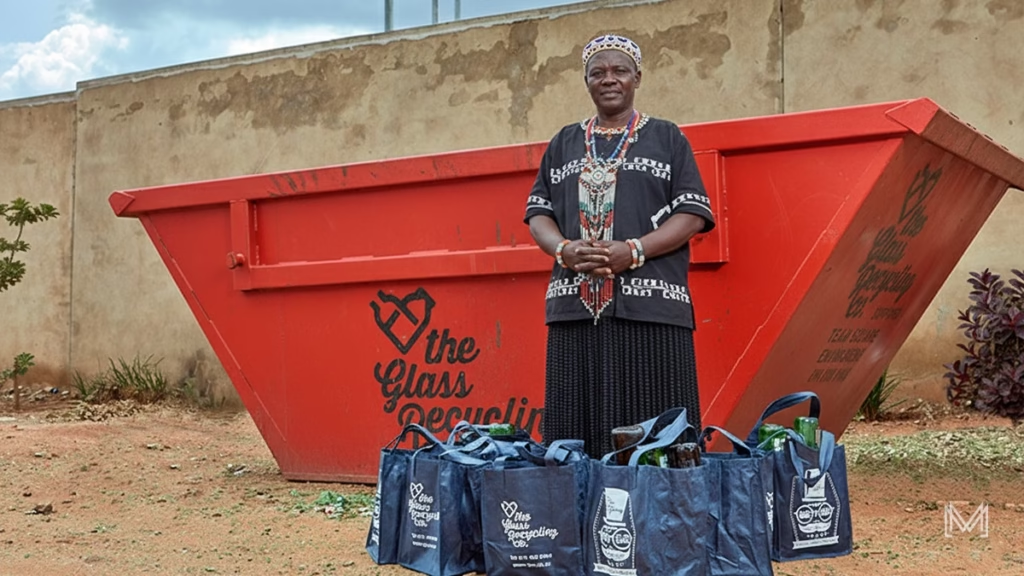
So, you’ve decided that you want in. Now, how to start a recycling business without losing your shirt? First, you need to pick your niche. Don’t try to recycle everything at once. Focus on one material be it paper, glass, or plastic and master the supply chain for that specific item. Look around your community. Is there a lot of glass waste from local taverns? Or a lot of cardboard from a nearby shopping centre? Your location often dictates your best recycling business path.

Secondly, you need a solid plan. Searching for a recycling business plan pdf online can give you a template. Yet, you must customise it for the South African market. You need to account for local transport costs and the “middleman” fees at the big mills. Many people ask, “Can I start a recycling business from my backyard?” Technically, yes, for collection. But once you start processing, you will need to look into zoning laws. You will also need to consider environmental permits. How to start a recycling business: success often relies on your connections. Begin networking early with local “waste preneurs.”
Navigating the Legal Landscape of Recycling Businesses in South Africa
Operating a recycling business South Africa style means dealing with some paperwork. You can’t just pick up waste and sell it without obeying certain rules. The National Environmental Management: Waste Act is the big law you need to know. Depending on the volume of waste you handle, you need a Waste Management Licence. For small startups, you usually just need to register with the South African Waste Information System (SAWIS).
Furthermore, if you are looking for funding, you must have your “house in order”. Investors and banks will ask for a recycling business plan in South Africa in PDF. This plan must show you understand the local regulations. They want to see that you have considered the safety of your workers and the environmental impact of your site. It might seem like a lot of red tape. Yet, these regulations actually protect your recycling and business interests. They keep fly-by-night operators out of the industry.
Funding and the Waste Management Business Plan
Let’s talk about the money. Most young South Africans don’t have R500,000 sitting in the bank to buy a truck and a granulator. This is where a waste management business plan PDF becomes your most important tool. Organisations like the IDC (Industrial Development Corporation) and the NEF (National Empowerment Fund) have specific mandates to fund “green” businesses. They are looking for entrepreneurs who can prove that there are possible recycling business opportunities in their specific area.
To get noticed, your plan must be detailed. Don’t just say you want to “recycle plastic”. Show them the numbers. To start a waste management business in South Africa, find your suppliers. Examples include schools or malls. Next, identify your buyers, like big manufacturing plants. Show a signed “letter of intent” from a buyer. This greatly increases your chances of getting a loan or grant. There are also many recycling for business competitions and incubators that offer seed capital for innovative ideas.
The Practicalities: How to Start a Recycling Business in South Africa
You might be searching for a PDF on how to start a recycling business in South Africa. This means you are looking for a manual. While manuals help, the real work happens on the ground. You need to secure a site that is accessible to both your collectors and your transport trucks. Security is also a major factor in South Africa. Copper and certain plastics are high-value items, so you need to ensure your site is locked down tight.
Many successful entrepreneurs began by asking, “How to start a recycling business in South Africa with zero capital?” They were “aggregators” at first. They would converse with rubbish pickers while strolling through the streets. Compared to the large centres, they gave them a marginally lower price. Then they sold the bulk load to the processors. This teaches you the “language” of the business of recycling without requiring a huge upfront investment. Once you understand the flow of materials, you can apply for a recycling business plan pdf. Then, look for equipment.
Using Technology and Innovation in Recycling in Business
We live in a digital age, and recycling in business is no longer just about dusty warehouses. Smart entrepreneurs are using apps to track collections and pay waste pickers via mobile money. This reduces the risk of keeping cash on-site and makes the whole process more efficient. Technology also helps in sorting. While manual sorting is common in Mzansi, small machines can help. They help you separate different grades of plastic. This significantly increases your profit margins.
Innovation can also mean finding new uses for waste. Instead of just selling crushed glass, some local businesses are turning it into bricks or kitchen countertops. This is the “Wealth” part of “Waste to Wealth”. By adding a manufacturing element to your recycling business, you are no longer just a middleman; you are a producer. This shift is where the real recycling business opportunities lie for the next generation of South African entrepreneurs.
Recycling Business Ideas in South Africa: Thinking Outside the Box
When people think of recycling business ideas in South Africa, they often stop at plastic and paper. But have you thought about tyres? South Africa faces a massive tyre waste problem. The REDISA scheme, despite its ups and downs, demonstrated that there is a market for tyre crumbs. These crumbs can be used in road construction and playground surfaces. What about organic waste? Turning food waste from restaurants into high-quality compost or biogas is another massive opportunity.
Another overlooked area is textile recycling. With the rise of “fast fashion”, our landfills are clogging up with old clothes. Starting a business that shreds these fabrics for stuffing is a great idea. You can also turn them into new rags. This approach is a great way to tap into recycling business opportunities. The key is to find what others discard. Then determine who would pay to reclaim it in a different form.
The Social Impact of Your Recycling Business
One of the most rewarding parts of starting a recycling business south africa is the social impact. You are often working with the most vulnerable members of society, the informal waste pickers. By providing them with PPE, fair prices, and a dignified place to trade, you are uplifting an entire community. This “Social Entrepreneurship” model is highly attractive to international donors and local corporate social investment (CSI) programmes.
A loyal network of collectors is the lifeblood of any successful recycling and business venture.
When you write your waste management business plan pdf, don’t forget to include the social aspect. Explain how your business will provide training and financial literacy to your collectors. This doesn’t just make you a “good person”; it makes your business more sustainable. A loyal network of collectors is the lifeblood of any successful recycling and business venture.
Common Pitfalls to Avoid in the Business of Recycling
While there are many recycling business opportunities, it is not all smooth sailing. One of the biggest mistakes is failing to account for transport costs. Diesel prices in South Africa are volatile. If your processing plant is too far away, your profits will be swallowed by the road. Always try to find buyers as close to your site as possible.
Another trap is “contamination”. If you have a tonne of high-quality plastic, you must keep it separate from food waste. It should also not be mixed with the wrong type of resin. The buyer will reject the whole load or pay you a “dirty” price. Education is key. You must teach your staff and your collectors exactly what you are looking for. Consistency is what builds a brand in the recycling business. If a mill knows your bales are always clean, they will always take your stock first.
Future Outlook: Recycling Business Opportunities 2026 and Beyond
Looking ahead, the future for recycling business opportunities in our country is incredibly bright. As the world moves towards a “Net Zero” future, the demand for recycled content will only increase. We are seeing more collaboration between the government and private companies to fix our infrastructure. This means better roads for transport and more reliable electricity for processing plants.
For the young hustler, this is the time to get in. Don’t wait until the market is crowded. Start small, learn the ropes, and build your network. Whether you are interested in a plastic recycling business or the high-tech world of e-waste, opportunities await you. South Africa has the waste, the people, and the need. All it needs now is your entrepreneurial spirit to turn that waste into lasting wealth.
Conclusion: Seizing Your Recycling Business Opportunities
In conclusion, the journey of an entrepreneur in Mzansi is never easy, but it is always worth it. Exploring recycling business opportunities goes beyond making money. It’s a way to build a better South Africa for everyone. From cleaning our oceans to creating jobs in our townships, the impact of a well-run recycling business is massive. We have the data, we have the passion, and we certainly have the waste.
Now that you have a better understanding of how to start a recycling business, the next step is yours. Will you be the one to turn a pile of “rubbish” into a thriving company? Download that recycling business plan in South Africa in PDF, talk to your local municipality, and start your journey today. The “Waste to Wealth” revolution is here, and there is a seat at the table for you. Let’s keep Mzansi clean and our pockets full!

FAQ – Waste to Wealth
Is starting a recycling business in South Africa profitable?
Yes, the recycling business can be highly profitable, particularly as your ‘raw materials’ are often free or very cheap, allowing high margins once scaled.
What should be the first step for someone wanting to start a recycling business?
The first step is to select and focus on one specific material niche, such as plastic, glass, or e-waste, and understand its specific local supply chain.
What is the significance of the Extended Producer Responsibility (EPR) policy for new businesses?
EPR legally obliges big brands to manage their packaging waste, creating massive new opportunities for small-scale entrepreneurs to become collection and processing partners.
How can entrepreneurs find funding for their South African recycling venture?
Funding is available from organizations like the IDC and NEF, provided the entrepreneur presents a detailed waste management business plan that highlights viability and job creation.
What critical challenge must entrepreneurs avoid to maintain high profitability?
Entrepreneurs must strictly avoid material contamination, as buyers will reject or pay a significantly lower “dirty” price for mixed or impure loads.


