

How Digital Marketing Fuels South Africa’s Startup Surge
In the dynamic and often unforgiving world of entrepreneurship, the environment is challenging. This is especially true here in South Africa. The difference between survival and success can come down to one core discipline: visibility. And in today’s digital-first economy, that visibility hinges on one indispensable strategy: digital marketing.
Young founders are bootstrapping their way through post-pandemic recovery complexities. They face load-shedding realities and a highly competitive informal sector. For them, digital marketing is not just a nice-to-have. It is the lifeline that connects a brilliant idea with real paying customers. What exactly is digital marketing? How does it fuel startup growth in ways traditional advertising can’t match anymore?
What Is Digital Marketing, Really?
Many new entrepreneurs ask themselves, what is digital marketing, and how does it differ from the traditional ways? Fundamentally, digital marketing is the promotion of products or services using electronic devices or the internet. It encompasses all marketing efforts that use an electronic device or the internet. Businesses use digital channels to connect with current customers. They connect with prospective customers through search engines, social media, email, and their own websites. It’s a dynamic, interactive, and data-driven approach, a stark contrast to the static, one-way messaging of old-school advertising.
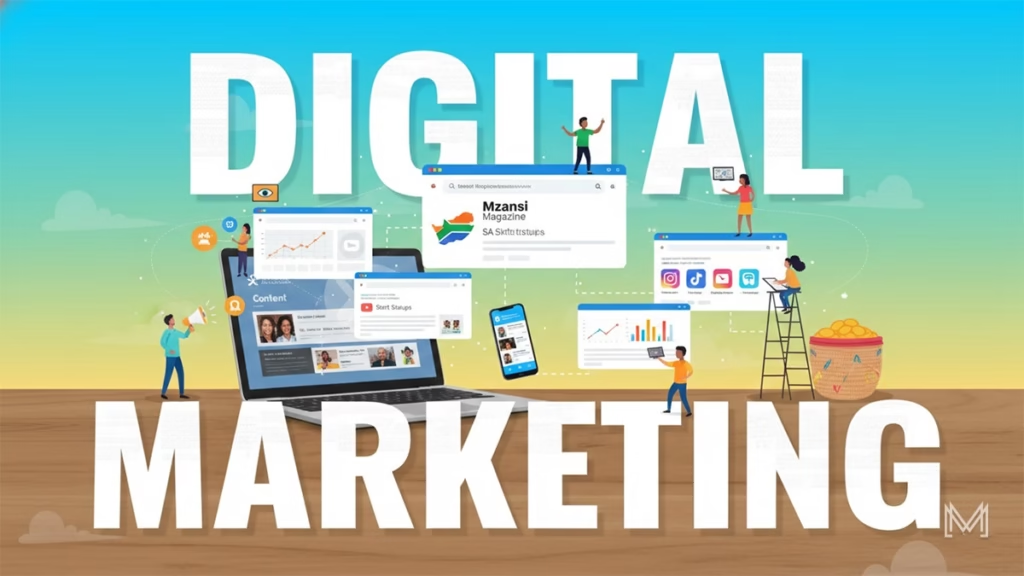
In South Africa, this digital shift is paramount. E-commerce sales hit R71 billion in 2023, and internet penetration is surging past the 70% mark. This means that a significant, and growing, part of your potential customers lives, works, and shops online. Startups that ignore this massive digital migration miss out on their primary avenue for growth. Effectively implementing this modern form of marketing will decide which small businesses scale and which unfortunately fade away.
Digital Marketing as a Startup Accelerator
For startups, especially those operating on a shoestring budget, digital marketing offers compelling advantages that traditional techniques simply can’t match. It’s not just about visibility; it’s about smart, targeted engagement that drives tangible business results.
Achieving Hyper-Targeted Exposure
One of the most potent weapons in the digital marketing arsenal is the ability to target very specific audience segments. Unlike traditional advertising, which broadcasts to a general audience, digital platforms enable businesses to precisely target their ideal customer. They do this based on demographics, location, interests, and even online behaviour, like focusing on a specific Mzansi suburb. This level of precision ensures that marketing spend reaches the people most likely to buy your product or service.
Digital marketing is the great equaliser. It doesn’t care if you work from a garage in Vereeniging. What matters is that you show up with relevance and resilience.
This means less money wasted and a significantly higher return on investment. Furthermore, even small enterprises can reach a wider audience than ever. They can extend their reach far beyond their local shopfront or first network.
Digital Marketing Provides Unparalleled Measurability
Imagine running a newspaper ad and trying to figure out exactly how many sales it generated. It’s practically impossible. Conversely, almost every element of a digital marketing campaign is measurable. You can track clicks, impressions, engagement rates, and, crucially, conversion rates down to the exact cent. This immediate and granular feedback loop empowers startups to move away from guesswork. Entrepreneurs can quickly recognize strategies that work, double down on them, and swiftly abandon those that don’t. This ability to measure, analyse, and iterate is essential. It is crucial for new ventures to be lean. It also helps them stay agile in their early stages.
Cost-Effective Scaling and Affordability
Startups often find themselves constrained by capital. Traditional media have steep entry barriers. In contrast, many forms of digital marketing have low beginning costs. These include organic social media, content marketing, and Search Engine Optimisation (SEO). A young business can start with minimal investment. They can use free tools and platforms. The spend can be scaled up as revenue grows. This pay-as-you-grow model makes sophisticated marketing tactics accessible to everyone, from the township entrepreneur to the Sandton tech founder. This democratisation of advertising power is vital for a developing economy like South Africa, fostering innovation across all sectors.
Knowing Your Customer: The Power of Personas in Digital Strategy
Here’s where many startups stumble: they blast generic messages into the void, hoping something sticks. But digital marketing only works when it’s personal. That’s why defining your buyer persona, the semi-fictional representation of your ideal customer, is non-negotiable.
Ask yourself: Who are they? What keeps them up at night? Do they check TikTok during load-shedding or scroll LinkedIn while waiting for minibus taxis? Understanding these nuances shapes everything from the tone of your WhatsApp campaign to the visuals on your Shopify store.
For instance, what are digital marketers in Durban doing differently for youth-focused brands? They’re using short-form video, influencer tie-ins, and UGC (user-generated content) because that’s where their audience lives. Meanwhile, B2B startups in Johannesburg focus on LinkedIn thought leadership and email nurture sequences. The channel mix depends entirely on who you’re trying to reach.

And here’s the kicker: when you align your digital marketing with real human behaviours, conversion rates soar. Studies show personalised digital campaigns can lift engagement by up to 200%. In a market as diverse as South Africa, there are 11 official languages. It also has varied cultural contexts. This level of customisation isn’t optional. It’s strategic.
Core Strategies: The Types of Digital Marketing Your Startup Needs
Mastering digital marketing means understanding its various interconnected channels. Aspiring digital marketers and founders should familiarise themselves with these core areas to build a robust online presence.
1. Search Engine Optimisation (SEO)
SEO involves optimising your website to rank higher in search engine results (like Google) for relevant keywords. For a startup, this is a long-term play, but its returns are massive. You want your coffee shop to be at the top. This happens when a potential customer searches for “best affordable coffee Cape Town.” You aim to attract highly qualified traffic. These are people actively looking for what you offer. Focusing on long-tail keywords, such as those with three or more words, is a great early strategy for new businesses. This approach helps them compete with bigger brands.
2. Content Marketing
Content is the fuel for your digital marketing engine. This involves creating and sharing valuable content. It should be relevant and consistent. Examples include blogs, videos, guides, and infographics. These efforts attract and keep a clearly defined audience. This strategy helps position the startup as a trustworthy authority in its field. For example, a South African fintech startup might publish articles on “Budgeting tips for young Mzansi professionals”. Good content organically drives traffic and leads.
3. Social Media Marketing (SMM)
South Africans are heavily engaged on platforms like TikTok, Instagram, and Facebook. Social media marketing is all about leveraging these platforms to build brand awareness, engage with customers, and drive sales. For many startups, SMM is the primary battleground. It allows for two-way communication, humanising the brand and fostering a loyal community. Successful examples include witty, timely campaigns from brands like Nando’s. They show the power of authentic social engagement in the Mzansi market.
4. Pay-Per-Click (PPC) Advertising
PPC is an incredibly useful tool for immediate results. Platforms like Google Ads or Meta Ads (Facebook/Instagram) enable businesses to place ads. These platforms charge only when a user clicks on the ads. This is often the quickest way for a new venture to test market demand. It can drive traffic to a newly launched digital marketing website. It also helps generate first sales. You have precise control over your budget and can switch off campaigns that underperform instantly.
Social Media: More Than Just Posting Pretty Pictures
Let’s be honest: many entrepreneurs treat social media as a gallery, not a growth engine. They post product shots, tag friends, and wonder why sales don’t follow. But digital marketing on social platforms thrives on conversation, community, and consistency.
Take TikTok, for example. In South Africa, it’s not just for dances anymore. TikTok has become a launchpad for authentic brand storytelling. Township food vendors showcase bunny chow recipes. Tech founders break down AI in Zulu. The algorithm rewards relatability over polish, which levels the playing field for startups without big production budgets.
Similarly, WhatsApp Business, a tool often overlooked, is a digital marketing powerhouse in our context. With over 27 million WhatsApp users in South Africa, it’s the perfect channel for order confirmations. It’s also ideal for flash sale alerts and customer support. One Durban-based fashion startup grew its monthly revenue by 300% just by moving its client communication from email to WhatsApp.
The key? Be where your customers are and engage; don’t just broadcast.
Upskilling: Why Digital Marketing Courses Are Non-Negotiable
Many founders hesitate because they “don’t know tech”. But here’s the truth: you don’t need to code to master digital marketing. What you do need is curiosity and a willingness to learn.
Fortunately, South Africa offers a wealth of accessible education. There are short courses in digital marketing at institutions like Red & Yellow Creative School of Business. Additionally, free digital marketing courses are available on Google Digital Skills for Africa. As a result, the barrier to entry has never been lower. These digital marketing courses cover everything from SEO, paid ads, and analytics. They also include content strategy. Often, they feature local case studies relevant to our market.
And yes, investing in a course for online marketing pays off. A founder who understands how to read a Facebook Ads dashboard or interpret Google Analytics can make smarter decisions. They can avoid costly agency markups. They can also pivot quickly when campaigns underperform.
If you’re eyeing digital marketing jobs, it helps to know what digital marketing is all about. This knowledge is beneficial if you are planning to hire. It helps you vet talent. The average digital marketing salary in South Africa ranges from R18,000 to R45,000 monthly, depending on experience. But, if you’ve done your homework, you’ll spot overpriced or underqualified candidates faster.
Measuring What Matters: Data Over Guesswork
One of the most liberating aspects of digital marketing? You don’t have to guess if it’s working. Every click, view, share, and purchase can be tracked.

For startups, this means agility. If an Instagram ad targeting students in Grahamstown yields a 5% conversion rate, you shift budget instantly. But, if the same ad in Bloemfontein gets zero, adjustments are necessary. In traditional marketing, that insight might take months and cost thousands to uncover.
Free tools like Google Analytics, Meta Business Suite, and Mailchimp’s reporting dashboards turn raw data into actionable insights. Which blog post drives the most sign-ups? What time of day do your emails get opened? These small tweaks, iterated over time, compound into significant growth.
And in a resource-constrained environment like ours, efficiency isn’t just smart; it’s survival.
Real Examples: Digital Marketing That Works in Mzansi
Let’s ground this in reality. Consider Yoco, the Cape Town-based fintech startup. They didn’t rely on billboards. Instead, they used digital marketing targeted LinkedIn ads for small business owners. They also created SEO-optimised guides on “how to accept card payments”. Additionally, they shared Instagram stories showing real street vendors using their card machines. The result? Over 200,000 merchants were onboarded, many in townships and rural areas.
Or look at Faith’s Kitchen, a home-based food business in Khayelitsha. She posted consistent TikTok videos of her cooking amagwinya. She included voiceovers in Xhosa. This strategy built a local fanbase that turned into delivery orders across the Cape Flats. No fancy website, just strategic, culturally rooted digital marketing.
These aren’t anomalies. They’re blueprints.
Overcoming Common Pitfalls
Of course, digital marketing isn’t foolproof. Many startups fall into traps: chasing vanity metrics (likes over leads), spreading too thin across platforms, or ignoring mobile optimisation. Remember, over 95% of internet users in South Africa access the web via phone. If your site takes 10 seconds to load on MTN data, you’ve already lost.
Also, don’t underestimate the power of consistency. Posting once a month won’t cut it. Digital marketing rewards regularity, whether it’s weekly newsletters, bi-weekly YouTube tutorials, or daily customer responses on Facebook.
For them, digital marketing is not just a nice-to-have. It is the lifeline that connects a brilliant idea with real paying customers.
And please, avoid “spray and pray” ad spending. Start small. Test one audience, one message, one platform. Learn. Then scale.
The Future Is Digital and Local
As AI, voice search, and augmented reality reshape the landscape, digital marketing will only grow more sophisticated. But the fundamentals persist: know your customer, deliver value, measure results, and adapt fast.
For South African startups, the opportunity has never been greater. Internet access is rising. There is a young digitally native population. Global platforms are available at local prices. Digital marketing is the great equaliser. It doesn’t care if you work from a garage in Vereeniging. It doesn’t matter if your workplace is a co-working space in Rosebank. What matters is that you show up with relevance and resilience.
Final Thoughts: Start Now, Learn as You Go
For the Mzansi entrepreneur, adopting digital marketing is no longer optional; it is a fundamental mandate for growth. It provides an effective way to cut through the noise. It is also measurable and accessible. This helps you connect directly with your target market and build a lasting brand. Start with a solid plan. Educate yourself through an accredited digital marketing course. Commit to the ongoing process of testing and learning. The data highlights the digital economy’s power. The digital channels are open. The playing field is waiting for your brand to dominate.
FAQ’s Digital Marketing for Startups
What is digital marketing, really?
Digital marketing is basically promoting your products or services using the internet and electronic devices. It uses channels like search engines, social media, and email to connect interactively with customers.
Why is digital marketing better than traditional advertising for startups?
It offers hyper-targeted exposure, meaning your ad spend only reaches the people most likely to buy from you. Furthermore, digital campaigns are fully measurable, allowing you to quickly see what works and what doesn’t.
How can startups with small budgets use digital marketing?
Many forms, like organic social media, content creation, and SEO, have low starting costs, letting you begin with minimal investment. You can use a “pay-as-you-grow” model, scaling up your spend only when revenue starts coming in.
Why is knowing my customer persona important in digital strategy?
Understanding your ideal customer’s habits dictates which platforms to use and what message will actually connect with them. This level of personalisation is crucial and can dramatically lift your engagement and conversion rates.
Do startup founders need formal digital marketing courses?
While you don’t need to be a coder, having curiosity and learning the basics through accessible courses is non-negotiable today. This knowledge helps you make smarter decisions and effectively manage or hire marketing talent later on.


