

3 Reasons Why Small Businesses Don’t Grow Enough in South Africa
There’s a quiet crisis unfolding in the heart of South Africa’s economy. It doesn’t always make the front pages. But, it shapes the daily reality of millions. It’s the story of small businesses that never quite take flight. Small businesses are fueled by the fire in their founders’ eyes and their daily grit. Despite this, too many stay stuck in survival mode. They never reach the scale that could transform lives, create jobs, or reshape communities.
In fact, the numbers are sobering. Up to 80% of small businesses in South Africa collapse within their first five years. Some reports even suggest that as many as 90% fail due to challenges like tax compliance alone. This isn’t just a statistic; it’s a national loss of potential, innovation, and economic resilience. But why? Why do so many small businesses sputter out just as they’re gaining momentum?
The truth is, it’s rarely one single factor. Instead, it’s a combination of deeply rooted, often invisible barriers that quietly throttle growth. In this feature, we unpack three critical reasons why small businesses don’t grow enough. More importantly, we discuss how you can overcome them to build something that lasts.
1. The Cash Flow Trap: When Survival Eats Strategy for Breakfast
Let’s start with the lifeblood of every enterprise: money. Not profit, not revenue, but cash flow. Many small businesses in South Africa run on razor-thin margins, juggling late-paying clients, unpredictable load-shedding costs, and rising supply prices. In this environment, it’s easy to fall into what we call “the cash flow trap.” It is a cycle where every rand earned is instantly spent just to keep the lights on.

You sell 50 T-shirts on a Friday? Great, but you’re already using that cash to buy fabric for next week’s batch. You also pay your delivery driver and top up your data for Instagram ads. There’s nothing left to invest in a proper website. You can’t hire a bookkeeper. You can’t even take a day off to plan your next move.
This reactive mode is the enemy of growth. And it’s alarmingly common. Research shows that poor cash flow management is among the top reasons small businesses fail in South Africa. Without a buffer, you can’t absorb shocks like a client delaying payment or a sudden tariff hike. Worse, you can’t seize opportunities. That chance to supply a local spaza chain? You’d need upfront capital for bulk production. That pop-up market in Sandton? Stall fees, transport, and samples cost money you don’t have.
But here’s the twist: it’s not always about more money; it’s about smarter money habits. Many small businesses overlook simple tools like cash flow forecasts. They miss out on digital invoicing with automatic reminders. Additionally, they often neglect separating personal and business accounts. Others miss out on government support that eases the burden. The Department of Trade, Industry and Competition (the DTI) offers DTI grants for small businesses. It also provides DTI funding for initiatives aimed at early-stage entrepreneurs. Yet, countless founders never apply either because they don’t know these programmes exist or because they’re overwhelmed by the paperwork.
Hustle is your engine, but strategy is your steering wheel.
And let’s be real: applying for small business funding in South Africa from government sources isn’t always easy. But the choice, staying trapped in the hand-to-mouth cycle, is far costlier in the long run. If you’re running one of the many small businesses starting in townships or rural areas, this is especially urgent. You don’t need millions. You need R5,000 to buy a second-hand sewing machine. Alternatively, you need R10,000 to stock your next batch of vetkoek. That’s where youth business funding and startup business funding programmes in South Africa can be lifelines.
The path ahead? Treat cash flow like oxygen. Check it weekly. Delay non-essential spending. Negotiate better payment terms. Always search for small business funding for startups. Even a microloan from a local stokvel-linked initiative can be valuable. You must have financial breathing room. Without it, your small business idea in South Africa, no matter how brilliant, is always one emergency away from collapse.
2. Flying Blind: The Myth of “Just Hustle Harder”
Across townships from Khayelitsha to Soweto, you’ll hear the same mantra: “If you just work hard enough, success will come.” There’s truth in that spirit: small businesses in South Africa are built on relentless hustle. But hard work without direction is like running on a treadmill: exhausting, but you’re not actually going anywhere.
Far too many entrepreneurs launch their small business ideas based on passion or a gap they’ve spotted. They might sell handmade beadwork or offer mobile car washes. Still, they often lack a clear growth roadmap. They confuse activity with progress. They post daily on TikTok, take every order that comes in, and stay up till 2 a.m. packaging goods… yet their revenue plateaus. Why?
Because growth doesn’t happen by accident. It requires strategy. And strategy begins with answers to hard questions:
- Who exactly is your ideal customer?
- What makes you different from the guy down the street selling the same thing?
- How will you reach 100 customers… then 1,000?
- What systems will you put in place so you’re not the only person who knows how everything works?
Unfortunately, many small businesses skip this step. They operate on instinct, not insight. This is especially true among first-time founders who may not have access to formal business training. Passion is essential. Yet, it must be merged with skill. As we always say, passion alone is not enough to sustain a small business in South Africa long-term.
Consider this: the most successful small business ideas aren’t always the most original. They’re the ones backed by solid market research, clear pricing models, and scalable processes. Take the rise of home-based bakers during the pandemic. Thousands started. Only those who created order forms, set delivery zones, tracked ingredient costs, and built waitlists grew beyond their kitchens. The rest burnt out or stayed stuck as “side hustles”.
This is where the power of planning kicks in. A simple one-page business plan focusing on your value proposition, target market, and 6-month goals can be transformative. It forces you to think beyond the next sale. It helps you qualify opportunities. And crucially, it’s often required when applying for small business funding in SA or pitching to a mentor.
Programmes offered by Seda (Small Enterprise Development Agency) give free templates and workshops. Local incubators also offer support for startup business ideas. Don’t sleep on them. Use them. Confirm your idea. Test demand. Ask real people if they’d pay for your solution before you sink your savings into it.
Remember: small business ideas in South Africa are a dime a dozen. What separates the survivors from the casualties is the willingness to plan, adapt, and learn. Hustle is your engine, but strategy is your steering wheel.
3. The Invisible Ceiling: Believing Your Business Can’t Be Big
Perhaps the most insidious barrier to growth isn’t financial or logistical; it’s psychological. It’s the quiet voice in your head that says, “This is as big as it gets.”
Many small businesses in South Africa are started out of necessity. People want to pay school fees, cover rent, or supplement a household income. There’s nothing wrong with that. But over time, that survival mindset can become a self-fulfilling prophecy. You design your operation to serve 20 customers a week because that’s “enough”. You turn down wholesale opportunities because you’re scared you can’t deliver. You avoid hiring help because “it’s just me and my dream.”

This is what we call the “invisible ceiling”, a mental limit you impose on your own potential. And it’s shockingly common. Studies suggest that a lack of confidence and vision is a key reason for small and medium enterprises remaining micro-operations. This issue affects businesses in South Africa. You might have a unique entrepreneurship idea, like eco-friendly nappies or AI-powered tutoring for matric. But if you can’t envision it scaling beyond your garage, it probably won’t.
Yet look around. Many small businesses have become national brands. Examples include Nando’s, which started as a single chicken shop in Rosettenville. Faithful to Nature was launched from a home in Cape Town. These businesses began with founders who dared to think bigger. They didn’t just want to survive. They wanted to transform.
So how do you break through your own invisible ceiling?
First, reframe your identity. You’re not just a “vendor” or a “side hustler”. You’re a South African small business owner, and that’s a title worth owning with pride. Second, surround yourself with people who think big. Join entrepreneur groups, attend pitch nights, or follow successful businesses on LinkedIn. Exposure rewires your brain.
Third, start thinking in systems, not tasks. Instead of asking, “How can I do more?” ask, “How can this run without me?” Can you document your process? Train a cousin? Use a WhatsApp bot to handle FAQs? Scalability begins when you stop being the bottleneck.
And finally, dream in metrics. Say “I want 500 repeat customers by Q3” instead of “I want to be big.” You can also say, “I want to supply three schools by year-end.” Concrete goals trigger your problem-solving brain.
Hard work without direction is like running on a treadmill: exhausting, but you’re not actually going anywhere.
Because here’s the truth: small businesses are the backbone of South Africa’s economy. The list of small businesses in South Africa in PDF format that you’ll find online is long. But the number that break through to the next level is too small. We need more small business startups that aim for the stars, not just the next month’s rent.
The Way Forward: Growth Is a Choice
Let’s be clear: growing a small business in South Africa is never easy. Load-shedding, crime, bureaucracy, and economic volatility are real. But so is your resilience. So is your creativity. So is your right to build something meaningful.
You are exploring South African small business ideas. You are weighing which business you can start with little capital. You are also hunting for profitable business ideas in your community. Remember this: growth is not reserved for the lucky few. It’s available to anyone willing to manage cash wisely. You must plan with purpose. Believe truly that your small business deserves to thrive.
And if you’re looking for support, you’re not alone. Help exists in many forms. There are DTI startup funding and local co-working spaces. You can find online courses on types of business ideas. There are also mentorship programs for small South African businesses. You just have to reach for it.
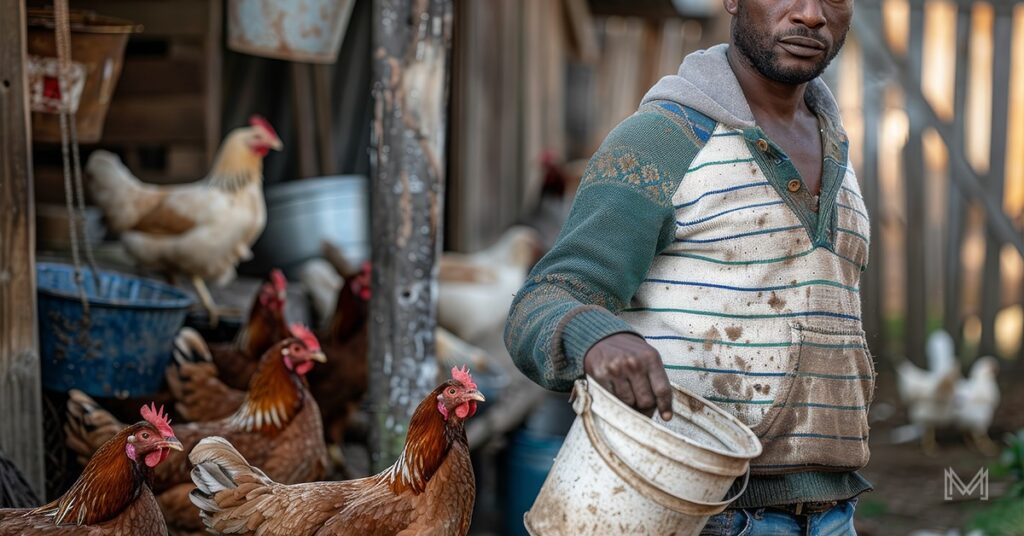
So go ahead. Reinvest that first R1,000 of profit. Draft that one-page plan. Pitch to that shop owner who’s been eyeing your products. Because Mzansi doesn’t just need more small businesses; it needs more small businesses that dare to grow.
Your vision matters. Your hustle matters. And your small business? It is the next great South African success story.
FAQs About Small Businesses
What is the main reason many small businesses in South Africa fail early on?
Poor cash flow management is a top reason for early failure. Every cent earned is immediately used for daily survival costs.
Besides passion, what essential element do many small business owners miss for growth?
They often skip creating a clear growth roadmap or business strategy, confusing activity with actual progress.
What does the article call the mental barrier that stops a small business from getting bigger?
This mental limitation that caps a business’s potential is referred to as the “invisible ceiling.”
Where can a South African entrepreneur find support or templates for business planning?
Local incubators and programmes offered by Seda (Small Enterprise Development Agency) provide free templates and workshops for planning.
What is the most important mindset shift needed to break through the growth barrier?
Founders need to reframe their identity. They should transition from being a “side hustler” to becoming a proud small business owner. This identity shift enables them to think and plan for scale.
Inspired to take the next step? Espere Camino provides free design templates for logos, business cards, and pull-up banners. These resources help you professionalise your brand from day one. Visit esperecamino.co.za to join our community and access tools that turn small business ideas into reality.


