
Sowing the Seeds of Success: Your Guide on How to Start A Gardening Business in South Africa
In a country where sunshine graces the land for most of the year, the opportunity has never been better. It is an ideal time to start a gardening business. Green spaces are valued as much in townships as in suburbs. South Africa’s climate and culture create fertile ground for this industry. Whether you’re a young entrepreneur with a passion for plants, you will find this environment conducive to growth. Or maybe you’re someone trying to turn a weekend hobby into a steady income. A gardening business caters to residential properties. It also serves commercial clients, schools, offices, shopping centres, and even municipalities.
Many South Africans love a well-kept garden. But, few have the time, tools, or skill to keep one. That’s where you come in. By choosing to start a garden, you step into a market that blends service, sustainability, and seasonal demand. Homeowners and property managers from Cape Town to Durban to Johannesburg are actively searching for reliable gardener services. This is especially true in areas like Durban, where landscaping is both aesthetic and functional due to the subtropical climate.
Before you grab a pair of pruning shears and hit the pavement, have a strategy. It’s essential to approach this venture with strategy, not just sweat. Running a successful gardening business in South Africa requires more than enthusiasm. It needs planning, branding, and pricing. Additionally, a clear understanding of local needs is crucial. In this guide, we’ll give all the information you need. Learn how to start a gardening business the smart way. Avoid common pitfalls. Build something that grows alongside your community.
Why a Gardening Business Makes Sense
Let’s be real: not every business idea survives South Africa’s economic ups and downs. Yet, the gardening business has shown remarkable resilience. Why? Because people always want their outdoor spaces to look good, whether for pride, property value, or mental wellness. In fact, studies show that well-maintained gardens can increase a home’s market value by up to 15%.
Eco-conscious living is on the rise. Urban farming and water-wise landscaping are also gaining popularity, especially in drought-prone provinces like the Western Cape. So, there’s a growing demand for expert garden maintenance services. In Durban, for example, homeowners often need help with tree felling in Durban, invasive plant removal, and coastal-friendly landscaping. These are not DIY jobs; they require skill, permits, and the right equipment.
Is a gardening business profitable? The numbers say yes. Entry costs are low compared to other trades, and profit margins can reach 40–60% once you’re established. Many solo operators earn between R15,000 and R30,000 per month working just 4–5 days a week. Add a small team, and that figure can double.
Entry costs are low compared to other trades, and profit margins can reach 40–60% once you’re established.
Most importantly, you don’t need a degree to succeed. What you do need is reliability, knowledge of local flora, and a willingness to get your hands dirty literally. That’s why so many young South Africans are choosing to start a gardening business as their first entrepreneurial leap.
How to Start a Gardening Business: Your First Steps
If you’re serious about wanting to start a gardening business, begin with research, not tools. Walk through different neighbourhoods. Notice which homes have overgrown lawns. Identify which businesses outsource their green spaces. Find out what services are already offered in your area. Search online for “gardening business near me” and see who’s ranking on Google Maps. Read their reviews. What are customers complaining about? Poor communication? Inconsistent visits? That’s your opportunity.
Next, define your niche. Will you focus on basic garden maintenance? This includes mowing, weeding, and trimming. Or will you offer premium services like landscaping in Durban, irrigation setup, or organic pest control? The broader your offering, the more clients you can serve, but specialising can help you stand out. For instance, becoming known as the go-to expert for tree fellers in Durban could secure high-value contracts.
Don’t skip this crucial phase: talk to real people. Ask neighbours, friends, and even local spaza shop owners if they’d use a gardening service. What would they pay? How often? These conversations will shape your gardening business plan far better than guesswork.
Crafting a Winning Gardening Business Plan
No, you don’t need an MBA. But you do need a gardening business plan even if it’s just two pages long. This isn’t for banks (yet); it’s for you. It clarifies your goals, pricing, target market, and startup costs.
Start by outlining your services. Will you offer weekly lawn care, seasonal clean-ups, or one-off projects like installing raised vegetable beds? Then calculate your gardening business start-up costs, Mzansi. Basic gear like a lawnmower, hedge trimmer, gloves, and rakes can cost between R3,000 and R8,000 if bought second-hand. A branded T-shirt and cap? Another R500.
Your plan should also include a marketing strategy. How will people find you? Will you rely on flyers, WhatsApp groups, or Facebook? And don’t forget operations: will you work alone or hire help? If you plan to scale, include a simple financial forecast.
You can find free templates online by searching “gardening business plan pdf”, but customise it for South African conditions. For example, factor in load-shedding. If you use electric tools, you’ll need a battery backup or petrol alternatives.
Having a solid gardening business plan in South Africa doesn’t just reduce risk; it builds confidence. And confidence shows in how you pitch your services.
Legal Setup: Registering Your Gardening Business
Yes, you can operate informally at first. Yet, if you want credibility and longevity, register your business. It also lets you issue tax invoices. Through the Companies and Intellectual Property Commission (CIPC), you can register a sole proprietorship for just R175. Platforms like FNB’s Business Portal even bundle this with a free business bank account.
Choose a name that reflects your brand. Brainstorm gardening business names that are memorable, easy to spell, and relevant, like “Green Thumb Mzansi” or “Durban Garden Crew”. Avoid overly cutesy or funny gardening business names unless your target market is playful (e.g., eco-schools or boutique cafes).
Once registered, open a separate bank account. Never mix personal and business funds. Also, consider liability insurance, especially if you’ll be using ladders or chainsaws or working on commercial properties. A small monthly premium can save you from major headaches.
And while you’re at it, design gardening business cards. Even in the digital age, handing someone a physical card after a great first job leaves a lasting impression. Keep them in your pocket, your van, and even tape one to your toolbox.
Tools, Transport, and Team: Building Your Operational Base
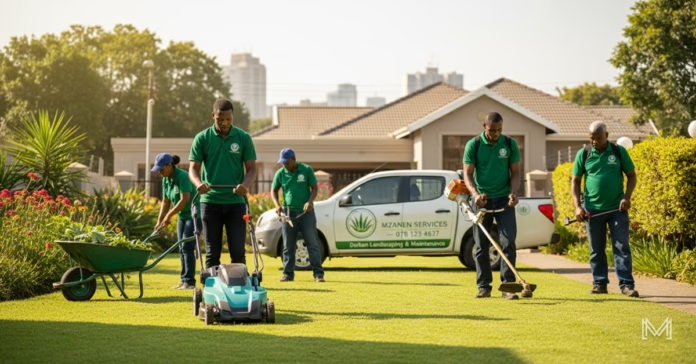
To start a gardening business, you need mobility and gear. Most professionals opt for a bakkie; it’s practical, durable, and perfect for hauling soil, plants, and tools. If buying new isn’t an option, consider renting or leasing. Some entrepreneurs even partner with local dealers for weekend-only rentals during peak seasons.
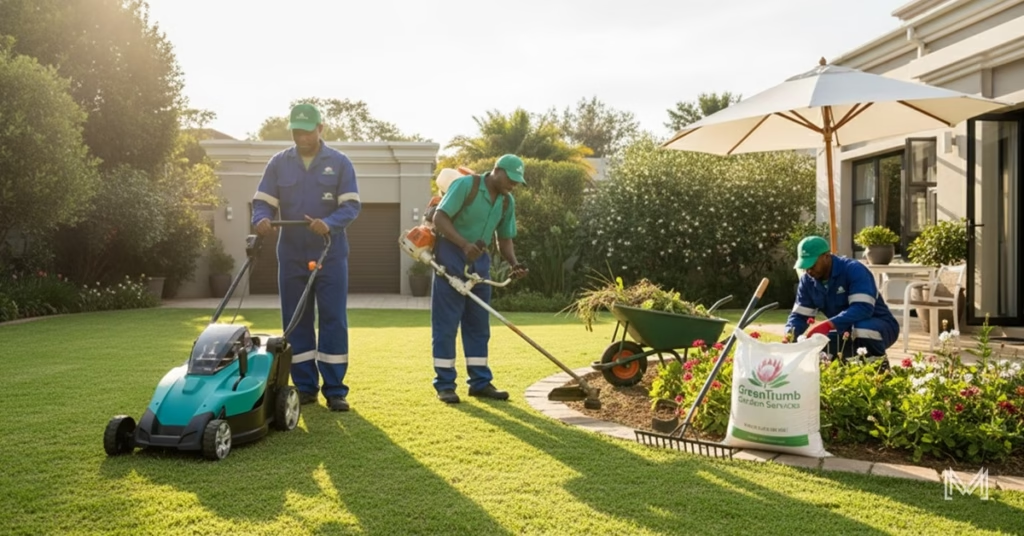
As for tools, start lean. Focus on versatility: a good brushcutter, a reliable lawnmower, pruning shears, and a wheelbarrow cover 90% of basic jobs. Invest in quality where it counts; cheap mowers break during load-shedding heatwaves.
Now, about your team. In the beginning, go solo. Master the workflow, pricing, and client management. Once you’re turning down jobs due to time, bring on help but wisely. Hire on a per-job basis at first. That way, you avoid fixed salaries during slow months. Look for people with experience, maybe former farmworkers or retirees who know indigenous plants.
Training matters too. Teach your team your standards: how you edge a lawn, how you bag clippings, and how you greet clients. Consistency builds reputation.
Marketing That Works for Local Gardening Services
Forget expensive ads. In South Africa, word-of-mouth and visibility drive gardening services. Start hyper-local. Print 200 flyers and deliver them in your suburb, especially to complexes and retirement villages where gardening is outsourced.
But don’t stop there. Put your logo on your bakkie. Park visibly at shopping centres while running errands. People will snap a photo of your number. Create a simple Facebook page or Instagram profile showing before-and-after shots. Tag your location “garden services Durban North” or “landscaping Durban” so locals can find you.
Ask happy clients for Google reviews. Five-star ratings boost your ranking when someone searches “gardener Durban” or “garden maintenance services”.

And never underestimate the power of a free service. Offer to tidy your local church garden or community centre for free. Just put up a small sign: “Maintained by [Your Business Name].” That’s low-cost, high-impact branding.
Pricing, Profit, and Avoiding Financial Troubles
One of the biggest mistakes new entrepreneurs make is undercharging. Yes, you want to be competitive, but R80/hour won’t sustain you. Research what others charge in your area. Garden services in Durban, for example, range from R150 to R350 per hour depending on complexity.
Charge per job or per visit, not per hour. A standard garden clean-up might be R600 flat. Tree removal? R1,500+. This simplifies billing and rewards efficiency.
Track every cent. Use a free app like Yoco or SnapScan for payments and record-keeping. Set aside 15% for taxes. And always pay yourself last after expenses, fuel, and tool replacements.
The soil is ready. All you need to do is plant the seed.
Financial discipline prevents gardening business financial troubles. Many fail not because of lack of work. They fail because they didn’t budget for slow seasons (like winter in Gauteng). Another reason for failure is not budgeting for equipment breakdowns. Build a rainy-day fund; even R500 a month helps.
Scaling Up: From Solo Gardener to Landscaping Brand
Once you’ve got 10 regular clients and a waiting list, it’s time to think bigger. Could you offer seasonal packages? Introduce composting or veggie garden setups? Partner with nurseries for plant supply commissions?
You might even consider buying an existing gardening business for sale in Mzansi to fast-track your growth. Just do due diligence: check client lists, equipment condition, and recurring revenue.
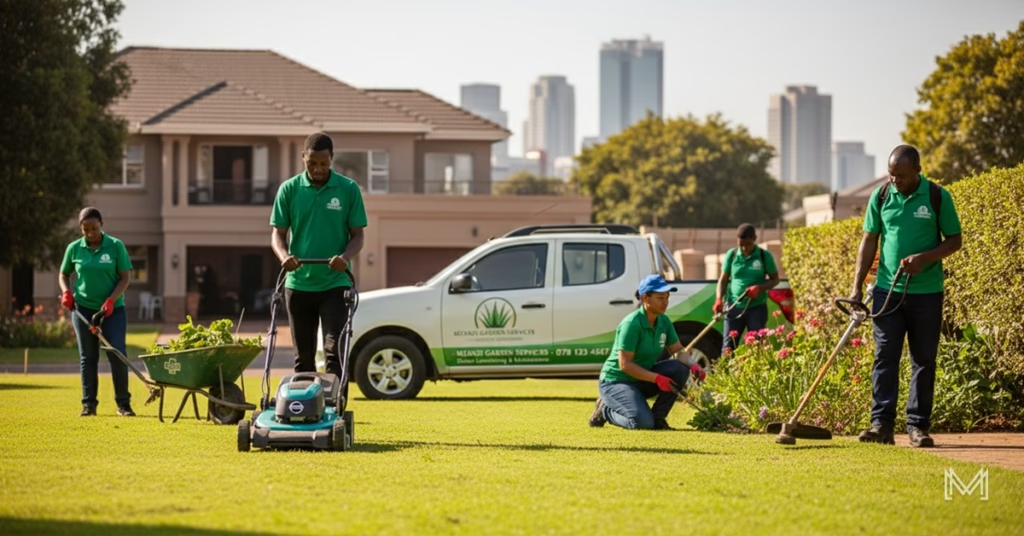
Also, think branding. A strong logo is essential. Adding matching uniforms enhances brand identity. Including a slogan (“We Grow With You”) can turn a side hustle into a recognisable local brand. And yes, those gardening business cards should now include your website and QR code.
Final Thoughts: Why Now Is the Time to Start a Gardening Business
South Africa needs more green hands. With urbanisation rising and green spaces shrinking, professional garden and maintenance services aren’t a luxury; they’re a necessity. Whether you’re in Pretoria, Port Elizabeth, or Pietermaritzburg, the demand is there.
To start a gardening business is to invest in community, environment, and your own future. It’s physical, yes, but also deeply rewarding. You’ll see results every week. You’ll build relationships. And you’ll earn respect as someone who makes Mzansi more beautiful, one garden at a time.
If you’ve ever wondered “how to start your own gardening business,” the answer is simple. Start small. Plan smart. Show up consistently. The soil is ready. All you need to do is plant the seed.
And remember, whether you’re searching “how to start a gardening business with no money” or looking for gardening business ideas that scale, the foundation remains the same. Focus on service, skill, and sincerity.
FAQ’s Start a Gardening Business South Africa Guide
What are the initial start-up costs for a gardening business in South Africa?
Basic second-hand gear like a lawnmower and tools can cost between R3,000 and R8,000. Add about R500 for simple branding like a cap and T-shirt to get going.
How much money can I expect to earn as a solo gardener?
Many solo operators in South Africa earn between R15,000 and R30,000 per month. They work only four or five days a week. Profit margins can reach 40–60% once your gardening business is established.
Should I register my gardening business with CIPC?
Yes, registering with CIPC, even as a sole proprietorship for just R175, gives you credibility. It lets you issue tax invoices. It’s a crucial step for longevity and professionalism in the business.
What is the best way to market my new local gardening service?
Focus on hyper-local marketing like delivering flyers and making sure your bakkie has visible branding. Getting good Google reviews from happy clients is key when people search for “gardener near me”.
How should I price my gardening services to be competitive yet profitable?
Avoid charging a low hourly rate. Charge a flat fee per job or visit. For example, charge R600 for a standard clean-up. Research local rates, which can range from R150 to R350 per hour depending on the job’s complexity.
It’s time. Go ahead and start a gardening business. The roses (and rand notes) are waiting.


