
The Ultimate Guide to Starting a Filling Station Business in South Africa
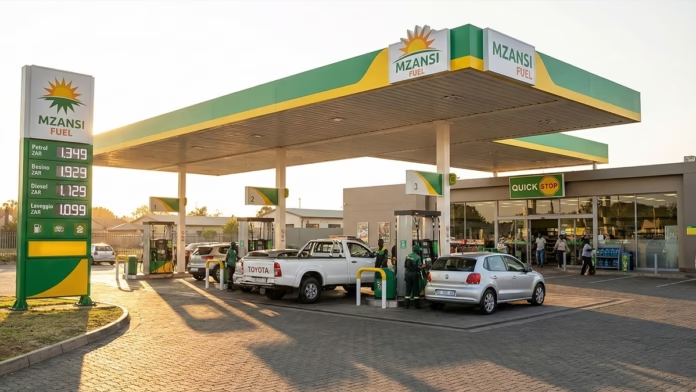
Every day, thousands of South Africans pull into their local garage. They fill up their tanks, grab a coffee, or buy a loaf of bread. Behind that routine transaction lies a powerful and often overlooked business opportunity: the filling station business. For young entrepreneurs, finding a venture that blends essential services is key. High foot traffic and scalable retail potential make few options as compelling. This is especially true in a country where mobility remains heavily dependent on fossil fuels. Despite growing interest in renewable energy, South Africa’s oil consumption remains robust. Daily usage hovered around 466,576 barrels as recently as December 2025. That enduring demand makes the filling station business not just viable but transformative for ambitious business owners.
Yet, launching a filling station business in South Africa isn’t as simple as buying land and installing pumps. The sector is tightly regulated and capital-intensive and requires careful navigation of environmental, legal, and financial frameworks. Success hinges on preparation. Your success relies on compliance and strategic partnerships. This applies whether you’re eyeing a petrol station for sale in Gauteng. It is also relevant if you are exploring BP franchise opportunities or considering a Viva filling station franchise. This guide, crafted for Mzansi Magazine’s community of rising entrepreneurs, walks you through every critical step. It covers everything from licensing to financing using up-to-date South African data. Practical insights show the realities of 2025.
Why the Filling Station Business Still Holds Promise in South Africa
Many assume the future of energy will make petrol stations obsolete. While electric vehicles are gaining traction globally, South Africa’s infrastructure and consumer habits tell a different story. The country’s electricity grid remains strained, and vehicle electrification is progressing slowly. In the meantime, fossil fuels continue to dominate. According to 2025 forecasts, South Africa’s fossil fuel-based electricity generation is expected to reach 215.79 billion kWh this year alone. More importantly, national fuel demand stays resilient, providing a steady customer base for fuel retailers.
Never underestimate visibility and accessibility. Customers favour stations that are easy to enter, exit, and see from a distance.
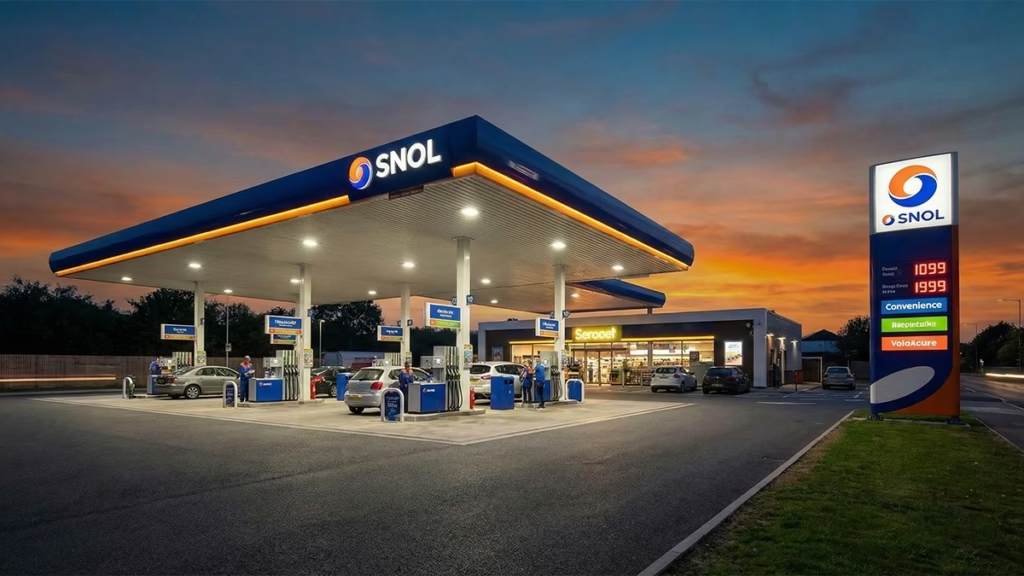
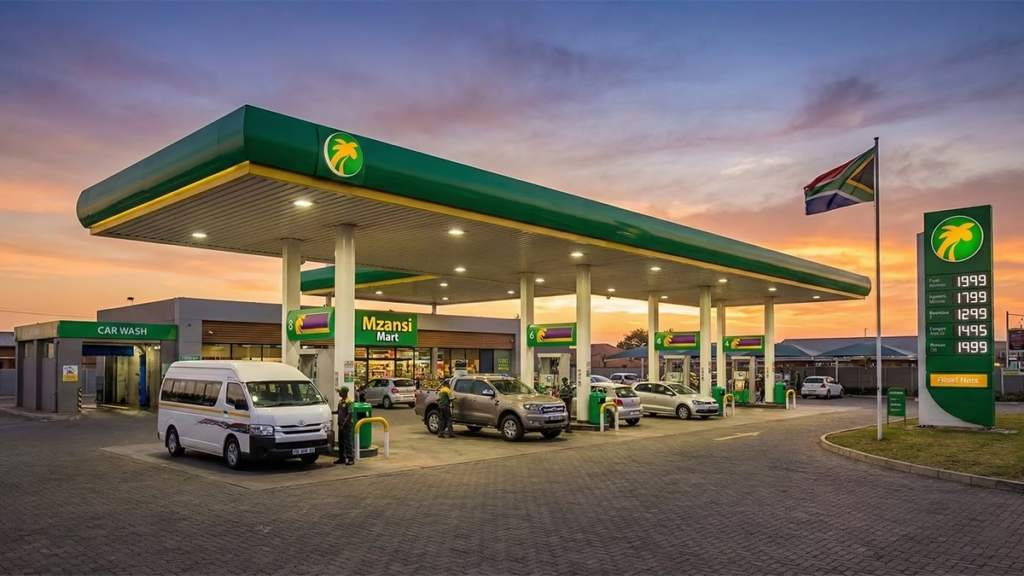
Moreover, modern filling stations are no longer just about petrol and diesel. They’ve evolved into convenience hubs offering car washes, ATMs, fast food, groceries, and even airtime. This diversification boosts margins and attracts more foot traffic, turning a petrol station in South Africa into a mini-retail ecosystem. For young entrepreneurs, this model offers multiple revenue streams and resilience against fuel price volatility. That’s why the filling station business remains one of the most attractive fuel business opportunities in South Africa. It is especially appealing in high-traffic urban corridors like Gauteng.
Navigating the Legal Maze: Licences, Permits, and Approvals
Before a single fuel pump is installed, aspiring owners must clear a series of regulatory hurdles. The Department of Mineral Resources and Energy (DMRE) oversees the entire process, and compliance is non-negotiable. To legally run, you need three core approvals. These include land use rights permitting a filling station and an environmental authorisation. Additionally, you need two critical licences: the site licence and the retail licence.
These licences must be applied for simultaneously, and both must be held by the same legal entity. The application process begins with submitting the DMRE 39 form to your regional DMRE office. You’ll also need to provide proof of land ownership or a valid lease agreement. You must also include a declaration affirming compliance with all relevant regulations. The environmental authorisation is typically issued under the National Environmental Management Act (NEMA). It ensures your proposed site won’t harm local ecosystems. This is a crucial step near water sources or residential zones.
This phase can take several months, so patience and meticulous documentation are key. Skipping steps or submitting incomplete forms is the fastest route to rejection. Engaging a consultant familiar with DMRE procedures can significantly streamline the process, especially for first-time applicants unfamiliar with bureaucratic nuances.
Franchise vs. Independent: Which Path Suits Your Vision?
One of the biggest early decisions is whether to run independently or under a major brand. Opting for a franchise petrol station like BP, Engen, TotalEnergies, or Viva comes with undeniable advantages. These brands offer established customer loyalty, standardised operating systems, bulk fuel supply contracts, and national marketing support. For newcomers, this reduces risk and accelerates market entry.
Franchising isn’t cheap. The BP filling station franchise cost, for example, can range from R1.5 million to over R20 million, depending on location and size. Total garage franchise cost follows a similar scale. Engen garage franchise opportunities demand significant upfront capital. They often require a 30–35% unencumbered cash contribution. If you’re scouting for petrol stations for sale in South Africa, many listed properties are already branded. This means you’d inherit the franchise agreement along with the physical assets.
On the other hand, an independent petroleum station offers full creative and operational control. You set your prices, choose your suppliers, and tailor your convenience offerings without corporate oversight. But you’ll also bear the full burden of brand-building and supplier negotiations. Independent operators often struggle with fuel procurement unless they partner with third-party distributors.

For most new entrepreneurs, a petrol filling station franchise provides the best balance of support and profitability. If you’re hunting for a petrol station for sale in Gauteng, you’ll find many branded opportunities. These opportunities are particularly available in emerging townships. In these areas, fuel demand is rising faster than supply.
Crunching the Numbers: Funding Your Filling Station Business
Let’s be clear: starting a filling station business requires serious capital. Whether you’re building from scratch or buying an existing petrol station for sale in South Africa, expect investments from R1.5 million up to R20 million or more. Oil companies do not offer direct funding. Applicants must secure financing from recognised banks or investment institutions. This needs to be done within three months of approval.
Thankfully, several options exist. Traditional commercial mortgages remain the most common route, covering both property acquisition and equipment installation. Alternatively, specialised lenders offer petrol station finance with loan amounts up to R6 million. Some entrepreneurs tap into development funds. These include the National Empowerment Fund’s (NEF) iMbewu Fund. The NEF’s iMbewu Fund has allocated R50 million specifically for Black-owned filling station ventures.
Your petrol station business plan PDF for South Africa will be pivotal here. Lenders demand detailed projections, market analysis, and risk mitigation strategies. A business plan for a petrol station free download PDF can serve as a template. Yet, your version must reflect local demand. Consider competitor pricing and realistic footfall estimates. Remember: banks assess not just your finances but also your operational readiness.
Location, Location, Location: The Make-or-Break Factor
In the filling station business, geography is destiny. A poorly located station, no matter how well-designed, will struggle. Ideal sites sit near high-traffic intersections, commuter routes, or industrial zones. In Gauteng, vehicle density is highest. A petrol station for sale in Gauteng along the N1 or M1 corridors can generate far higher turnover. It is more profitable than one in a low-density suburb.
When evaluating a petrol station for sale in South Africa, study traffic patterns, nearby competitors, and zoning laws. Also consider future development: a new housing estate or shopping mall nearby could dramatically increase demand. Conversely, planned road diversions or public transport upgrades might reduce car dependency.
This sector combines essential service provision with scalable retail, all underpinned by steady national demand.
Never underestimate visibility and accessibility. Customers favour stations that are easy to enter, exit, and see from a distance. These factors directly impact impulse stops, which are critical for boosting non-fuel sales like snacks and car care products.
Building Beyond Fuel: The Convenience Revolution
Today’s most profitable filling stations earn more from their shop than their pumps. Leading brands like BP Connect and Engen Quickshop have transformed forecourts into go-to convenience destinations. As you plan your fuel station franchise, integrate a retail strategy from day one.
Offer essentials like bread, milk, cold drinks, and phone chargers. Add fresh food options. Many stations now partner with local vendors or franchises like Nando’s or Debonairs. Install ATMs, airtime kiosks, and even parcel collection points. Each service increases dwell time and average deal value.
This model aligns perfectly with South African consumer behaviour, where time poverty makes one-stop solutions highly valuable. By thinking beyond station fuel, you future-proof your filling station business against margin pressures in the core fuel trade.
Fuelling Your Future: Final Thoughts on the Filling Station Business
Starting a filling station business in South Africa is not for the faint-hearted. For those willing to navigate its complexities, the rewards are substantial. The sector combines essential service provision with scalable retail, all underpinned by steady national demand. You may pursue a franchise filling station with BP. Alternatively, you can buy an independent petrol station for sale in South Africa. Your success will hinge on compliance, capital, and customer-centric innovation.
As you draft your petrol station business plan PDF in South Africa, remember: this isn’t just about selling fuel. It’s about creating a community hub where convenience, reliability, and trust converge. Interest in franchise opportunities is rising. Opportunities range from Total franchise opportunities to Engen garage franchise models. The path is clearer than ever for young entrepreneurs ready to pump ambition into action.
And if you’ve been searching for petrol stations for sale in South Africa, now is the time to act. With fuel demand holding strong and retail diversification offering new profit avenues, the filling station business remains one of Mzansi’s most powerful entrepreneurial gateways. Don’t just fill tanks; fuel your future.
FAQ’s Start Filling Station SA
What are the main licences needed to run a filling station in South Africa?
What are the main licences needed to run a filling station in South Africa?
Is starting a filling station a cheap business venture in South Africa?
No, starting a filling station business requires serious capital, with investments potentially ranging from R1.5 million up to R20 million or more. Oil companies do not provide direct funding, so you must secure financing from commercial banks or investment institutions.
Why is choosing the right location so important for a fuel station?
Geography is essentially destiny in this business, as ideal sites are near high-traffic intersections or busy commuter routes like the N1 or M1 corridors in Gauteng. Excellent visibility and easy accessibility directly impact impulse buys, which boosts non-fuel sales significantly.
What is the biggest advantage of choosing a franchise like BP or Engen over an independent station?
A major franchise offers established customer loyalty, standardised operating systems, and strong national marketing support, which helps reduce initial risk for newcomers. However, this comes at a high cost, as franchise fees can be substantial, sometimes requiring a 30–35% unencumbered cash contribution.
How can modern filling stations boost their revenue beyond just selling fuel?
Profitability is heavily driven by diversifying into a convenience hub, offering groceries, fast food partnerships, ATMs, and airtime sales. This retail ecosystem increases customer dwell time and creates multiple reliable revenue streams.


