

Breaking Free from Financial Slavery: Why Paying Off a R300k Debt Isn’t an Achievement
In the world of South African business, we often celebrate milestones that are actually traps. You observe this phenomenon daily on social media. A young entrepreneur shares a picture of their brand-new R300,000 SUV. The caption reads “God did.” Five years later, they post another photo celebrating that the car is finally paid off. They think they have reached a peak. In reality, they have just finished a five-year sentence of breaking free from financial slavery. This article discusses why paying off such a debt is not actually a societal victory. It also delves into how you can truly change your trajectory.
The hard truth about our economy is that it rewards those who own and punishes those who owe. When you take out a R300k loan for a depreciating asset, you are not just buying a car. You are selling your future time to a bank.
True success in the South African context isn’t about the ability to pay back a loan; it is about the ability to never need the loan in the first place.
By the time that final payment clears, the asset is worth half of what you paid. Additionally, you have lost years of potential investment growth. To break free from financial slavery, one must adopt a mindset that considers more than just the monthly instalment. It is crucial to focus on the long-term cost of capital.
The Illusion of the Paid-Off Asset
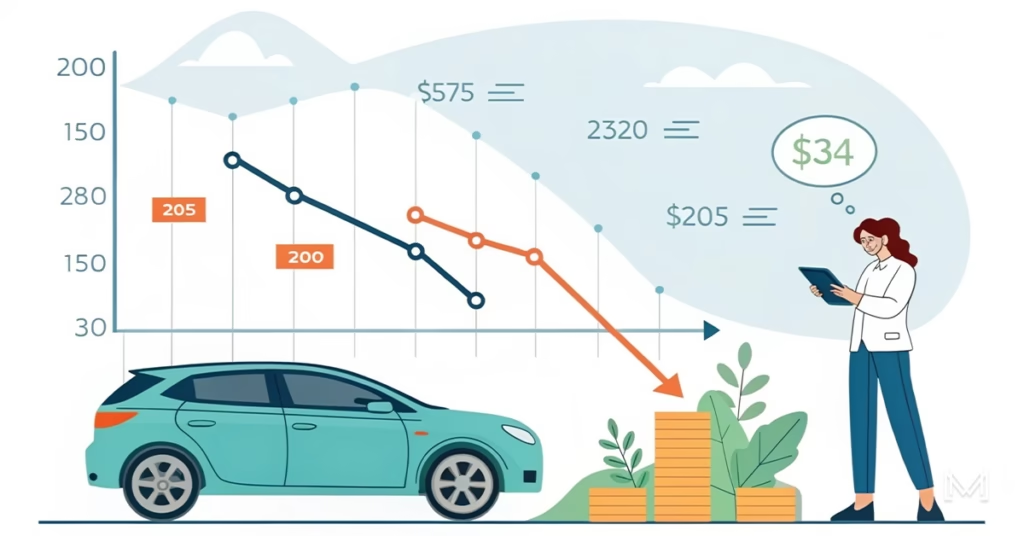
Many young professionals believe that debt is a natural part of life. They see their parents struggle with bonds and car notes and assume that this is the only way to live. Yet, the maths tells a different story. If you pay R7,000 a month for five years to clear a R300,000 debt, you actually hand over nearly R420,000. This amount includes interest and insurance. Meanwhile, the car is now worth maybe R150,000. You haven’t “achieved” a win. Instead, you have successfully subsidised the bank’s profits. At the same time, your own net worth took a massive hit.
True success in the South African context isn’t about the ability to pay back a loan. It is about the ability to never need the loan in the first place for things that lose value. Breaking free from financial slavery means realising this. Every rand sent to a creditor is lost. It is a missed opportunity for your family’s well-being. We need to stop applauding the end of a debt cycle and start questioning why we entered it. If you spent five years running in a circle, you end up back where you started. But you are older and poorer. That isn’t a race worth winning.
Historical Context and the Price of Freedom
To understand our modern predicament, we have to look at the history of economics. People often ask, ‘How much did it cost to buy freedom from slavery in the past?’ Historically, manumission the act of a slave buying their own freedom was an exhausting, nearly impossible financial feat. The enslaved person had to work extra hours for decades. They needed to pay a price for something that should have been their birthright. Today, we do something similar with interest rates and consumer credit. We spend the best years of our lives working to pay off “freedoms” that keep us tied to our desks.
The history of the United States often influences our global financial systems. Many ask, did Jefferson ever free his slaves? The answer is complicated. It is mostly negative. He remained deeply in debt to British banks. He viewed his “assets” as collateral. This historical collateral damage the financial economics of slavery created is still visible in how modern banking operates. We are often treated as collateral for the debt we carry. Thus, breaking free from financial slavery is a revolutionary act that honours the struggle for real independence.
The Modern Corporate Landscape
In today’s corporate world, transparency is becoming a legal requirement. You will see a modern slavery statement financial year report. Or you notice a modern slavery act disclosure in financial statements. This occurs when reading through annual reports of JSE-listed companies. These documents are meant to guarantee that supply chains are clean of forced labour. The Insignia Financial modern slavery statement is now standard in big businesses. The same is true for the Modern Slavery Act financial services guidelines. Yet, while companies look for physical slavery in their supply chains, they often ignore the “debt slavery.” They encourage this through their own financial products.
The Financial Times’ modern slavery reports often focus on external labour, but we must look internally. If you are a young entrepreneur, be careful. Do not let yourself become a line item in a bank’s profit margin. When you examine your modern slavery statement for the financial year, does it show you work for yourself? Or does it show you work for your creditors? Breaking free from financial slavery involves examining these corporate structures. You must decide not to be a victim of the interest-bearing systems they promote.
| Debt Type | Original Value | Total Paid (with Interest) | Value After 5 Years | Real Loss/Gain |
|---|---|---|---|---|
| Luxury Car | R300,000 | R420,000 | R160,000 | -R260,000 |
| Business Equipment | R300,000 | R420,000 | R400,000 (Revenue) | +R280,000 |
| Investment Property | R300,000 | R450,000 | R550,000 | +R100,000 |
| Credit Card Debt | R50,000 | R90,000 | R0 | -R90,000 |
Why Paying Off Debt is Just the Beginning
The “Who” in this story is you the emerging South African leader. The “When” is right now. We can’t wait for a better economy to start building wealth. Many people are waiting for some form of financial compensation for slavery or historical redress. While that conversation happens at a high level, your daily choices decide your personal freedom. Breaking free from financial slavery is a choice you make every time you decide to save instead of spend.
There is an old saying that goes, ‘My money, my responsibility.’ Spend and it will end. But save and you will never be a slave. This mantra should be the foundation of every startup in Mzansi. If you spend your seed capital on a lifestyle to impress people, you are choosing a path of servitude. Those people are also broke. As a result, you will need more loans. You will find yourself just maintaining a fake image. Breaking free from financial slavery starts with the courage to look “broke” while you are actually getting rich.
The Strategy for Real Independence
So, how do we actually do it? How do we stop the cycle? First, you need a plan. Some call it a manifesto for breaking the financial slavery to interest (PDF). It serves as a conceptual guide many use to restructure their lives. It involves aggressive saving, avoiding “bad” debt, and only using leverage for things that put money back into your pocket. Breaking free from financial slavery does not happen overnight. It requires a series of disciplined decisions made over many years.

You must understand where the traps are. The “Where” is often in the malls and the car dealerships of our major hubs. These places are designed to make you feel inadequate if you aren’t spending. To counter this, you must educate yourself on the “how”. Instead of paying off a R300k car, consider buying a reliable second-hand vehicle for R80k. Invest the difference into a business or a tax-free savings account. This is the true path to freedom from financial slavery.
The Economic Cost of the Status Quo
When we look at South African data, the numbers are sobering. The South African Reserve Bank often highlights that household debt remains a massive burden on economic growth. The majority of the middle class is servicing debt. As a result, there is no capital left to start new businesses. There is also no capital to create jobs. This is the collateral damage the financial economics of slavery produces in a modern society. It slows down the entire country. We are all working to pay back the past. Instead of funding the future, resources are diverted to address earlier obligations.
Breaking free from financial slavery is, thus, a patriotic act. By clearing your debts and building capital, you become a source of investment for other South Africans. You become the person who can lend or invest, rather than the person who is always asking for a loan. This shift in the power dynamic is what we need to see in the next generation of entrepreneurs. If you are still celebrating a paid-off car loan, you are still thinking like a consumer, not an owner.
Shifting Your Focus to Assets
To achieve breaking free from financial slavery, you must change what you consider an “achievement”. An achievement is not a zero balance on a credit card; it is a R300,000 balance in an investment account. We have been conditioned to feel relief when we reach “zero”, but zero is not the goal. The goal is positive net worth. If you pay off a debt but have no savings, you are at risk. One emergency may make you a slave to the bank again.
Consider the “How” of your wealth building. Are you buying assets that pay you while you sleep? Or are you buying things that eat your money while you sleep? Breaking free from financial slavery means choosing the former every single time. It means being the one who owns the shares in the bank. It does not mean being the one who pays the bank’s dividends through your interest payments. This is the only way to guarantee that your children do not start from the same disadvantaged position.
The Role of Discipline and Vision
Most people fail at breaking free from financial slavery because they lack a long-term vision. They want the reward now. They want the “soft life” before they have done the hard work. But the soft life funded by debt is actually a hard life in disguise. It is a life of stress. You are hiding from debt collectors. You work jobs you hate just to pay for things you don’t need. Real freedom means you can turn down a bad job. It also means you can refuse a bad deal. You have a “get lost” fund in the bank.
This journey is about my money and my responsibility. Spend it and it will end. But if you save it, you will never be a slave. It requires you to be the CFO of your own life. You wouldn’t let a business run the way many people run their personal finances. You wouldn’t celebrate a business paying off a loan for a machine that is now broken and useless. So, why do we do it with our personal lives? Breaking free from financial slavery requires the same cold, hard logic that the most successful CEOs use.
Moving Forward as a Free Entrepreneur
As we look toward the future of Mzansi, the “Who” must be a generation of debt-free creators. The “What” is a total overhaul of our financial habits. We must stop seeing the bank as a friend. We should start viewing it as a utility that should be used sparingly. Breaking free from financial slavery is crucial. This is the only way to guarantee that the wealth of South Africa stays in the hands of its people. Otherwise, it will leak out through interest payments to global financial institutions.
Spend and it will end but save and you will never be a slave.
In conclusion, paying off a R300k debt is a sign that you have survived a trap. But it isn’t the finish line. It is the point where you should finally start your real journey. Don’t let the relief of a zero balance stop you from pushing into the positive. Breaking free from financial slavery is a lifelong commitment to ownership and discipline.
Remember that freedom has a price. Whether you are looking at a modern slavery act financial services report, pay attention to it. Keep this in mind if you are checking your own bank app. That price is usually discipline. Breaking free from financial slavery is the best gift you can give to your future self. It is time to stop celebrating the chains we have removed and start building the kingdom we deserve. True wealth is not found in what you can buy. It is in what you own outright. It also comes from the freedom that ownership provides.

Your journey toward breaking free from financial slavery starts with the next Rand you earn. Will it go to a bank, or will it go to your legacy? The choice, as always, is yours. Let us make Mzansi a place where “success” isn’t measured by the car you drive. Measure it by the lives you can change. You are finally, truly, financially free. Don’t just pay off your debts. Outgrow them. Build a foundation that can never be shaken by an interest rate hike. It should also withstand a market dip. That is the ultimate achievement. Breaking free from financial slavery is your new mission. Go and get it.
FAQs: Breaking Free from Financial Slavery
Why is paying off a R300k car debt considered a trap rather than a victory?
It is a trap. You spent five years paying high interest on an asset that depreciates. This asset is now worth significantly less than the total amount you handed over to the bank.
What is the difference between “bad” debt and “good” debt mentioned in the article?
Bad debt involves borrowing for items like luxury cars that lose value. Good debt is leverage used to acquire assets. These assets generate income or grow your net worth.
How does the article define the concept of “breaking free from financial slavery”?
This concept is defined as the disciplined choice to stop working for creditors. Instead, it focuses on owning assets that provide long-term security and freedom.
What is the economic impact of high household debt on the South African economy?
High debt levels drain the capital needed for entrepreneurship and job creation, effectively slowing down the entire country’s economic growth.
What is the first practical step toward achieving real financial independence?
The first step is adopting the mindset of “my money, my responsibility.” Choose to save and invest your earnings. Avoid spending on a lifestyle you cannot truly afford.


